Describe the difficulty precisely
Replace a broad goal such as 'make gardening easier' with an observable problem: reaching the far side of a planter, opening a pruner repeatedly, carrying water from the tap or finding a dark tool on the ground. Each suggests a different adjustment. A lighter trowel cannot fix an inaccessible path, and a raised bed cannot make a poorly fitting pruner comfortable.
Ask the gardener which activities they enjoy and want to keep doing. Do not assume that convenience means removing every physical task or replacing hands-on work with automation. Someone may value sowing and harvesting but prefer help with moving compost. The useful setup protects that choice and directs effort toward the activities that matter most.
Use this article as a practical planning guide, not an individualized medical assessment or a public-accessibility compliance checklist. If pain, numbness, weakness or balance problems affect gardening, seek appropriate professional guidance. Stop an activity that causes concerning symptoms rather than using a product's comfort claim as a reason to continue.
The Grampa’s stand-up weeder profile illustrates a posture tradeoff: standing spot-weeding still involves foot pressure and balance. Review the operating method against your own needs.
Rehearse the whole route before selecting a tool
Follow a task from storage to cleanup. For potting, that means reaching the supplies, transporting medium, filling containers, moving finished pots and putting equipment away. Watch where unnecessary lifting, twisting or repeated trips occur. Write down the first obstruction rather than buying a tool for the most visible part of the job.
Clear hoses, loose pots and protruding handles from the working route. Ensure that the intended chair or mobility aid can approach the work area and turn as needed without relying on a narrow gap remaining empty. Oregon State University highlights smooth paths, manageable reach and adapted equipment as connected parts of accessible gardening. OSU Extension: Gardens are for everyone.
Trial work height with a stable, appropriately designed surface before commissioning a permanent bench or planter. Include the height of the pot and plant, not just the tabletop. For seated work, check usable approach space and the position of tools while actually sitting. There is no single household bench height that suits every gardener and every task.
Check grip, handle travel and handedness
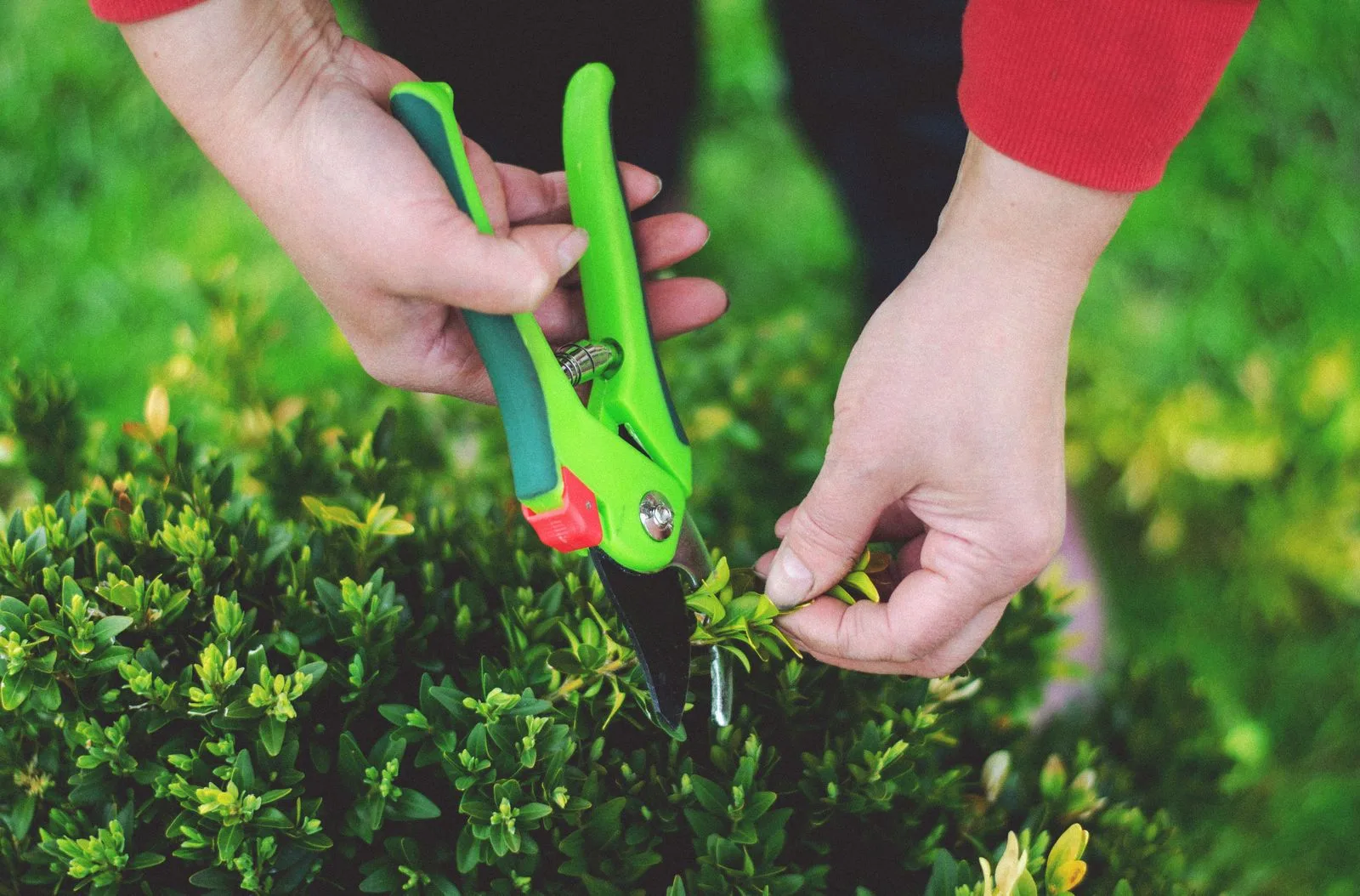
Hold a candidate tool in the position required by the real task. A handle that feels pleasant in a shop can become awkward when the cutting head is angled toward a branch. Check whether you can operate the lock safely, open the handles far enough and maintain control without reaching with the fingertips. Wear the gloves you normally use when assessing fit.
NIOSH and Cal/OSHA guidance defines suitable hand tools through the fit between the user, task and workspace, not through an ergonomic marketing label. Its selection principles include reducing unnecessary force and awkward wrist positions, assessing grip span and choosing tools usable with the dominant hand. Use those principles to compare candidates rather than treating a handle shape as a universal solution. NIOSH guide to selecting non-powered hand tools.
Handedness can be model-specific. FELCO describes its number 9 pruner as a large left-handed model; that is a meaningful distinction from simply turning a right-handed tool around. It also shows why the correct handedness does not settle hand-size fit. Check both, and do not choose the large model solely because it is labeled left-handed. FELCO 9 manufacturer information.
Make reversible adaptations carefully
A properly fitted grip sleeve can be worth trying on an otherwise suitable handle, but thicker is not automatically better. Added material increases the grip diameter or the distance between paired handles. Check that it stays secure and does not interfere with a lock, moving joint or safe closing action. Remove it if it slips or makes the tool harder to control.
Bright labels can make tools easier to distinguish, especially when several gardeners share storage. Place identification where it remains visible without covering a warning or operating instruction. Use one consistent storage location for each tool so finding and returning it require less searching. A simple outline, large-print label or agreed tactile marker may be more useful than a crowded pegboard.
Do not alter cutting mechanisms, remove guards, drill structural handles or attach a tool to a mobility aid without suitable manufacturer or professional guidance. Adaptation should preserve the tool's safe function. University of Maine's accessible-gardening resources include both adapting existing tools and planning tasks around individual abilities, a useful starting point when more tailored help is needed. University of Maine accessible gardening resources.
Reduce carrying without hiding a new handling problem
Place frequently used supplies near the work area in containers that can be handled comfortably. Smaller quantities may mean more refills but less difficult lifting at each use. Compare the whole routine: several manageable trips along a clear path may work better than maneuvering a heavily loaded cart through a tight gate.
Test a cart's steering, handle position and stopping behavior on the actual route before assuming it solves transport. Check its load rating and instructions, including any limits on slopes. Keep loads stable and do not use a garden cart, stool or bucket as a body-support aid unless it is designed and rated for that purpose.
A holster or small caddy can keep a frequently used pruner nearby, but location matters. Check that it does not obstruct a seated position, press against the body or catch on a chair arm. Lock and sheath cutting tools as appropriate before carrying them. If belt storage is awkward, a reachable fixed holder may be a better arrangement.
Make watering and reach adjustable
Trace the hose route while the hose is in use, not only when it is neatly stored. Avoid arrangements that require stepping over it or repeatedly dragging it around obstacles. A shorter working section, a different storage position or a carefully designed irrigation zone may reduce handling more effectively than replacing every hose with a new material.
For hand watering, compare the effort of carrying a filled can with the control needed to use a hose and nozzle. A large capacity is useful only if the filled container is manageable. Check whether the tap and nozzle controls can be operated without sustained uncomfortable force, and keep a place to rest the watering equipment near the plants.
Long-handled tools can bring some tasks within reach, but the extra length also changes control and clearance. Try one on the specific weed or planting task before buying a whole matching set. If a bed is too wide to inspect or harvest comfortably, changing the planting layout or access may be more useful than extending the handle again.
Use a short trial and keep what works
Choose one task for a trial week and change one element: tool grip, storage position, working height or the amount carried. Record what became easier and what remained awkward. Include cleanup, because a setup that works during planting may still require an inconvenient lift at the end.
Schedule natural stopping points, such as one tray or one short section of bed, rather than requiring a whole job to be completed in one session. Alternate suitable activities and take breaks according to your needs. Assistance with a particular heavy or repetitive task can be part of an independent gardening routine, not evidence that the setup has failed.
Keep the final arrangement understandable to everyone who uses it. Label storage, leave routes clear and note any tool that belongs to a particular gardener because of its fit. Review the setup when plants, seasons or abilities change. The goal is a garden that remains workable and enjoyable, supported by a small number of well-chosen tools rather than an expanding collection of promises.
Sources & further reading
We favor university extension guidance and original product documentation. Linked sources support the specific facts cited; they do not endorse Garden Gear Atlas.
- Oregon State University Extension: Gardens Are for Everyone
- NIOSH and Cal/OSHA: Selecting Non-Powered Hand Tools
- FELCO: Number 9 Left-Handed Pruner
- University of Maine Extension: Pain-Free Gardening