Define the view before setting a pruning height
Start at the place where you want to see the shrub: a patio chair, a kitchen window or the end of a path. Decide whether the goal is an autumn feature, a loose summer separation or continuous privacy. Those goals require different evidence about the same plant's seasonal appearance.
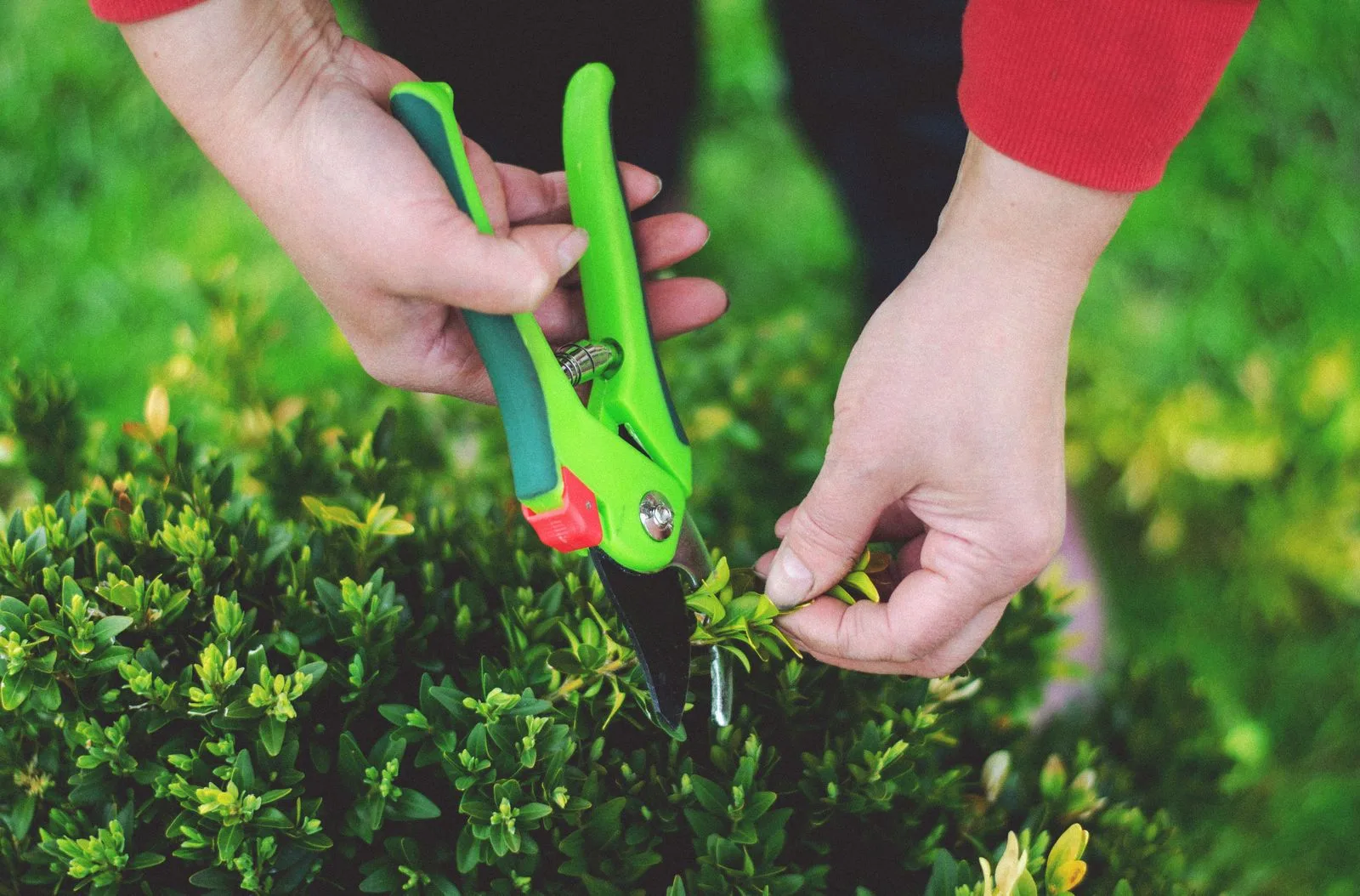
For limited small-stem work, consider the FELCO 6 or FELCO 9 according to hand fit and cutting access. They are alternative hand pruners, not a kit that every beautyberry requires. Start with equipment you can control comfortably, and reassess larger stems individually.
Make a baseline photograph and identify the species. American beautyberry is Callicarpa americana; other beautyberries sold for attractive fruit can have a different size and habit. Keep the full label with the view you are planning. A pruning instruction attached only to the common name may not describe the exact plant or the role it is expected to perform.
Separate late-season interest from permanent coverage
UF/IFAS describes American beautyberry as an open, spreading, deciduous shrub with arching branches. That form can provide an informal seasonal layer, but it does not establish dense year-round screening. The useful design starts by allowing its appearance to change. UF/IFAS: Callicarpa americana
Take the same photograph with and without leaves when evaluating an existing plant. Look through the space at the height that matters for privacy. A cluster of attractive fruit may draw attention to the shrub while providing very little actual visual cover. Evaluate the two functions separately.
If continuous coverage is necessary, assign that job to another suitable part of the design. A fence or a locally appropriate evergreen planting may supply a stable background, subject to the site's conditions and available space. Keep enough room for both layers so that beautyberry is not forced into a thin strip simply to decorate the front.
For a new garden, sketch the expected open season as carefully as the fruiting season. The result should still make sense when the shrub is visually quiet or has been deliberately reduced before new growth.
Leave a place for the full fruiting branch
Mark the routes that need to remain clear: gates, doors, watering access and the normal walking line. Then sketch where a mature branch can arch without creating a late-summer cutting problem. The best fruiting position is one you can leave in place through the display.
Imagine a shrub whose attractive outer stem extends across the route used every day. You can repeatedly remove the interference, but that commits the design to losing exactly the branch most visible from the path. Moving the plant's center farther back, widening the bed or changing the path relationship may preserve both access and display.
For a group, evaluate the combined canopy and the approach needed to inspect it. Do not judge space solely from gaps between nursery pots. A temporary gap can be useful while plants establish; filling it immediately may create the pressure for later trimming.
Keep the viewing background simple enough that individual fruit clusters are visible. This is a visual planning choice. It does not require a prescribed companion plant, and it should not override the growing conditions required by either layer.
Use the growth sequence to choose the intervention window
NC State places flowers and fruit on new shoots. NC State Extension: American beautyberry
Maryland Extension schedules beautyberry pruning before new growth in winter or spring. Maryland Extension: Pruning shrubs and hedges
Choose a goal before choosing an amount. A shrub that fits may only need inspection. A plant with an awkward framework may justify a more substantial dormant-season change. A damaged stem needs an assessment of its own. These decisions should not be collapsed into one annual cutting height that every plant receives.
Keep local season and stem condition in the plan. Florida guidance allows a broad late-fall-to-winter interval, while gardeners elsewhere may prefer to retain the fruit display longer and assess winter effects before acting. Use the plant's growth stage and local advice when the season is uncertain.
If extensive reduction is being considered, assess health and the role of the temporary gap before cutting. The point of using new growth for flowers is to understand the options, not to make hard pruning compulsory.
Protect the summer work the shrub has already done
Once the growing season is underway, inspect branches before taking them for an indoor arrangement or reducing the outer shape. Find the flowers or developing clusters along the stem. The branch you remove is also part of the planned autumn view, so decide whether the immediate use justifies that loss.
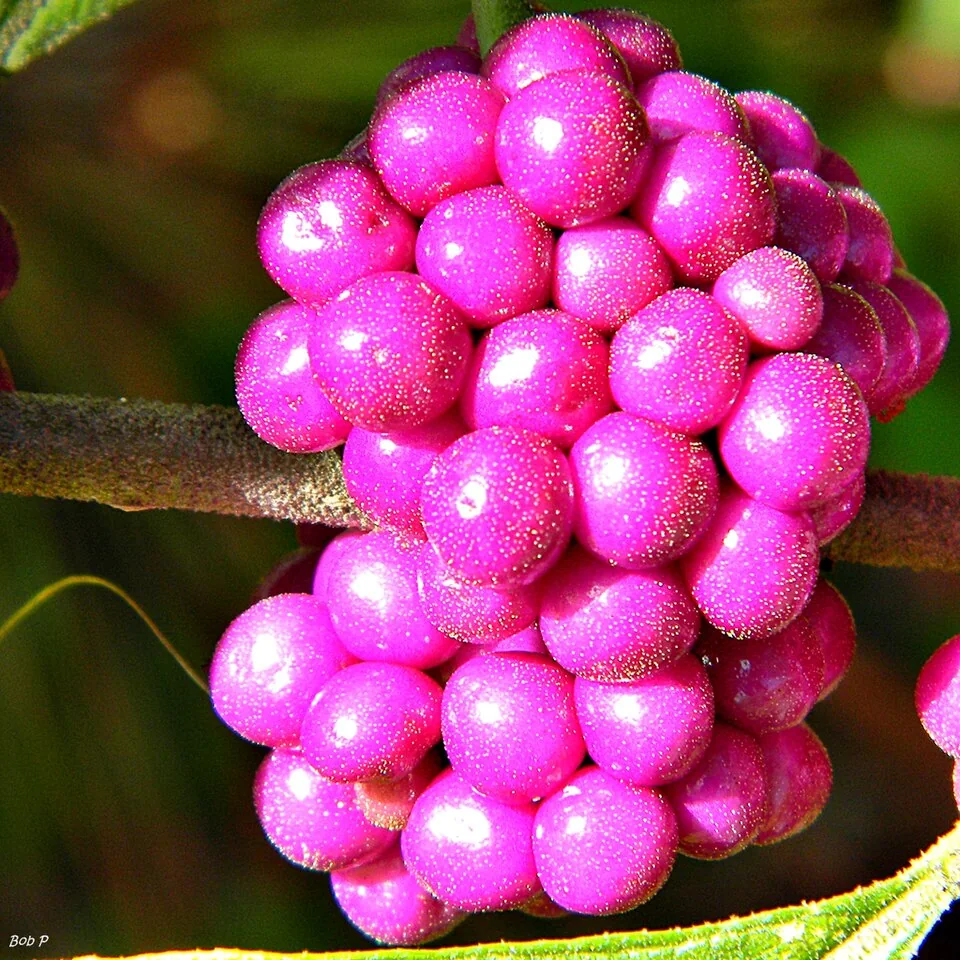
UF/IFAS Gardening Solutions warns that maintenance shaping can reduce fruit production. Its account also emphasizes that the showy fruit is the main visual attraction after the less conspicuous flowers. That makes routine summer clipping a consequential design choice. UF/IFAS Gardening Solutions: Beautyberry
Set aside a limited part of the plant for cutting if decorative stems are one of your goals. Keep that choice separate from the branches supplying the main outdoor display. You do not need an exact harvest quota, but you do need to recognize that both uses draw on the same plant.
When unexpected access work is unavoidable, record the date and side affected. That simple note prevents an uneven autumn display from being misread later as a mysterious failure of the whole shrub.
Follow a sparse display backward through the season
Start by asking whether flowers appeared on the branches now lacking fruit. If you did not observe flowering, record that uncertainty rather than concluding pollination failed. Next ask whether the flowering stems were retained, whether small fruits developed and whether those fruits later disappeared. Each answer points to a different next observation.
Review photographs, pruning dates, light exposure and the plant's condition. A shaded side, a newly established plant and a recently trimmed section should not automatically be expected to behave identically. Compare branches within the same plant before treating the entire garden as one uniform case.
NC State suggests fruiting may improve when shrubs of the same type grow nearby. NC State Extension: American beautyberry
That is a possible consideration, not a rule that a lone American beautyberry cannot fruit. Do not buy additional plants before checking whether the existing shrub flowered and retained its fruiting growth.
When local advice is needed, bring that sequence rather than only a picture of empty branches. A clear history can narrow the question and prevent an unnecessary purchase or treatment from becoming the first response.
Let wildlife use and fruit persistence remain variable
Decide how much of the crop you want to leave undisturbed. If the planting is intended for bird observation, choose a viewing position that lets you watch without needing to approach the shrub repeatedly. Keep routine garden access outside the branches carrying the best clusters.
UF/IFAS Gardening Solutions notes that birds and small mammals may consume fruit and that remaining clusters can persist after leaf fall before drying dark. A long-lasting purple display is therefore an opportunity, not a fixed-duration promise. UF/IFAS Gardening Solutions: Beautyberry
Record when clusters color, when leaves fall and when fruit is removed or changes appearance. Those observations help you understand the plant's contribution to your own garden. They are more useful than borrowing a distant photograph's date and expecting the same scene.
If you want more winter interest, use the native-shrub season plan to identify a real gap and a suitable additional plant. Avoid crowding the beautyberry merely to make its display last longer on paper. Each plant still needs the space that allows its useful branches to remain.
Review three outcomes before the next dormant season
Judge the planting by access, display and seasonal coverage. Did the useful routes remain clear without repeated summer cuts? Did fruit appear where you could see it? Did the open season meet your expectations? Keep those outcomes separate; a beautiful crop does not solve a privacy problem, and excellent access does not explain a sparse crop.
If the role fits, retain the arrangement and plan only the structural work actually needed. If one side repeatedly interferes, revise that boundary or placement. If the plant is expected to deliver a permanent form it cannot provide, change the design rather than assigning it another automatic pruning height.
Use the small-shrub moving guide before relocation and the rejuvenation decision guide before a major reset. For equipment questions, gear comparison compares fit and documented specifications. Keep a final note stating the branches or area to retain for fruit, the access line to protect and the next observation needed. That is a practical plan for the coming season.
Sources & further reading
We favor university extension guidance and original product documentation. Linked sources support the specific facts cited; they do not endorse Garden Gear Atlas.
- NC State Extension: American beautyberry
- UF/IFAS: Callicarpa americana
- UF/IFAS Gardening Solutions: Beautyberry
- Maryland Extension: Pruning shrubs and hedges
_(7905062584).jpg)