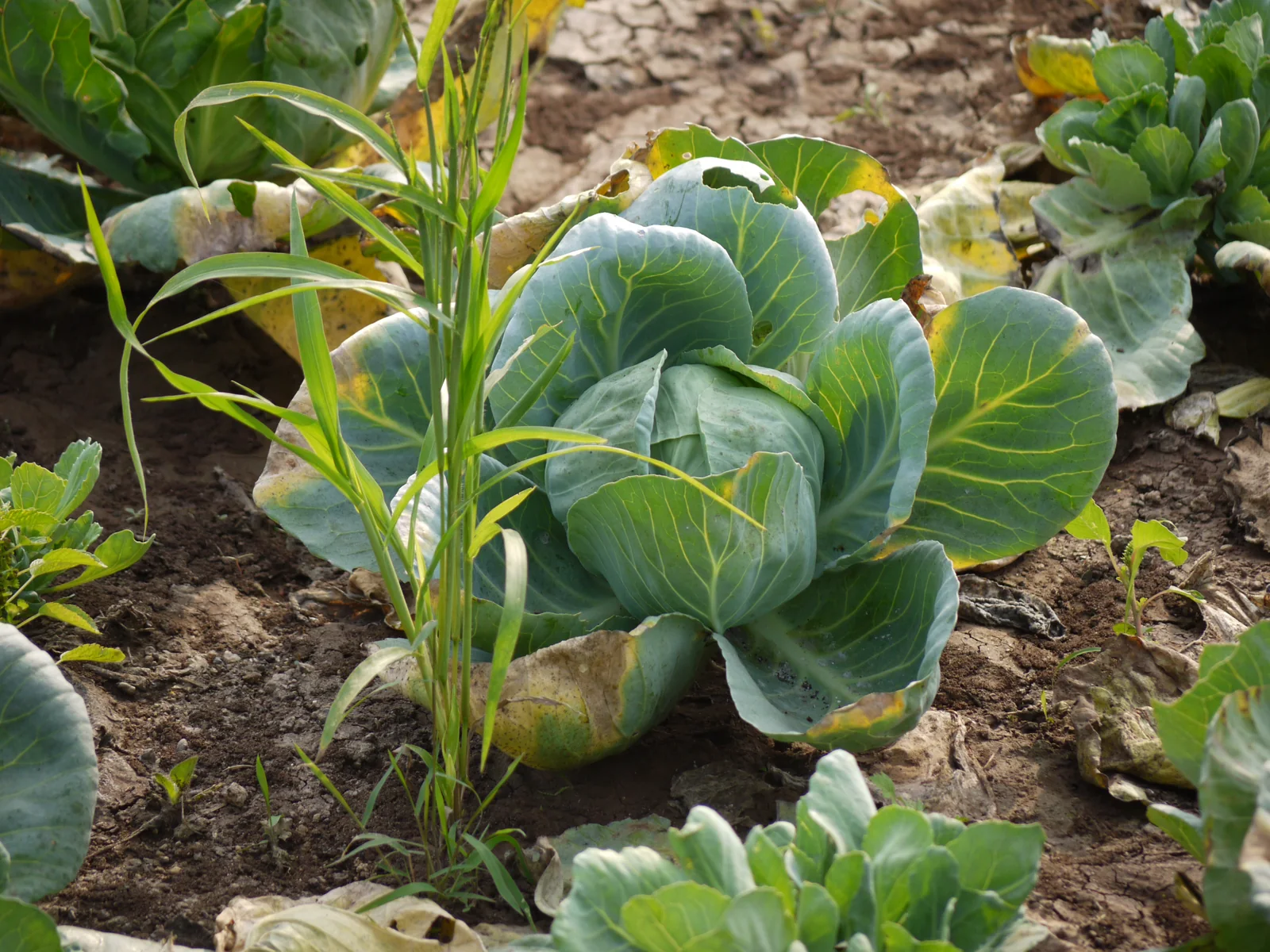
First decide whether there is a head to assess
Look into the center before blaming fertilizer. Heading cabbage makes overlapping inward-curving leaves around a short core; a spreading skirt of outer leaves is not itself a head. Compare plants of the same cultivar and planting date. A plant still building its center needs a different response from a solid head that has merely stayed smaller than expected. The cabbage plant profile explains which cabbage types this applies to.
An injured central growing point can prevent heading even while existing leaves remain large and tough. Minnesota Extension identifies cold injury, insect feeding and rough handling among the possible causes. University of Minnesota Extension: Growing cabbage Gently separate only enough foliage to see whether fresh leaves are developing. Do not pull the center apart to test it. A useful inspection record is one photograph from above, one from the side and the transplant date. Repeat the photograph after several days rather than judging growth from memory.
Use firmness and cultivar size together
With an open hand, press the developing head gently from the side. A harvestable head feels firm rather than springy and open. Head size varies with cultivar, fertility and spacing, so a small firm cabbage can be ready while a larger loose one is still developing. Maryland Extension bases harvest on firmness and notes that close spacing produces smaller heads. University of Maryland Extension: Growing cabbage
For a practical comparison, mark three representative plants: the largest, a typical one and the smallest. Check all three during the same garden visit. If all are firm but undersized, keeping them indefinitely is unlikely to give the result promised by a photograph from different conditions. Harvest one and weigh it; cut it open and inspect the interior. This converts an uncertain visual guess into a useful reference for the remaining crop. If only the largest is firm, harvest selectively and leave the others room and time.
For example, a bed with six firm heads and three loose centers is not one harvest event. Assign the ready heads to meals, refrigeration or sharing, then leave the unfinished plants under observation. If your household can use only one head this week, that is a planning signal for next season’s cultivar mix or plant count, not a reason to keep every mature head attached through uncertain weather.
Separate a slow crop from a crop that has stopped
Before intervening, reconstruct the last two weeks: heat, drying, waterlogging, insect injury and transplant disturbance. Inspect where irrigation actually reached, not just whether a timer ran. Look for active new central leaves and compare sunny plants with shaded ones. A small, steadily developing head and a plant with no new center are not equivalent. Nor does yellowing automatically identify a nutrient shortage; damaged roots can prevent a plant using nutrients already in the soil.
Cabbage performs best in a cool growing window. Illinois Extension advises arranging spring crops to mature before summer heat and fall crops to develop their main heads during cooling weather. Illinois Extension: Cabbage Use that regional principle rather than copying its calendar. If your crop has reached a long hot interval, adding successive feeds will not recreate spring. Set a review date, assess new growth, and decide whether the bed space would now be more useful for another crop.
During heading, steady the water supply
Utah State recommends maintaining even moisture and avoiding extra nitrogen once heads begin forming; fluctuating moisture and excessive late growth increase splitting risk. Its suggested 1–2 inches of weekly water is regional guidance, not a fixed allowance for every soil. Utah State University Extension: Cabbage in the garden Count rainfall, look beneath mulch and check the root zone before deciding whether to irrigate. A raised bed with fast drainage may need a different schedule from a moisture-retentive ground bed.
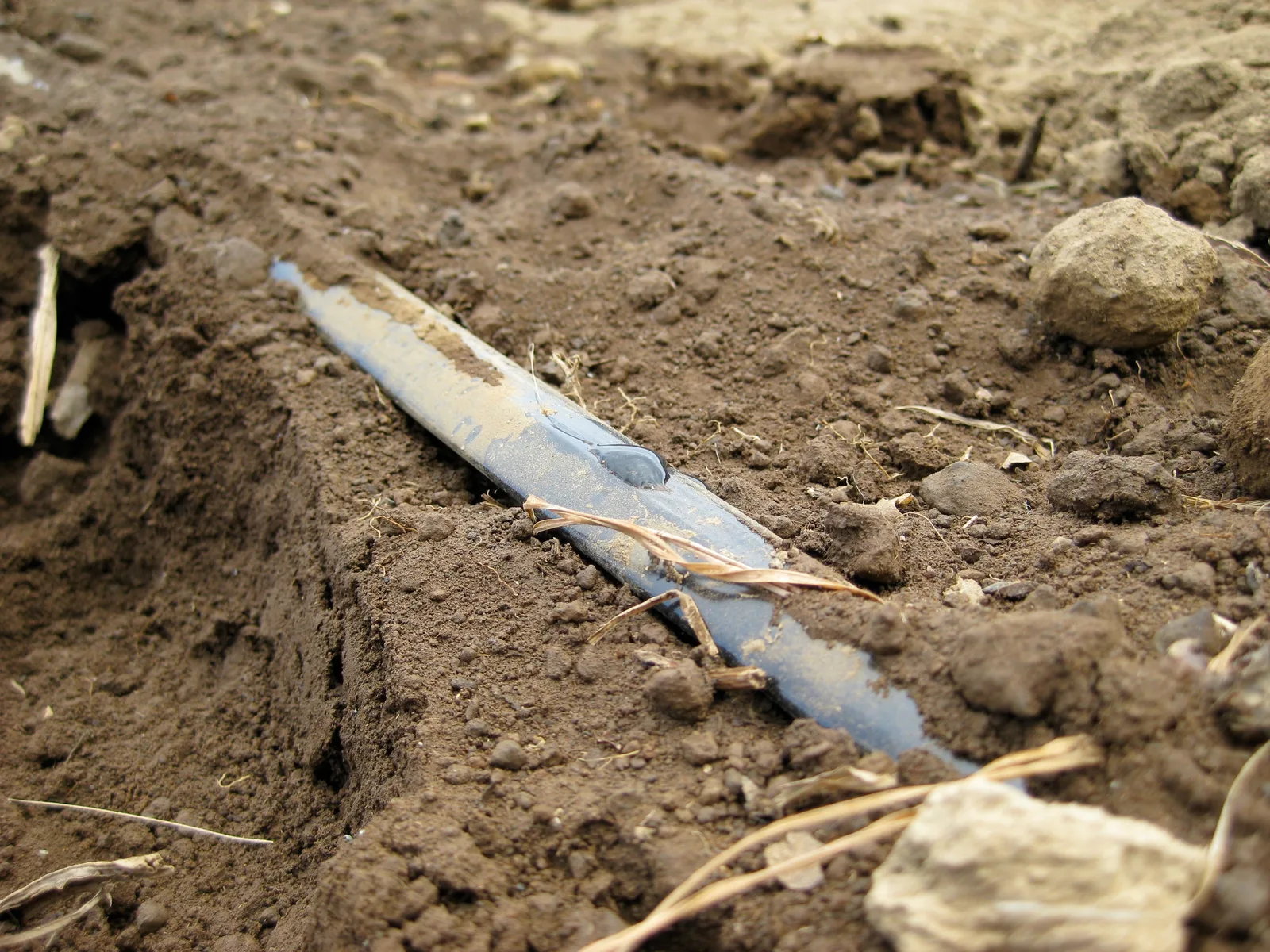
Make the watering decision at the bed, then adjust the equipment. Check both the emitter nearest the inlet and the far end of the row. If one cabbage stays dry while another remains wet, extending the whole system runtime can worsen the imbalance. Use the drip troubleshooting guide to check delivery. For the next week, write down rain and irrigation days together. The point is to identify a repeated dry-then-soaked pattern you can change, not to force a perfect number onto variable weather.
Treat heavy rain as a harvest decision
A mature head can split after a sudden influx of water. Once a head is firm and useful, harvesting ahead of substantial rain is often the most straightforward choice. Illinois Extension notes that split internal tissue deteriorates quickly and recommends prompt salvage. Illinois Extension: Cabbage Inspect cracks immediately; use only sound portions and discard decay. A split head belongs at the front of the kitchen queue, not in a long-storage batch.
Extension guides also describe partially breaking roots to reduce water uptake when mature heads must remain briefly in the garden. That deliberately damages the plant and does not repair a split or guarantee extra storage time. For a small home harvest, first ask whether you can simply cut and refrigerate the ready heads. Do not use root disturbance on young or loose-headed plants, and do not repeatedly twist a plant in pursuit of a precise harvest date. Keep a clear list of which heads were disturbed so they are harvested soon.
Protect the center without stripping the wrapper leaves
Inspect the underside of leaves and the midribs for caterpillars and dark droppings. Imported cabbageworm larvae may also feed inside heads. Maryland Extension recommends hand removal and exclusion covers as useful controls. University of Maryland Extension: Imported cabbageworm Remove a confirmed pest when found, then check neighboring plants. A few outer-leaf holes are an inspection prompt; they do not justify removing every imperfect leaf and exposing the entire head.
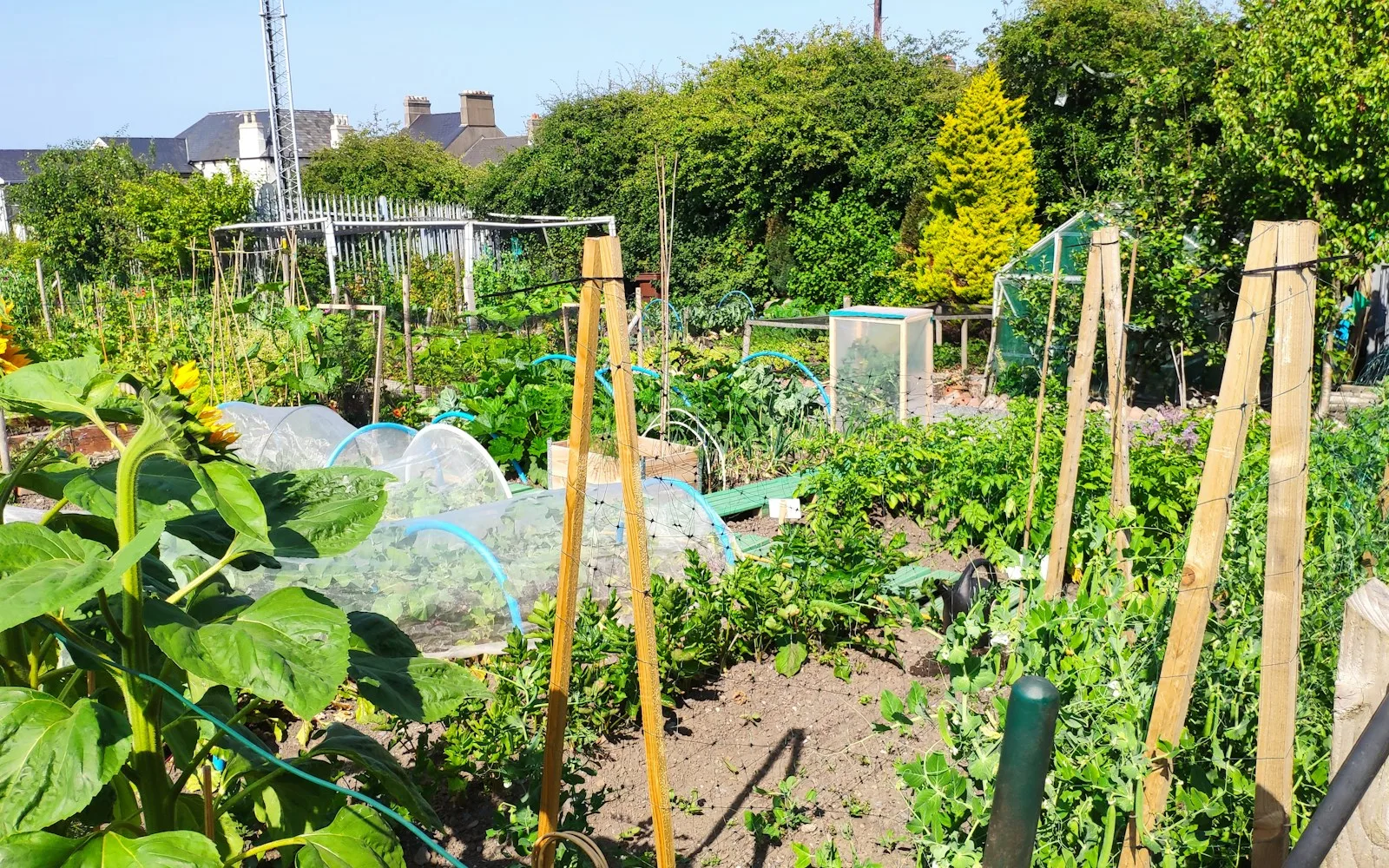
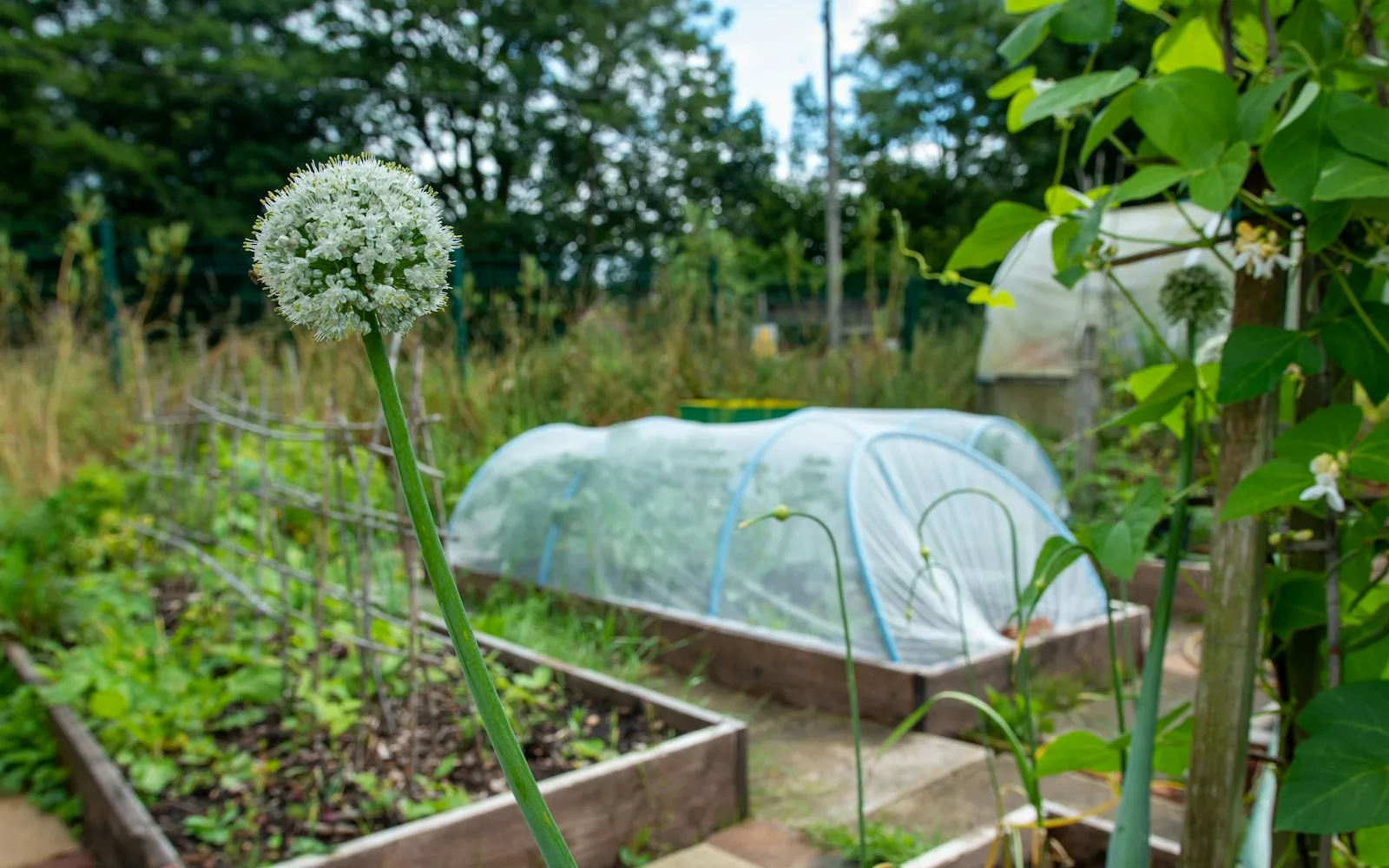
Where exclusion is needed, choose a cover you can open for inspection and reseal after each visit. Check its height against the mature plant, not the size of the transplant. A cover pinned so tightly that you must tug cabbage leaves to reach the center makes routine care harder. Use a regular access side and keep pins or weights visible. If damage continues under a cover, inspect for trapped pests and gaps before buying another material. The cover is part of a checking routine, not evidence that the crop is automatically protected.
Harvest for the kitchen and plan what happens to the stump
Cut below the head with a clean sharp harvest knife, directing the blade away from your supporting hand. Leave a few sound wrapper leaves around heads intended for storage. Utah State describes long storage under near-freezing, very humid conditions; that is a controlled storage environment, not an ordinary warm shed. Utah State University Extension: Cabbage in the garden For a household refrigerator, plan smaller batches and inspect them regularly rather than assuming a winter-long shelf life.
Decide separately whether to retain a healthy stump for possible small side heads or clear the bed. Keeping it means continued watering, pest checks and occupied space; it is reasonable only if those small heads are useful and the plant is healthy. Record cultivar, spacing, first firm-head date, usable weight and any splitting. That record makes next season’s decision concrete: choose a smaller head, change the planting window, improve irrigation uniformity or grow fewer plants so every ready head has a planned use.
Sources & further reading
We favor university extension guidance and original product documentation. Linked sources support the specific facts cited; they do not endorse Garden Gear Atlas.
- University of Minnesota Extension: Growing cabbage
- University of Maryland Extension: Growing cabbage
- Illinois Extension: Cabbage
- Utah State University Extension: Cabbage in the garden
- University of Maryland Extension: Imported cabbageworm
.jpg)