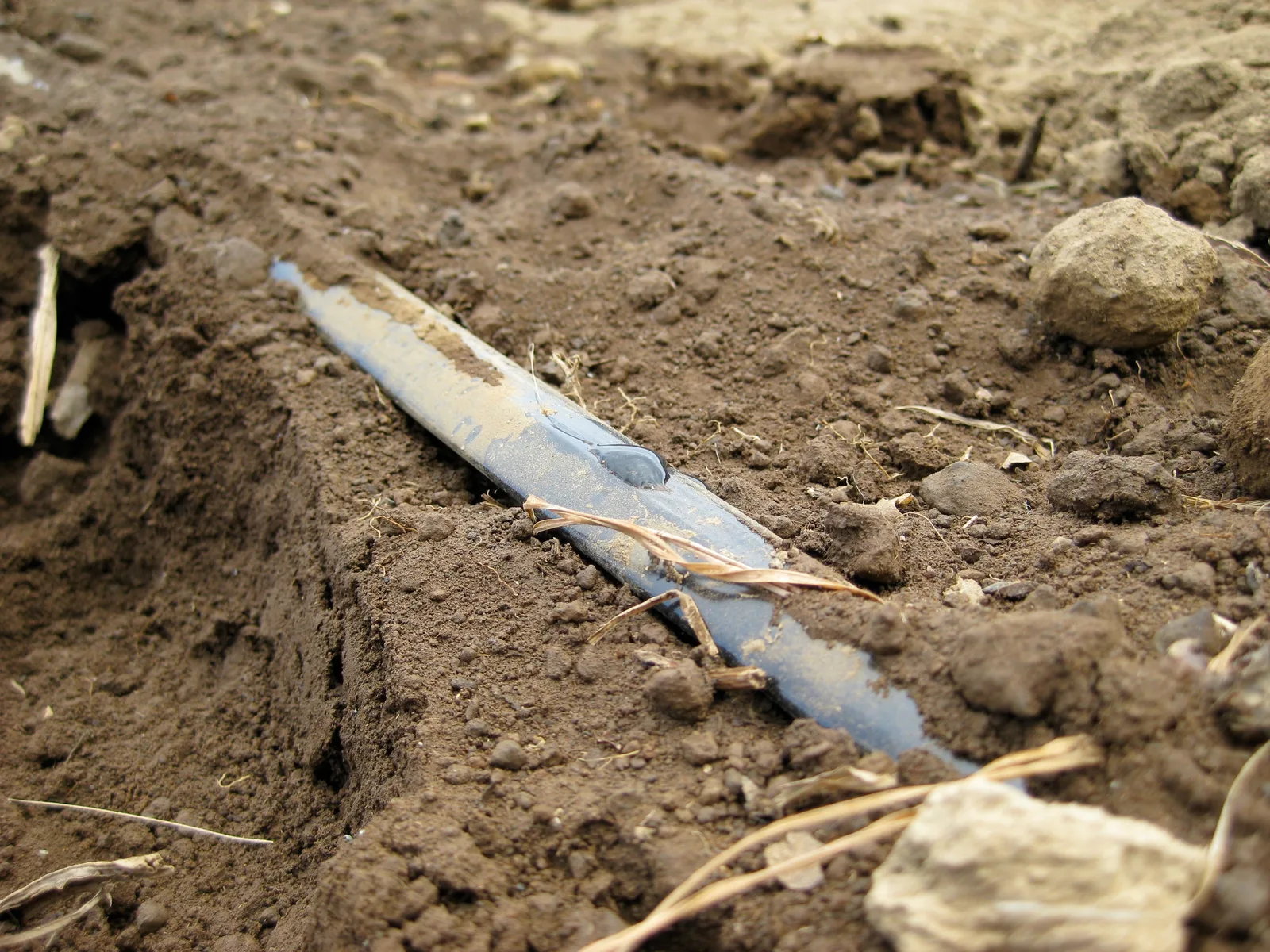

Describe the symptom before changing anything
A dry-looking plant is a reason to investigate, not immediate proof that its emitter is clogged. Begin with a short description: one outlet produces nothing, several distant outlets seem weak, water escapes beside a fitting, or all outlets appear normal but roots remain dry. These observations point to different parts of the system. Photograph the area and record the schedule before making changes.
Run the zone while you are present and walk its complete route. Note whether the trouble started after adding plants, moving tubing, cultivating the bed or changing the supply. Timing can be a useful clue. A new problem immediately after an extension deserves a flow-and-layout check; a single damaged spot after digging deserves a close inspection of that branch.
Do not change emitter size, runtime and pressure together. If the next run improves, you will not know which change helped. A deliberate one-change-at-a-time process usually produces a repair you can understand and repeat.
Use the scale of the problem to choose the next check
If the entire zone is off, first check whether the supply is available and the controller is actually commanding a watering event. Confirm manual shutoffs are in their intended positions and review delay settings. Do not assume a blank display, an app notification and a closed valve are the same failure. Consult the timer manual if operation is uncertain.
If one branch is affected, trace it back to the point where it separates from a working branch. Look for a kink, crushed section, disconnected fitting or closed local valve. If only one outlet is affected, compare it with a nearby outlet of the same model and flow rating. Similar-looking colors across brands do not prove equivalent emitters.
Colorado State Extension explains the importance of adequate emitter placement and a sufficiently wetted root area. An apparently working emitter can still be the wrong distribution pattern for an established plant. Keep a delivery fault separate from a layout that never watered enough of the roots. CSU home-garden drip guidance.
Compare output in a repeatable way
Where the component arrangement allows it without damage, collect water from comparable accessible outlets for the same measured interval. Use stable containers and avoid lifting or moving outlets in ways that significantly change their operating position. Record the collection interval, outlet identity and collected amount. The aim is a useful comparison, not a claim of laboratory testing.
Compare like with like. A nominal two-gallon-per-hour emitter is intended to deliver more than a one-gallon-per-hour model, so different collected amounts are not automatically a defect. Check the printed model or supplier record rather than relying on memory. An adjustable bubbler also cannot be treated as a fixed-rate emitter unless its documentation establishes the setting and conditions.
Rain Bird's SW10 documentation, for example, specifies a one-gallon-per-hour pressure-compensating emitter operating at 15–50 psi. Pressure compensation has an operating range; it does not promise correct output with any supply. Use your own emitter's data when interpreting a comparison. Rain Bird SW10 operating range.
Inspect the easy physical faults first
Look for tubing trapped beneath a pot, sharply folded around a bed corner or pulled tight by a moved support. Check that the intended outlet is still positioned at the plant rather than watering a path. Follow the line through mulch carefully instead of pulling blindly. A tug can create another loose connection while you are trying to find the first.
Water emerging beside a barb may indicate a damaged hole or mismatched connection, not an emitter that needs a longer run. Shut off and depressurize the zone before working on it. Use the manufacturer's compatible repair method and replacement parts. If the tubing is brittle or splits repeatedly, repeated patching may be less useful than replacing the affected section.
Keep flushing closures accessible when you rebuild a branch. A repair that buries every service point may look tidy but makes the next inspection harder. Mark any repaired location on a small layout sketch so you can revisit it after the following watering cycle.
Clean what is designed to be cleaned
Check the filter according to its instructions, with water shut off and pressure released. Keep removed seals and screens clean, inspect for damage, and reinstall them correctly. A missing screen or displaced O-ring can create a different problem from the original clog. Rain Bird's RBY075MPTX, for example, has an accessible stainless-steel screen behind an unthreading cap; serviceability is model-specific. Rain Bird filter construction.
Do not drive a pin through an emitter outlet or drill its passage larger. The passage is part of the delivery design, and an improvised opening no longer has the original rated behavior. Some emitters can be opened or cleaned; others are replaced as a unit. Follow the instructions for the exact product, and replace a suspect low-cost emitter with the correct model when repair is not supported.
Likewise, do not pour household cleaners or acids into the system on speculation. Recurring mineral or biological deposits call for water-quality and irrigation-specific advice. Chemical treatment requires compatible equipment, controlled procedures and appropriate backflow protection, not a guessed kitchen recipe.
Consider whether the network has outgrown the supply
If distant outlets weakened after expansion, total demand and line capacity deserve attention. Add the nominal flow of all devices on the zone, record tubing dimensions and run lengths, and give that information to the supplier. A larger supply tube alone does not establish that every downstream component or regulator can serve the revised arrangement.
UGA Extension recommends knowing available water output and garden layout when planning drip irrigation. Its guidance also includes flushing and maintenance. The practical lesson for troubleshooting is to revisit the original design assumptions after an expansion instead of treating every new dry spot as an isolated clog. UGA planning and maintenance.
Do not remove a regulator merely because flow seems weak. First check whether the selected regulator's flow range and inlet requirements match the zone. Bypassing a protective component can expose tubing and emitters to conditions they were not intended to handle.
Keep a simple repair record that prevents repeat work
Label the affected branch or mark its position on a small sketch before replacing anything. Record the symptom, which outlets were checked and the change made. If several identical emitters are present, put the removed part in a labeled container rather than dropping it among unused spares. This prevents a questionable emitter from quietly returning to the system later.
After the next few watering cycles, compare the original trouble spot with an unaffected reference point. If the fault returns, the earlier record helps distinguish a recurring supply or contamination problem from an isolated damaged component. Avoid writing only 'fixed drip': note whether you straightened a kink, cleaned the filter, replaced an outlet or reduced the number of simultaneously running branches. These are different interventions. Keeping the observation and action together also makes it easier to ask a supplier for specific help without buying another bag of emitters simply because it is the most visible replaceable part.
Confirm the repair in the soil
After reassembly, inspect for leaks and compare the previously affected outlets again. Then check moisture below the surface and between watering points. A visible drip is only one part of the result. Look at the area the plant can actually use, without repeatedly disturbing roots to make the inspection.
Keep a short record of the fault, cause, replaced part and follow-up result. If the same location repeatedly fails, investigate the recurring cause: movement, incompatible fittings, debris or an unsuitable layout. A spare-parts bag is useful; a record that prevents the same failure is better.
Finish with the smallest stable change that solves the identified problem. Extend runtime only when the system is delivering correctly and observation shows that more watering is appropriate. Otherwise, extra minutes can simply send more water to already wet plants while the original dry spot remains.
Sources & further reading
We favor university extension guidance and original product documentation. Linked sources support the specific facts cited; they do not endorse Garden Gear Atlas.
- CSU Extension: Drip Irrigation for Home Gardens
- Rain Bird SW10 emitter specifications
- Rain Bird RBY075MPTX filter
- UGA Extension: Drip Irrigation in the Home Vegetable Garden