
Draw the service route before opening anything
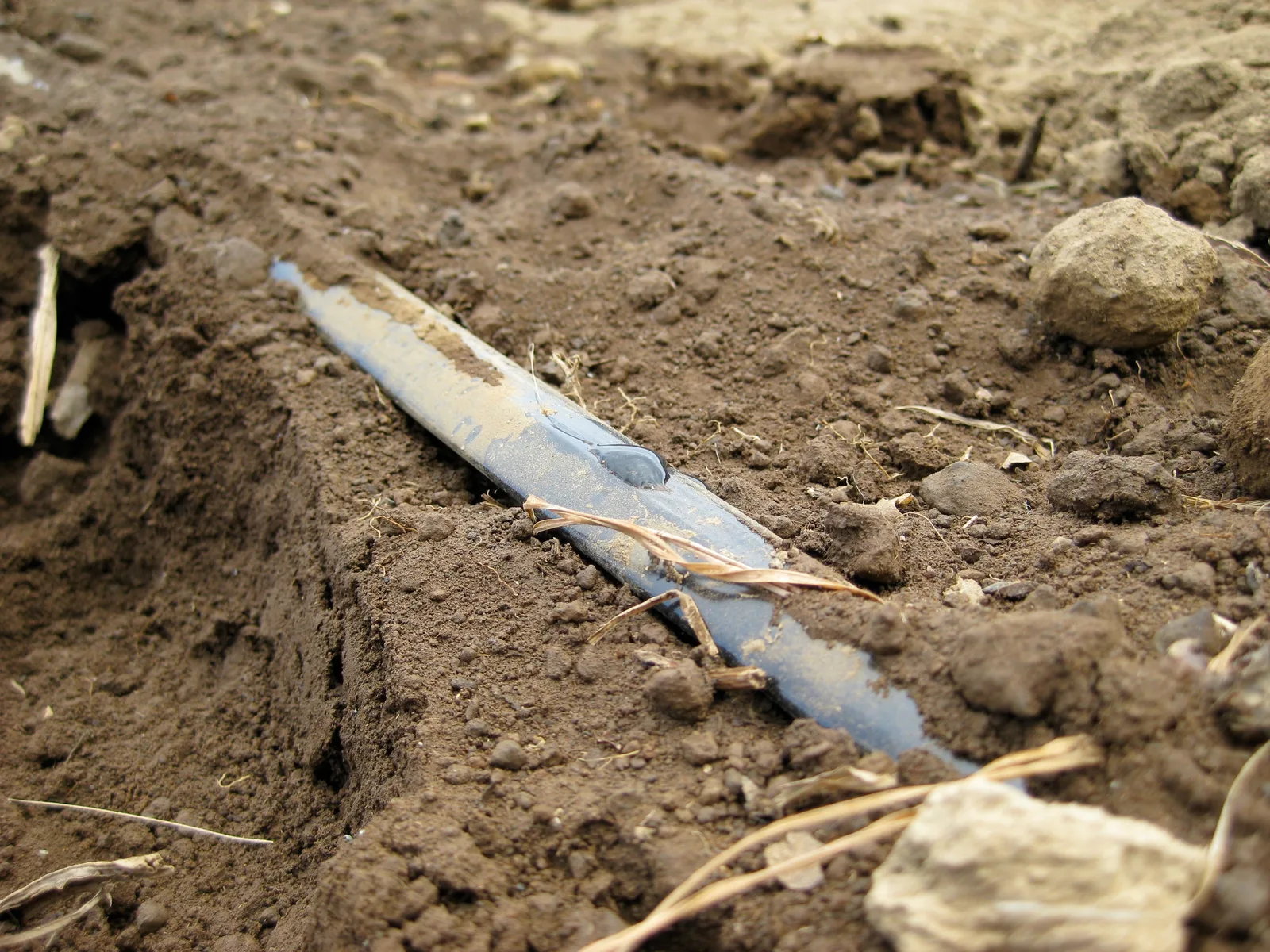
Walk the circuit while it is off and identify the water shutoff, portable head assembly, main distribution tube, branches, end closures and obvious low points. Look for places hidden beneath mulch, behind planters or inside a tangle of roots. Mark each service point on a sketch. If a line disappears underground, record that gap rather than assuming where it drains. The next maintenance session should begin with a route you can follow, not another search for buried ends.
Choose where discharge can go without washing soil from a bed, flooding a walkway or splashing a neighboring property. Keep line ends out of muddy puddles while they are open. Have a clean place for removed caps and washers. This preparation is particularly useful for gardens with several successive additions: the oldest mainline may terminate in a different place from the newest emitter tubing. Label the branches now so one can be flushed, closed and checked before you move to the next.
Separate sediment removal from winter draining
Flushing uses moving water to carry deposited material out of an open line. Draining removes retained water after the supply is shut off. They solve different problems and may require different openings. University of California guidance explains that small particles can pass through even a 200-mesh filter and collect inside drip laterals. Opening the ends allows that material to leave; normal emitter discharge is not equivalent to an unrestricted line-end flush. University of California: Flushing microirrigation.
For agricultural laterals, the university specifies an open-end flushing velocity and notes that only a limited number of laterals may be flushable simultaneously. The practical lesson for a small garden is to follow the tubing maker’s procedure and verify adequate discharge rather than opening every end at once. Do not borrow a flow figure from a different tube diameter. A weak trickle from ten open ends may be less useful than a properly supplied flush through one service section. University of California: Flushing microirrigation.
Choose closures for repeated access
A closure should be reachable and reusable for the maintenance you expect. Rain Bird’s EC50 closes compatible half-inch distribution or emitter tubing while allowing subsequent flushing, draining and extension without cutting the line simply to reopen it. Keep enough working space around a closure to release and refit it using the manufacturer’s method. Store a spare compatible closure where it can be found; an improvised plug should not become the permanent answer to a missing part. Rain Bird: EC50 end closure.
An automatic flush valve has a different operating mechanism. DIG describes a valve that releases a small amount of water as pressure changes at the beginning and end of a cycle. That behavior does not establish that an entire circuit is empty for winter, and its connection dimensions and pressure conditions still matter. If a valve discharges continuously, inspect its specified operating requirements rather than treating the discharge as proof of successful cleaning. A manual service opening remains valuable for observing what actually comes out. DIG: Automatic flush-valve operation.
Clean and flush in a controlled sequence
Turn off the supply and relieve pressure before opening a filter or disconnecting fittings. Follow the filter’s cleaning instructions and examine its screen and sealing parts. Rain Bird’s inline RBY design provides access through a removable cap with an O-ring. The manufacturer also requires the filter to sit downstream of a control valve and prohibits constant pressure. A convenient location is therefore only one part of choosing a correct installation. Rain Bird: Inline RBY filter.
For an existing garden, use the documented flushing sequence for its components. Keep newly opened tube ends clean, discharge away from vulnerable soil and note persistent sediment. Close the serviced section as directed, operate the circuit and inspect the closure as well as representative emitters. Repeat after a line break or repair that could admit dirt. Record which section carried debris and whether output changed after service; that creates a better diagnosis than simply increasing runtime when a plant later looks dry.
Plan shutdown for your climate and hardware
Choose the shutdown date from expected conditions and the vulnerability of the equipment, not a fixed national calendar. Rain Bird instructs users to remove the 1ZEHTMR from the water supply when freezing temperatures are expected. Illinois Extension also emphasizes disconnecting and draining garden hoses from outdoor spigots; leaving a hose attached can retain water where freezing can affect the connection. A mild winter last year does not establish that this year’s exposed timer or hose is protected. Rain Bird: 1ZEHTMR timer specifications. Illinois Extension: Winterizing outdoor plumbing.
Prepare an alternative watering method for any plants still growing after the automatic circuit is removed. A winter vegetable bed under cover, an evergreen container and a dormant border may need different attention. Label each stored assembly with its circuit name, photograph its order and keep its washers with it. Store components in the conditions specified by their manufacturer. Emptying an exposed filter or timer and protecting the building’s outdoor water supply are separate tasks; completing the first does not certify the second.
Account for trapped water instead of assuming drainage
A sloping line can have several low pockets even when its final end is open. Elbows, raised crossings, check valves and changes in grade may retain water. Hunter’s winterization guidance says manual drainage is suitable only where the system was designed with appropriate end and low-point drains. It also warns that flexible polyethylene does not make retained freezing water harmless. Use the instructions for the actual installation rather than a broad claim that a material can always stay outside full of water. Hunter: Irrigation winterization.
For a simple removable garden layout, disconnect and drain accessible parts as their instructions allow, then protect the openings from debris. For buried piping or a system whose drain paths you cannot establish, have the winterization method identified by a qualified irrigation professional. Compressed-air winterization introduces equipment-specific hazards; a household compressor and a generic pressure number are not a substitute for that assessment. Keep this task separate from routine water flushing. Write down any portion that remains unresolved so it cannot be mistaken for a completed shutdown. Hunter: Irrigation winterization.
Leave a restart record you can use in spring
Before putting parts away, record damage, replacement sizes, filter condition and where each line was opened. Keep one photograph of every finished end closure and one of the stored head assembly. Mark any valves or components that require a specific restart position. A short list of unfinished repairs is more useful than trusting your memory through several months. If a component is cracked, label it clearly and remove it from the bag of serviceable spares.
At restart, inspect the layout before admitting water and follow the documented flushing and filling sequence. Hunter recommends slowly restoring the water supply, manually operating each zone and checking pressure, coverage and component performance before returning to automatic watering. Adapt that inspection to drip by observing representative outlets and the wetted root area. Check repaired joints and service closures again during operation. Save the first normal-cycle measurements as the new baseline, using the flow and pressure guide when necessary. Set the schedule for current plants and weather after those checks. Hunter: Spring startup guide.
Sources & further reading
We favor university extension guidance and original product documentation. Linked sources support the specific facts cited; they do not endorse Garden Gear Atlas.
- University of California: Flushing microirrigation
- Rain Bird: EC50 end closure
- DIG: Automatic flush-valve operation
- Rain Bird: Inline RBY filter
- Rain Bird: 1ZEHTMR timer specifications
- Illinois Extension: Winterizing outdoor plumbing
- Hunter: Irrigation winterization
- Hunter: Spring startup guide