Choose the winter room before choosing the tree
Measure the indoor space that will hold the tree at its expected maintained size. Include the pot, saucer, branches, and the clearance needed to water it. Identify a route through doors and around furniture while carrying or rolling the container. A small tree that fits a summer patio can still be impractical if its winter destination is up stairs or behind an immovable radiator.
Dwarf describes a size-related characteristic, not independence from light or warmth. Wisconsin explains that citrus does not enter the leafless winter dormancy used by many temperate fruits. Its indoor-citrus guide distinguishes slow winter growth from dormancy. A dark garage therefore cannot be selected simply because another gardener successfully stores figs there. Evaluate citrus as a living leafy plant throughout its indoor stay.
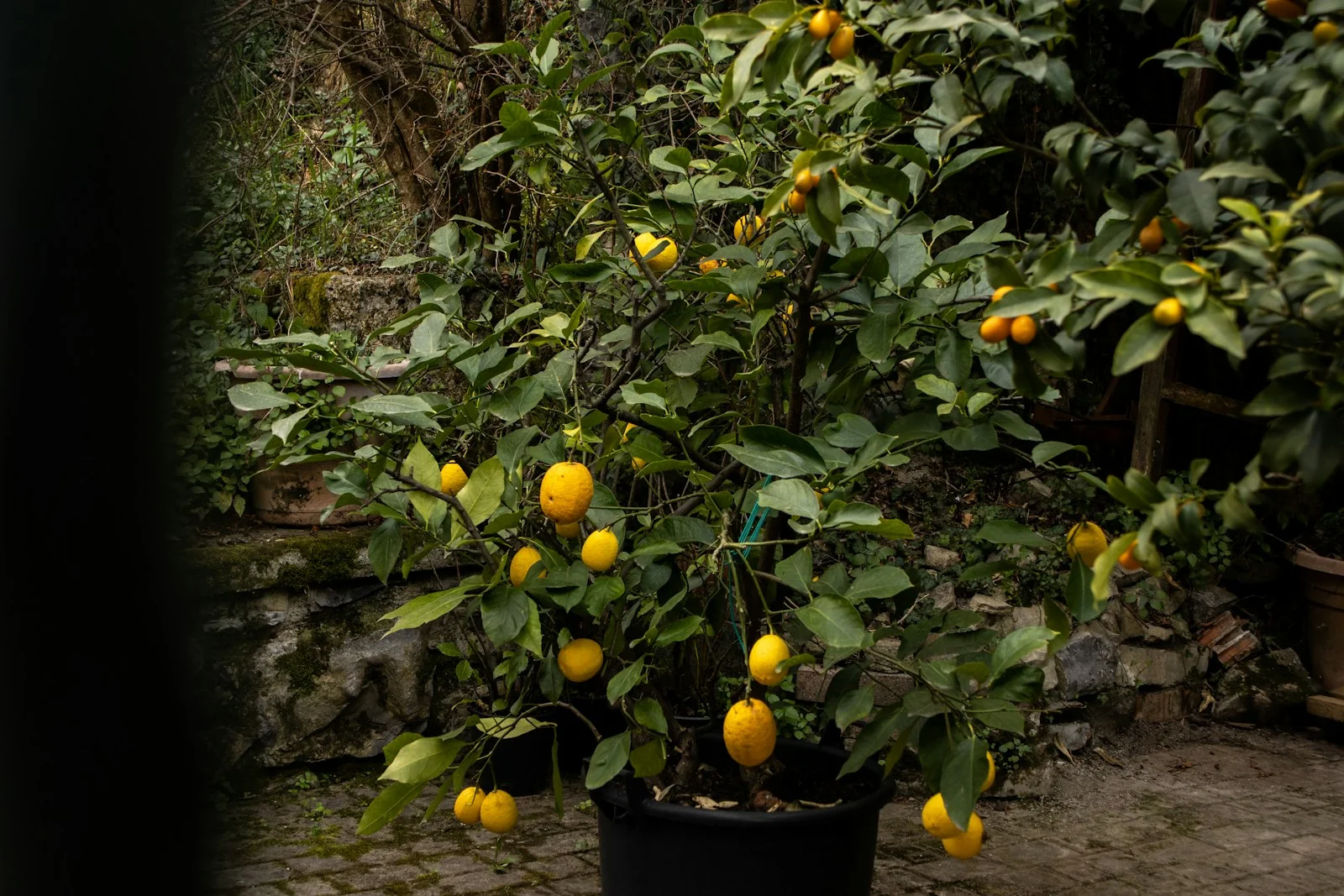
Write down the intended outcome: keeping an attractive tree healthy, encouraging flowering, or attempting a regular edible crop. Those goals demand different expectations from a marginal window. If you cannot provide a realistic winter environment, resolve that before buying a larger plant or more containers. A nursery photograph showing a heavily fruited specimen does not demonstrate what your room can support during its darkest months.
Assess light where the leaves will actually sit
Observe the chosen window across several days and note external shade, curtains, nearby buildings, and how far the foliage sits from the glass. The room can look bright to you while the tree receives little direct sun. Put the plant close enough to use available light without pressing leaves against cold glass. Leave a way to turn or inspect the container without scraping branches along the frame.
Iowa State recommends bright direct light and describes a west- or south-facing window with around six to eight hours of direct light as a useful indoor reference. It notes that plants may tolerate less light without flowering or fruiting. Its citrus guidance explains that difference. Window direction is only a starting clue; actual obstruction and season determine what reaches the foliage.
If supplemental lighting is needed, measure the canopy before shopping. Check that the fixture's documented coverage and mounting arrangement can illuminate the plant rather than one small central patch. Plan stable placement, safe clearances, and access to the pot. Avoid promising fruit from a bulb's wattage alone. An existing grow-light guide can help compare specifications, but this decision begins with the size and shape of the citrus canopy you need to light.
Move before the forecast turns the task into an emergency
Use local forecast lows and the cultivar's documented requirements to decide when to bring the plant in. Wisconsin recommends moving its outdoor container citrus inside before nights drop into the 40s Fahrenheit. That is a useful conservative regional reference, not a measured injury threshold for every citrus type or rootstock. Avoid leaving the move until a freeze warning arrives while the tree is inaccessible or too heavy to handle alone.
Inspect the pot, leaf undersides, stems, and branch junctions before entry. Look for insects, sticky residue, webbing, or attached scale-like bumps and identify what you find. Maryland lists several pests that can accompany citrus indoors. Its dwarf-citrus guide describes common pest problems. Diagnose before choosing a treatment, and use only a product labeled for the plant, pest, edible use, and intended application setting.
Clean the outside of the container and remove fallen material so the indoor setup starts easy to inspect. Keep the newcomer apart from other plants where practical while checking for developing problems. Record a photograph on arrival. That provides a baseline if leaf drop begins, and helps distinguish a change after the move from damage that was already present outside.
Relearn the pot's drying pattern indoors
Do not carry the summer watering schedule into the house unchanged. Check the mix and original root ball, water when indicated, and let excess water drain fully. Then empty the saucer or outer cover. The useful cycle is thorough wetting followed by appropriate drying, rather than frequent small splashes intended to make the surface look attended. Record the first few intervals so another household member can understand the routine.
Minnesota's citrus guidance calls for a moist growing medium without persistent saturation and emphasizes a suitable indoor environment. Its indoor-growing article provides a practical starting framework. Your interval will still depend on pot size, mix, light, temperature, and growth. A calendar reminder should trigger a moisture check, not force watering a pot that remains wet.
For a worked decision, compare a tree that was thirsty outdoors with the same pot after a cloudy indoor week. The unchanged container has not guaranteed unchanged demand. If the mix remains wet, delay watering and investigate drainage and conditions instead of adding water because it is Saturday. If the root ball dries while the surrounding fresh mix stays wet, target the actual wetting problem before considering an even larger pot.
Match temperature, humidity, and feeding to the room
Measure conditions beside the foliage, particularly overnight near glass and during heating cycles. Avoid hot forced air blowing directly across the plant and repeated exposure to an opening exterior door. A thermostat across the room cannot tell you the coldest temperature at the container. Choose a stable location you can monitor rather than moving the tree between bright cold windows and dark warm corners every day.
Maryland describes moderate indoor temperatures and recommends increasing humidity where household air is dry. Use a monitor to judge whether a humidifier would solve an observed problem, and operate it according to its cleaning instructions. Do not crowd wet containers together until leaves cannot dry or condensation accumulates on nearby surfaces. The aim is a workable environment for the plant and room, not a constantly damp enclosure.
Follow a citrus feeding program appropriate to its active growth and product label. Reduced winter growth is not a reason to repeatedly add nutrients in hopes of forcing a crop from inadequate light. Record the last application before changing products so doses do not overlap accidentally. When leaves yellow, consider roots, light, pests, and moisture first; the color alone does not identify which nutrient, if any, is missing.
Handle flowers and the spring return with realistic expectations
If flowers open indoors, consult the cultivar's pollination requirements. A small dry brush can move pollen where hand pollination is appropriate, but pollen transfer cannot correct every reason a flower or young fruit drops. Keep the tree's environment steady and record flowering and fruit development. Judge its performance over a full cycle, rather than interpreting one lost flower as proof that the plant needs a second tree.
When outdoor conditions are reliably suitable, acclimate the tree gradually in a sheltered position before stronger sun and wind exposure. A leafy plant that has spent months behind glass should not be placed abruptly in the brightest open patio corner. Check pot moisture more often during this transition because the conditions that controlled indoor drying have changed again. Keep the moving equipment ready in case the local forecast requires temporary protection.
Before the next winter, review whether the tree still fits its route and lighted area. If it has outgrown the destination, plan suitable size management or a different container arrangement while there is time to do the work carefully. A sustainable citrus collection is limited by the winter environment you can provide, even if the summer patio has room for several more pots.
Sources & further reading
We favor university extension guidance and original product documentation. Linked sources support the specific facts cited; they do not endorse Garden Gear Atlas.
- Wisconsin Extension: Indoor citrus
- Iowa State Extension: Growing citrus indoors
- University of Maryland Extension: Growing dwarf citrus
- University of Minnesota Extension: Growing citrus indoors