Choose the problem you are solving today
Stand back before touching the plant. Is it a small transplant sitting in cool soil, a leafy plant dropping flowers during hot weather, or a fruit-laden plant leaning toward the path? Each needs a different action. A larger cage cannot warm the root zone; additional feed cannot hold a heavy branch upright. Make the first decision from plant stage and recent weather, then assess support and water together.
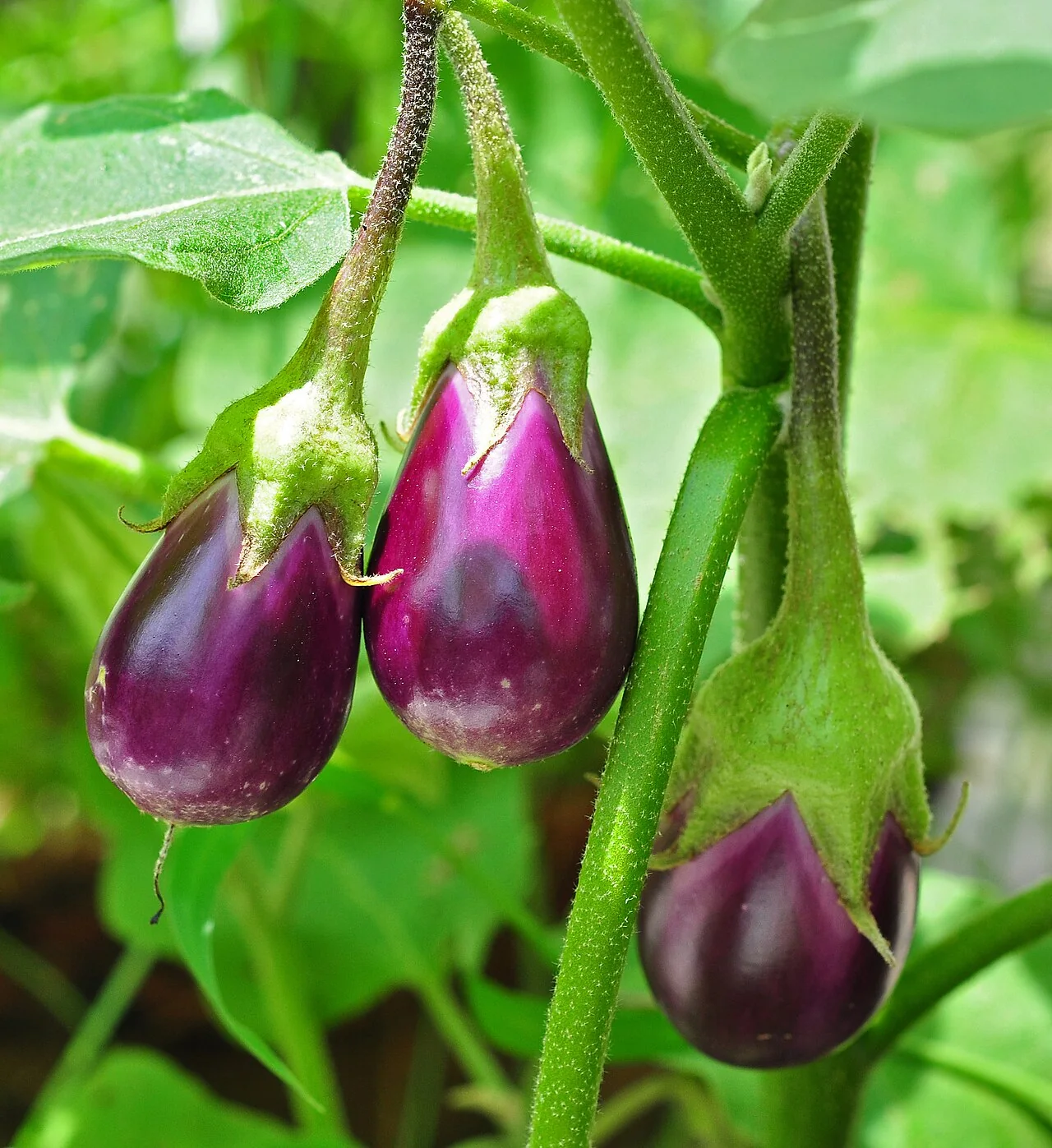
A simple record helps separate those causes: cultivar, planting date, recent night lows, the number of developing fruits and where the plant is leaning. Count enlarging fruits rather than every flower. If two neighboring plants behave differently, compare their exposure and soil moisture before assuming the weaker one needs feeding. Keep the eggplant profile handy for basic growing requirements; this guide concentrates on the changing work as a supported plant enters fruit production.
Wait for warmth that lasts through the night
Utah State’s crop guide describes favorable growing conditions around 75–85°F by day, with nights above roughly 60–65°F for eggplants and peppers. These are growing preferences rather than a guarantee that every flower will set. Utah State University Extension: Solanaceous crop planting and spacing A warm afternoon following cold nights can make the garden feel more ready than its root zone actually is.
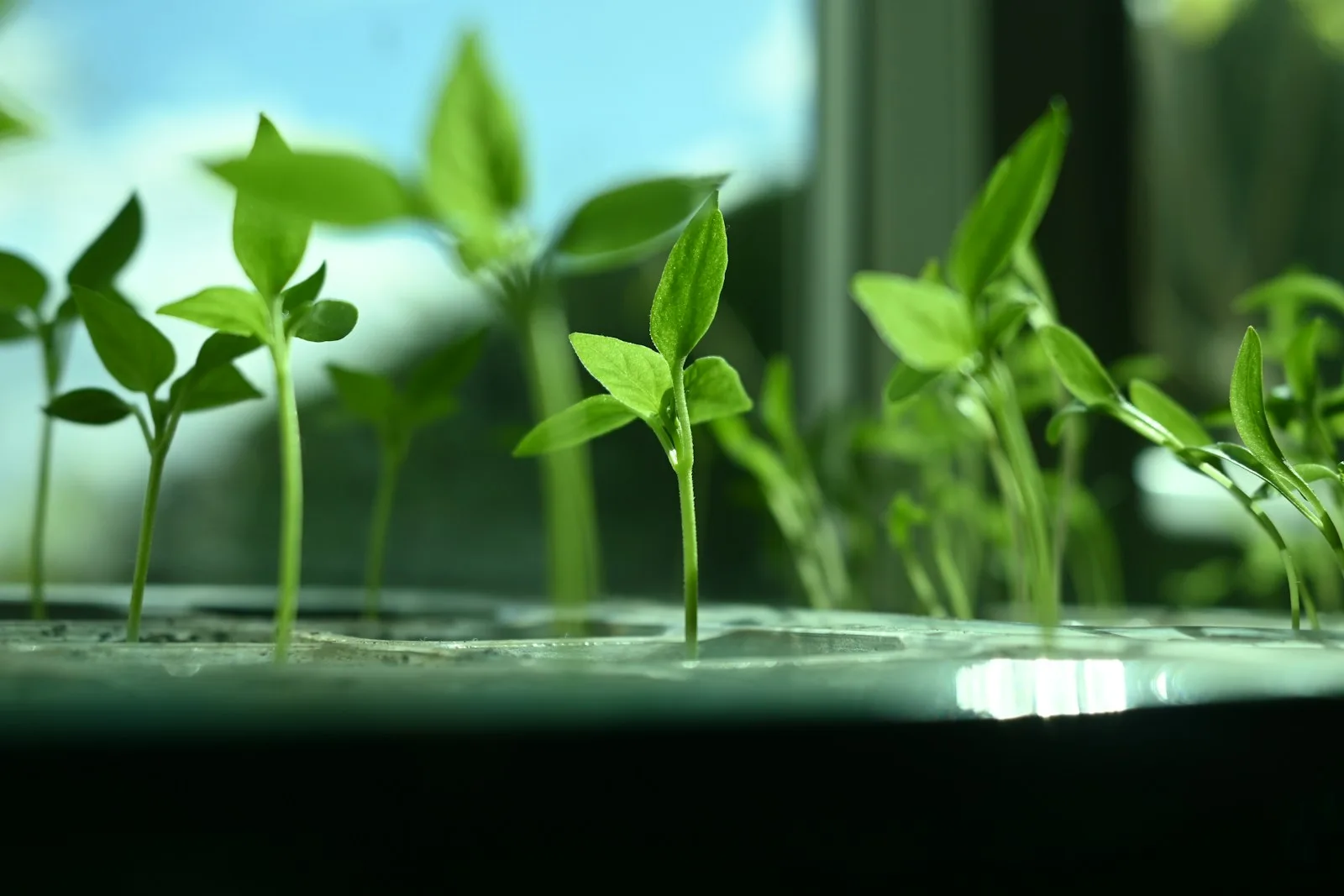
For planting, Minnesota Extension advises waiting until night lows stay above 50°F and recommends installing support at planting. University of Minnesota Extension: Growing eggplant Check your local forecast and soil conditions together. If a transplant needs to wait, keep it growing in suitable light and pot it on if its current cell has become restrictive. Set a date to review the forecast instead of moving it outside merely because tomatoes are already planted. On a cool site, an early locally adapted cultivar can be a better investment than trying to compensate for a long-season selection with ever more equipment.
Fit support to the plant and your harvest reach
Maryland Extension recommends cages or trellises to prevent eggplants falling over. University of Maryland Extension: Growing eggplant Select a support that contains the expected branching habit while leaving openings through which a hand, fruit and pruner can pass. A narrow support may hold the central stem yet leave outer fruiting branches unsupported. A tall cage with small openings can also make a compact plant surprisingly awkward to harvest.
For one plant, sketch the likely support footprint and stand at the side from which you will pick. Place the support before roots spread widely, following its assembly and anchoring instructions. Do not treat a lightweight container or a shallow raised-bed fill as equivalent to firm ground. An existing tomato cage may be useful if its height, opening size and anchoring suit your cultivar. The Titan Tall Tomato Cages are an inventory option to compare, but a large model is unnecessary for every dwarf eggplant.
Make ties carry stems without pinching them
Guide a stem into position while it is still flexible; do not force an established branch sharply against its existing direction. Support it below a sound branching point where practical and leave room for thickening. Keep the fastener from rubbing directly against fruit. After adding a tie, gently release your hand and see what actually takes the load. If the branch still hinges at one weak point, merely tightening the tie is not the answer.
Soft adjustable garden ties can help with this task, provided you inspect and loosen them as growth changes. At each harvest, check for constriction, rubbing and branches caught outside the cage. Reassess after wind or a new flush of fruit. If an already damaged branch cannot be repositioned without further cracking, harvest usable fruit from it and make the plant manageable; do not build a complicated suspended load over a path. Keep all work reachable from the ground.
For a loaded branch, rehearse the harvest with the pruner closed. You should be able to hold the fruit, see the stem to be cut and keep your other fingers clear without pushing hard on adjacent branches. If a cage opening prevents that movement, select a different approach angle or harvest the obstructing ready fruit first. Do not reach blindly into prickly foliage or bend a heavy branch outward merely to match the easiest cutting angle.
Change your heat strategy when the season changes
Early-season warming and midsummer heat protection are different decisions. Utah State notes that organic mulch should wait until soil is warm and that covered eggplants require ventilation as temperatures rise. It also warns that erratic watering can reduce fruit quality or contribute to root problems. Utah State University Extension: Eggplant in the garden A cover that helped a young plant in cool weather should not remain unchecked through a hot spell.
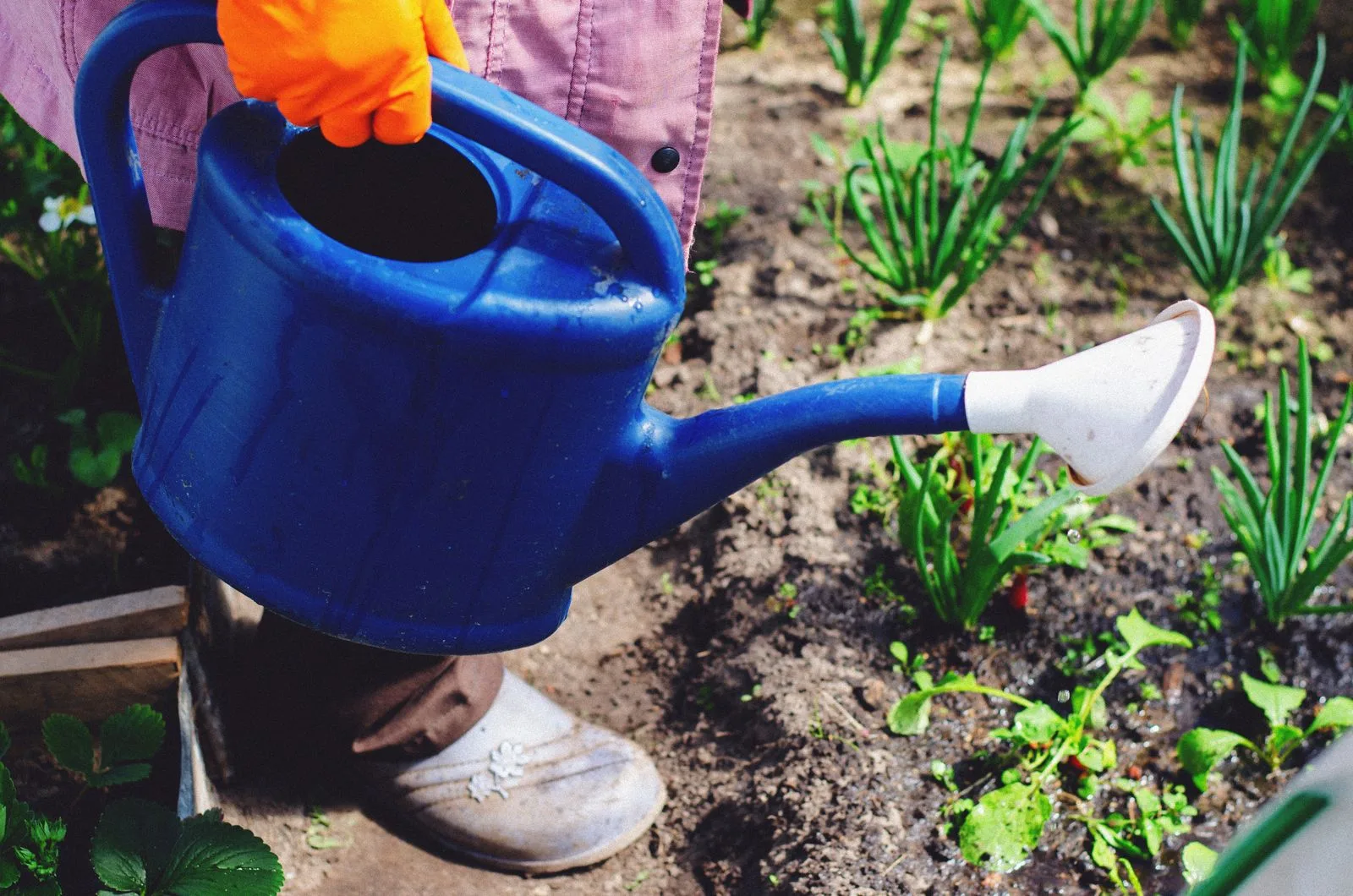
During heat, inspect moisture below the surface before watering. Compare the sunny edge with the shaded side of the root zone, and verify that water enters the growing medium rather than escaping along a dry pot edge. Temporary shade can be useful where exposure is severe, but it needs an independent secure support and a plan for removal when conditions moderate. Avoid making the whole plant permanently dark. For container plants, the hot-weather watering routine helps connect daily checking with what the pot actually absorbs.
Keep useful foliage while checking flower loss
Do not strip a plant to make its fruit more visible. Minnesota Extension identifies both temperature stress and inadequate leaf protection as problems: extreme conditions can impair flowering, and exposed fruit can develop sunburn. University of Minnesota Extension: Growing eggplant Assess the canopy before cutting leaves. A leaf brushing a support may be repositioned; it does not automatically need removal.
If flowers fall but established fruit keeps enlarging, record the weather and continue basic care. If the whole plant stalls, inspect new leaves, stem bases and water delivery as well. Illinois Extension identifies flea-beetle holes as especially consequential on young eggplants. Illinois Extension: Eggplant Look for the actual beetles before choosing a response. A few holes on an otherwise vigorous mature plant have a different significance from rapid loss of a transplant’s few leaves. Avoid reflex feeding when the root zone remains cold, saturated or alternately dry and flooded.
Harvest early enough to reduce both load and waste
Judge fruit against the cultivar description and its glossy, fresh appearance. A long slender type does not share the same useful size as a round purple type. Maryland Extension recommends harvesting before full seed maturity and cutting the stem; leaving overmature fruit reduces productivity. University of Maryland Extension: Growing eggplant Use a clean pruner and support the fruit with your free hand so the branch is not jerked.
Illinois Extension notes that the cap and stem can be prickly and that fruit bruises easily. Illinois Extension: Eggplant Harvest into a shallow container, keeping cut stems from scratching neighboring fruit. On your first picking, cut one fruit in the kitchen and use its tenderness and seed development to calibrate the next visit. Write down the size that worked for your meals. A plant carrying several ready fruits may need harvesting more than another tie. Finish by checking that the reduced load has not left a loosened branch rubbing against the cage in the wind.
Sources & further reading
We favor university extension guidance and original product documentation. Linked sources support the specific facts cited; they do not endorse Garden Gear Atlas.
- Utah State University Extension: Solanaceous crop planting and spacing
- University of Minnesota Extension: Growing eggplant
- University of Maryland Extension: Growing eggplant
- Utah State University Extension: Eggplant in the garden
- Illinois Extension: Eggplant
.JPG)