Make a checking schedule, not an automatic watering rule
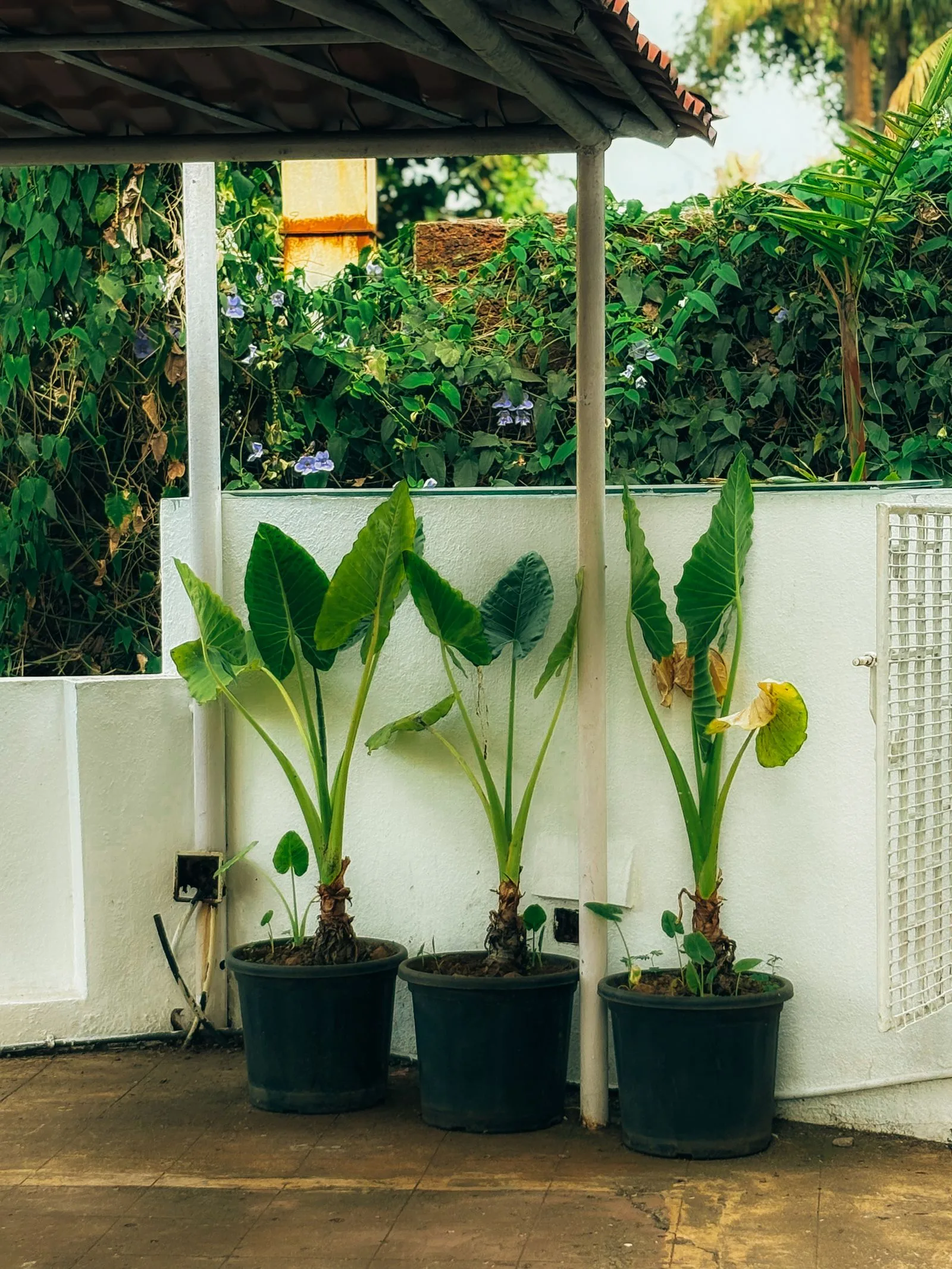
A watering reminder should tell you to look, not force the same dose into every pot. The RHS recommends daily moisture checks in warm or windy weather and twice-daily checks in hot weather, including after rain. That is a checking frequency, not a requirement to water every container twice a day. RHS summer container maintenance.
Create an easy route past your containers, beginning with those that have dried fastest in previous checks. Record which pots needed water and which remained moist. After a few observations you will have a more useful priority list than 'all plants on the sunny patio.' Repeat the assessment as plants grow, weather changes or a pot is moved. Yesterday's result is a starting point, not a guarantee.
Check below the surface and water the medium
Feel the growing medium below its top layer rather than deciding from surface color alone. The RHS recommends checking moisture within the pot, watering slowly and directing water onto the medium rather than the leaves. Light rain can leave the deeper root zone dry. Its guidance aims to stop before, or as soon as, drainage appears rather than continuing to flush water through an already wetted pot. RHS container-watering method.
University of Maryland likewise recommends thorough watering instead of brief surface sprinkles and warns that covered patios may prevent rainfall reaching pots. Together, the practical goal is to wet the root zone evenly and then allow excess water to leave, not to achieve a particular amount of runoff. UMD container watering.
If a manageable pot can be lifted safely, learning its weight when watered and when drier provides another clue. Illinois Extension notes that containers become lighter as they dry. Do not lift a large or awkward planter simply to perform this check. Illinois watering checks.
Recognize water that bypasses a dry root ball
Water escaping quickly is not always proof that the pot has absorbed enough. Maryland Extension describes dry medium shrinking away from container walls, creating a gap that channels water past the roots. Repeated, patient wetting may be needed to rehydrate it. For an appropriately small pot, the same guidance describes temporary partial immersion until moisture returns through the medium. Let excess water drain afterward. UMD rehydrating dry containers.
Check more than one location after watering a badly dried pot. If the center remains dry while the edges are wet, correct that unevenness before returning to an ordinary routine. A timer that repeats a short cycle may keep following the same bypass route. Treat recovery watering as a supervised task rather than assuming an extra scheduled minute has fixed it.
Use shade and timing to reduce the load
University of California's container heatwave guidance recommends watering early and checking water temperature from a hose before directing it at roots. Water left in a sun-heated hose can be hot. The same guidance suggests temporary shade for movable pots or supported shade cloth where moving them is impractical. Keep any temporary structure secure and clear of the plants. UC container heatwave guidance.
Think of temporary shade as a targeted adjustment, not a reason to move every sun-loving crop into permanent darkness. Make the smallest useful change and observe the result. Do not drag a heavy, filled pot across an unsafe surface or lift it by handles without considering the load. Access for watering and a clear walking route still matter during a heatwave.
Let container design inform your priorities
Illinois Extension notes that clay, fabric and unglazed ceramic containers can lose moisture faster than less porous plastic or glazed pots. A fabric grow bag may suit your space while asking for more frequent checks. That is a maintenance tradeoff, not evidence that one material is always better. The same guidance emphasizes choosing enough root volume for the crop and providing drainage holes. Illinois container-material tradeoffs.
NC State Extension also identifies container size, material and color as relevant growing conditions. In a future planting, choose a suitable root volume and consider how exposed the pot itself will be to sun. Do not try to fix a cramped or poorly draining setup only by changing timer duration. NC State container design.
Treat automation as a delivery system
A small drip kit can reduce repeated hand-watering, but pots with different crops and volumes may need different delivery. Rain Bird's PATIOKIT includes both 1 GPH and 2 GPH emitters, illustrating why device selection matters. Its listed layout is for up to eight planters; that is not a guarantee that any eight pots need an identical schedule. Rain Bird patio-kit specifications.
Before relying on automation, run it while you are present. Check every outlet, the wetting pattern in each pot and the result at the end of the cycle. Repeat that check after moving containers or disturbing tubing. For a reservoir-style planter, follow its filling, overflow and growing-medium instructions; an intentional reservoir is not equivalent to an ordinary pot sitting indefinitely in a full saucer.
Avoid turning heat stress into another problem
Do not assume more fertilizer will rescue a struggling plant. UC's heatwave advice recommends holding off on feeding stressed plants until conditions improve. It also suggests mulch while keeping it away from stems. Mulch can help moderate the surface environment, but it does not remove the need to check moisture. UC heat-stress care.
If a pot remains wet and the plant looks unwell, adding more water without investigating is not a sensible default. Check for blocked drainage and an overly dense medium; the RHS highlights both as container problems. A persistently declining plant may need plant-specific diagnosis rather than a blanket watering adjustment. RHS drainage troubleshooting.
Leave a routine someone else can follow
Before time away, label pots or groups and leave a short description of what to check. Show the helper how to inspect moisture, which reservoir needs filling, and where excess water should drain. Do not leave only 'water daily' if your own observations show different needs.
After the hot spell, reassess instead of leaving emergency settings running indefinitely. The useful habit is a short feedback loop: check, water when needed, confirm absorption, and adjust. That routine remains valuable whether your equipment is a watering can, a hose or a timed drip system.
Sources & further reading
We favor university extension guidance and original product documentation. Linked sources support the specific facts cited; they do not endorse Garden Gear Atlas.
- RHS: Container Maintenance
- RHS: How to Water Containers
- University of Maryland: Maintaining Container Grown Vegetables
- Illinois Extension: Six Tips for Watering Container Gardens
- UC Agriculture and Natural Resources: Caring for Container Plants During Heatwaves
- NC State Extension: Plants Grown in Containers
- Rain Bird: PATIOKIT manufacturer specifications