Buy a named habit as well as a color
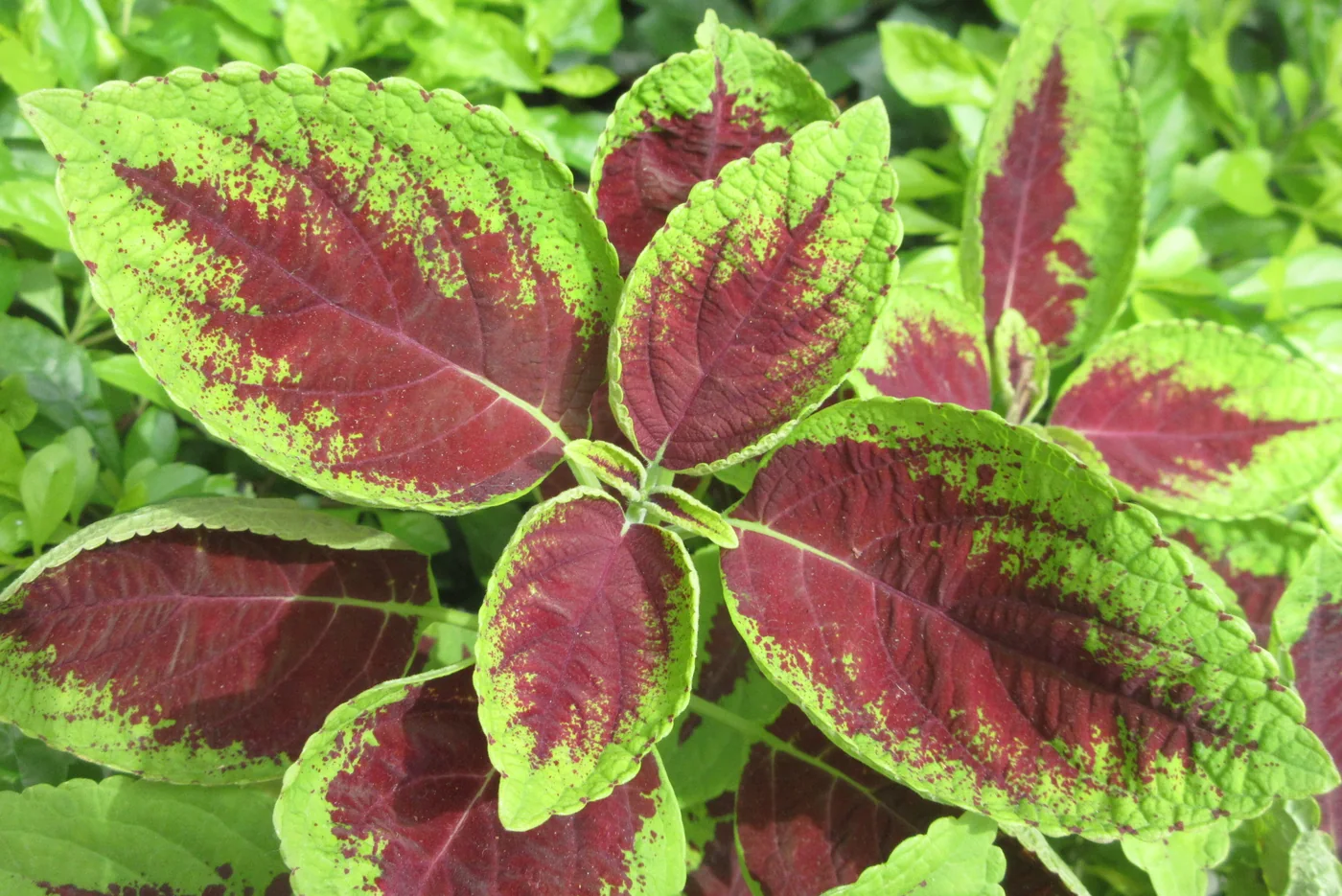
Coleus is often chosen by a single leaf: a bright center, a dark border, or an unusual ruffle. A useful purchase also needs a habit. Decide whether the plant must fill a low bowl, form an upright accent, or spill from an edge before comparing colors. A selection that naturally fits its position reduces the amount of corrective cutting you will need later.
Older labels may use Plectranthus scutellarioides or Solenostemon scutellarioides for this familiar foliage plant. UF/IFAS uses Coleus scutellarioides as the current name. UF/IFAS: coleus
Keep the cultivar label with a photograph of the whole plant. If you buy an unnamed mixed tray, accept that its final proportions and color response are less predictable. That can be enjoyable for an experimental pot. For matching pots at an entrance, buying consistently labeled plants gives you a clearer starting point and makes a disappointing result easier to trace.
Match the light claim to the actual position
Read sun tolerance as a claim about a particular selection. Florida's breeding program has developed coleus for sunny conditions, while traditional shade selections remain available. UF/IFAS: coleus
Before planting an entire border, place a trial pot in the intended location and observe it through ordinary bright weather. Record when sun reaches the foliage and whether a wall reflects additional heat. Keep a separate note about the root zone: color change accompanied by a dry pot needs a different response from color change in a well-watered plant.
If the planting must occupy an exposed site, begin with a clearly labeled sun selection. If the cultivar is unknown, a location with relief from the harshest exposure leaves more room to learn. Moving a portable pot is a practical experiment; moving a whole established border is a larger investment. Use that difference when deciding how many plants to buy initially.
Treat the pot as part of the planting design
Choose a pot whose opening allows you to reach the mix after the canopy fills out. The best-looking combination at purchase can become awkward if every surface is covered by stems. Leave a route for a watering spout and room to inspect the base of the plant. A saucer that cannot be emptied or a decorative outer pot that hides standing water complicates routine care.
Separate strongly different watering needs into separate pots. You can still place them together visually. If a trailing companion occupies the coleus crown, rearrange or remove the companion before making the coleus smaller merely to accommodate it. The container drainage guide explains how the vessel and its outlet work together.
Select container size from the root ball and intended display, then calculate the mix required. Buying an oversized decorative vessel solely to avoid watering may exchange frequent checks for a heavy pot with a large, hard-to-assess wet volume.
Use the root zone to interpret a wilted canopy
A limp canopy is a reason to inspect, not an instruction to refill automatically. Check the mix in the original root ball and the surrounding medium. After watering, make sure water has actually reached the planted area rather than escaping down an edge. Observe whether the plant recovers as conditions become less demanding, and compare its response with any neighboring coleus under different exposure.
Repeated rescue watering should prompt a design review. Ask whether the pot is too difficult to reach, whether roots have filled the available space, or whether the chosen site exceeds the selection's practical tolerance. A larger watering can changes carrying capacity; it does not resolve those questions. The hot-weather container watering routine helps turn a vague daily chore into a check of individual pots.
Avoid changing fertilizer, light, and watering simultaneously. A clear record of one adjustment provides more useful information than a sequence of untraceable treatments.
Make shape a deliberate choice
Pinching stem tips can encourage a bushier plant. Coleus has opposite leaves on angled stems, so the leaf pairs provide visible landmarks when examining shoots. NC State Extension: coleus
Start by deciding which outline you want. A single shoot sticking above an otherwise rounded plant is a different job from an upright specimen that belongs behind lower companions. Stand back before cutting, identify the offending shoot, and retain enough existing canopy to preserve the display. Do not assume that every plant needs the same amount removed simply because they share a pot.
The coleus color and pinching guide separates a light problem from a shape problem. That distinction matters when a plant looks sparse: repeatedly shortening it may keep it within bounds while leaving the unsuitable growing conditions unaddressed. If your selection already fills its allotted space evenly, observing it may be the most useful maintenance action.
Keep a favorite through cuttings only when space supports it
Illinois Extension describes coleus propagation using a stem tip cut below a leaf joint and inserted into loose rooting medium. This is a way to preserve a selected plant's characteristics through vegetative growth. Illinois Extension: stem cuttings
Treat the resulting starts as a separate project with a real destination. Count available bright indoor positions before taking numerous cuttings. A small set of labeled starts that you can inspect is more manageable than a crowded tray of unlabeled favorites. Keep the parent identity, date, and intended spring use together so the winter effort produces something you actually want to plant.
Before propagating a named selection, check its label for any propagation restrictions. If saving the cultivar is impractical, record why you liked it and plan to buy it again. Purchasing a replacement can be a sensible choice when indoor space is already committed to established houseplants.
Plan the indoor transition before the outdoor display ends
Illinois Extension identifies coleus as a tender perennial suitable for overwintering and advises choosing healthy plants, inspecting them, and gradually acclimating saved plants back outdoors in spring. Illinois Extension: overwintering favorites
Choose between bringing a manageable plant inside and maintaining small starts. The large patio pot that looked proportionate outdoors may block a window or become difficult to water on an indoor floor. Try the empty footprint in the intended room before committing. Keep room for inspection around the leaves instead of pressing them between other plants.
An indoor coleus does not need to maintain its exact outdoor appearance to make the project worthwhile. Set a practical objective: preserving a useful plant for next season, or enjoying an attractive houseplant now. Those goals may demand different amounts of space and attention. If the indoor position cannot support either, end the seasonal planting deliberately and keep good cultivar records for spring.
Judge success by repeatable performance
Compare photographs taken from the same position and at a similar stage of growth. A close-up of the best leaf says little about how the whole plant functions in the border. Include the pot, neighbors, and path in your record. Note whether the plant stayed within its intended space and whether you could maintain it comfortably during busy periods.
For the next purchase, rank performance criteria before colors. A compact plant that needed little intervention may be more useful at the front door than a larger dramatic selection that repeatedly obstructed access. Conversely, a vigorous plant may be exactly right in an open bed where its width is welcome.
The equipment decision can remain small. A clean cutting tool and an accessible watering method cover the main routine. Buy a pruner only if your existing tool cannot make controlled cuts comfortably; young tips do not justify a large pruning system by themselves.
Sources and scope
Research-based guidance informed by institutional references. Cultivar, region and growing conditions can change the advice. Product inclusion does not imply hands-on testing of every model.