Define what changed before deciding what to do
Start with a description that another gardener could recognize. Has the red center become smaller? Are pale areas now crisp and brown? Are the spaces between leaf pairs becoming longer? Is one stem above the rest, or is the whole plant sparse? Those are separate observations. Writing them down prevents the general complaint that a coleus looks wrong from turning into several unnecessary treatments.
Photograph the full plant and a representative healthy leaf. Include both exposed and sheltered sides, then keep the images with the cultivar label. If you have an earlier photo, compare leaves at a similar maturity rather than a tiny new leaf with an old one. Also note recent changes in location, weather, watering, and neighboring shade.
The aim is to choose one useful next action. A plant may need a change in exposure, a better watering routine, selective shaping, or simply more observation. You do not need to solve all possible coleus problems at once.
Read the cultivar's light instructions before its color
UF/IFAS distinguishes traditional partial-shade coleus from newer sun-tolerant selections. Its breeding program also selects for branching and delayed flowering, which can reduce maintenance. UF/IFAS: coleus
That makes the name a practical tool. Look for the selection's stated exposure and habit in the nursery or breeder information, and keep those two claims separate. Sun tolerance does not tell you whether the plant trails, stands upright, or naturally forms a mound. A compact habit does not establish how much direct sun it can accept.
If the label is missing, treat your first placement as a trial and avoid expanding the planting until you understand it. Buying replacements by matching a leaf photograph can reproduce the color while changing the habit or care needs. For a formal pair of pots, obtaining the same named selection is usually a more dependable starting point than choosing two plants that happen to resemble each other at purchase.
Use a small exposure trial instead of moving every plant
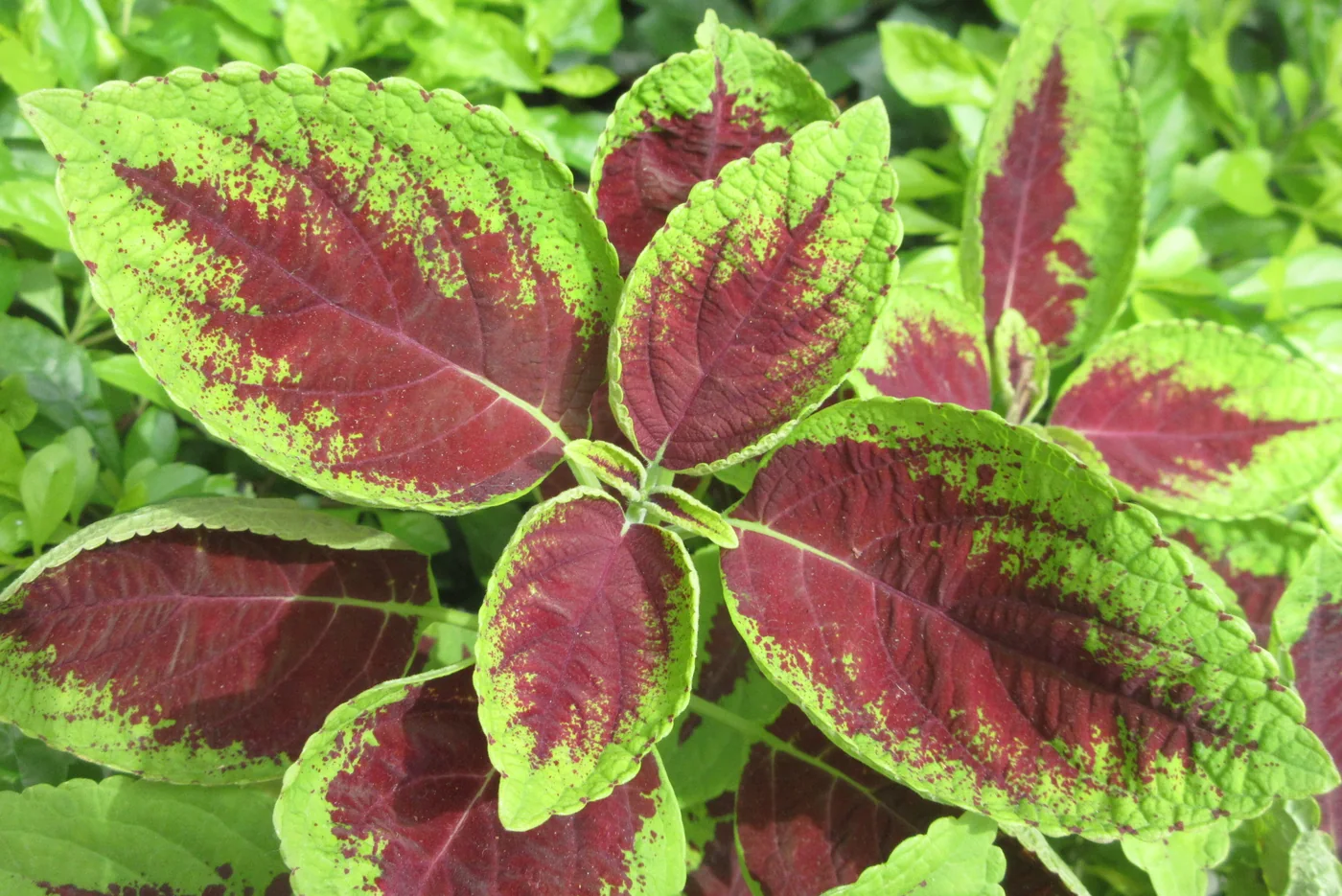
Illinois Extension describes Main Street Beale Street as a bushy, late-flowering, deep-red selection that can grow from full sun to full shade. That is a named example, not a rule for every red coleus. Illinois Extension: Beale Street coleus
To assess your own selection, choose a portable plant and document its starting condition. Keep the container and watering method consistent while changing its location to a reasonable alternative within the label's range. Do not place an already distressed plant in the most extreme spot merely to test its limits. Watch subsequent growth and the condition of existing leaves, rather than expecting an instant return to the catalogue image.
If you have several matching plants, leave one in the original acceptable position for comparison. The comparison will still be informal: pots may differ in roots and moisture, and weather will change. Its purpose is a better gardening decision, not a claim of controlled product testing. Keep the successful position only if you can maintain it comfortably.
Separate wilt from a pruning problem
NC State notes that coleus can wilt in full sun and become leggy in full shade. It also identifies pinching as a way to encourage bushier growth. NC State Extension: coleus
Before cutting a limp plant, feel the growing medium in the root ball and inspect the drainage arrangement. A pot that is already wet calls for different questions from a root ball that has dried while water ran down the container wall. Record whether the plant improves as exposure eases and whether the same pattern returns the next day. Do not use a single recovery as proof that the overall setup is sustainable.
When the plant repeatedly needs rescue, review pot access, root space, and location. Correct the recurring limitation first. Reducing the canopy may change its appearance, but it can also obscure whether the original problem was resolved. The hot-weather watering guide provides a separate routine for checking individual pots so shape decisions can remain focused on shape.
Mark the outline you want before making the first cut
Stand at the main viewing position and choose the desired silhouette. For an entrance pot, the practical boundary might be the clear route past a door. For a mixed container, it may be a neighboring plant that you want to keep visible. For an upright accent, extra height may be useful. The correct outline depends on the composition, not on an assumption that every coleus must become a short ball.
Identify the specific shoots that cross that outline. Part the foliage gently so you can follow each shoot rather than cutting a handful of stems at once. Retain the shoots that already contribute to the desired structure. If the plant is small and still filling its space, allow room for ordinary development before repeatedly shortening it.
Take a photograph before shaping. It gives you a way to judge whether the intervention improved the whole composition. Without that reference, repeated minor cuts can become a habit long after the original shape problem has disappeared.
Pinch selectively and stop when the goal is met
Use a clean tool that lets you see the tip you are removing. On soft young growth, the task is a controlled removal of the growing end; tougher or more crowded stems may be easier to manage with a small cutting tool. Avoid pulling against the entire plant. Work on selected shoots, then stand back again before continuing.
Do not remove every tip solely to make the work uniform. If one side needs more width and another already touches a neighbor, their maintenance goals differ. A naturally branching selection may require only an occasional correction. Keep the plant's intended habit in mind instead of forcing a trailing plant into an upright form or constantly shrinking a vigorous selection that should have had more space.
Leave time to observe the response before repeating the operation. Make the next decision from the resulting structure. If the same boundary problem returns continually, choose between moving the plant, enlarging its allotted space, or selecting a more suitable habit for the next planting.
Make flower removal an explicit display choice
Look closely at the end of a shoot before cutting it. Decide whether you are removing an emerging flower spike, shortening an overlong leafy stem, or doing both. These jobs may happen near one another, but they answer different questions. A note on your planting plan can prevent a general tidying routine from overriding the appearance you wanted.
For a foliage-focused display, remove unwanted flower spikes individually while retaining the surrounding leaf structure. If you prefer to observe the flowers, leave a selected plant to do so and judge how it fits the composition. Avoid converting this choice into a universal claim that the same action is necessary for every modern selection.
Record flowering behavior alongside the cultivar name at the end of the season. If frequent flower removal became an unwelcome chore, seek a documented late-flowering selection next time. That purchase decision can have a larger effect on maintenance than buying a more expensive pair of shears.
Decide whether removed shoots should become another project
Illinois Extension describes taking coleus stem-tip cuttings below a leaf joint and rooting them in loose medium, with indirect light and ventilation for covered starts. Illinois Extension: stem cuttings
A cutting is useful only if you have a reason and space to grow it. Before keeping the material, check whether the parent plant is healthy, whether the selection's label permits the intended propagation, and where the resulting starts will live. Name each pot immediately. Similar young leaves can become difficult to identify after several cultivars are mixed on a windowsill.
Separate propagation from corrective pruning. Do not take more material than the display can comfortably lose just because a tray has empty spaces. Likewise, do not retain every awkwardly shaped offcut when a small number of suitable starts would meet your goal. Prepare the containers and growing space first, then collect what you can maintain. The coleus profile helps connect a saved plant with next season's container role.
Finish the season with a choice you can repeat
Illinois Extension includes coleus among tender plants that can be saved indoors, recommends choosing healthy material before frost, and advises gradual acclimation when returning plants outdoors. Illinois Extension: overwintering favorites
Evaluate the outdoor display before deciding what to save. Which cultivar stayed attractive in the exposure you could provide? Which one fit its pot without continual correction? Which one was easy to water during busy weeks? Preserve the plant that solved your actual gardening problem, even if another produced a more dramatic close-up photograph.
Keep the equipment list proportional. A FELCO 6 can be an option for repeated controlled cuts if its right-handed, medium-hand design fits you, but it is unnecessary if an existing clean tool handles the job comfortably. A plant label and a few clear notes may deliver more value than another implement. Save the cultivar name, its successful position, and the amount of shaping it required so next year's purchase begins with evidence from your garden.
Sources & further reading
We favor university extension guidance and original product documentation. Linked sources support the specific facts cited; they do not endorse Garden Gear Atlas.
- UF/IFAS: coleus
- Illinois Extension: Beale Street coleus
- NC State Extension: coleus
- Illinois Extension: stem cuttings
- Illinois Extension: overwintering favorites