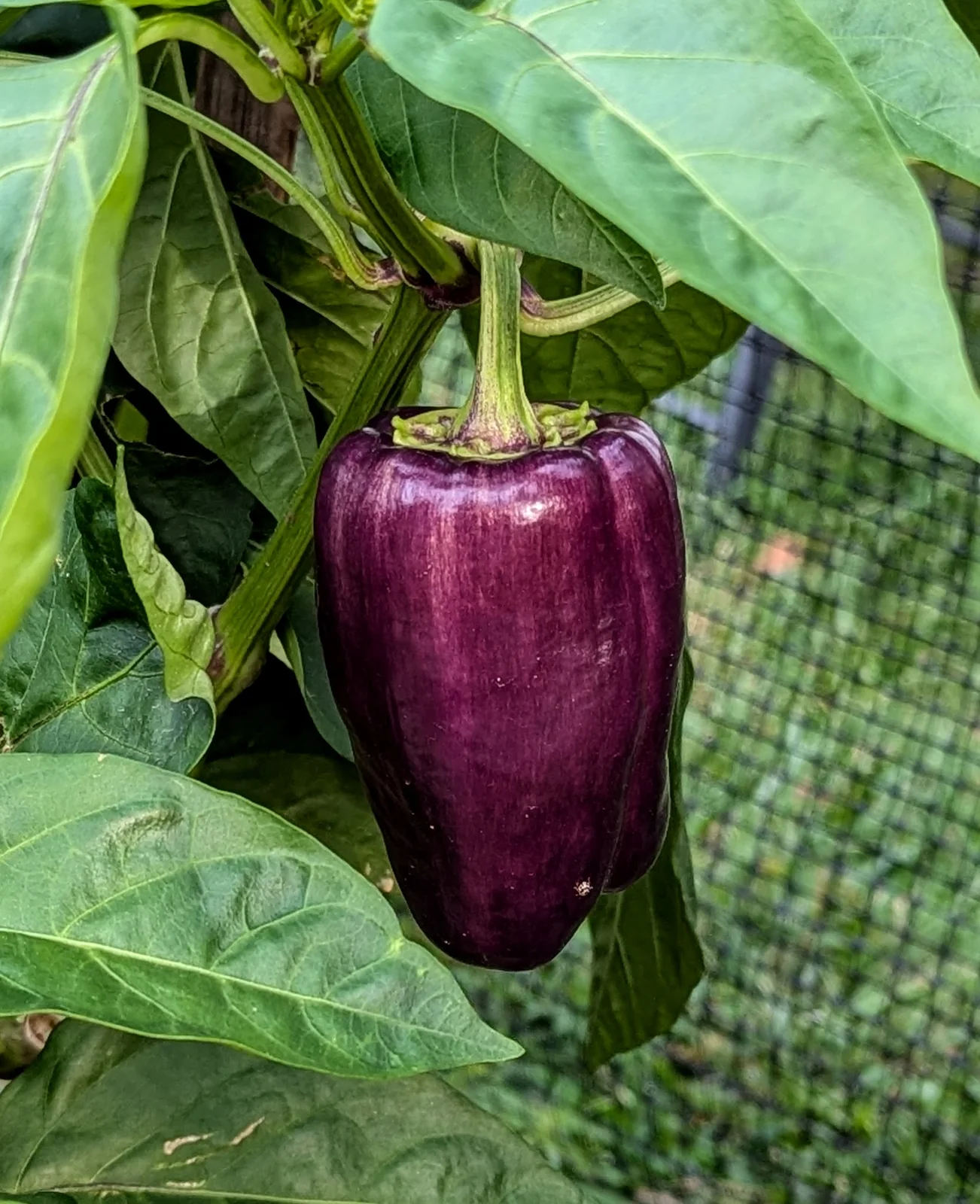
Choose a sweet pepper by shape and harvest stage
This profile covers sweet cultivars of Capsicum annuum, especially blocky bell peppers. Sweet banana, pimiento and frying types broaden the choices without changing the basic warm-season approach. A pepper's shape does not establish its pungency: check the cultivar description rather than assuming every long pepper is hot or every small pepper is mild. Iowa State Extension distinguishes the main pepper types.
Decide whether you mostly want crisp green bells or fully colored fruit. Those are different harvest stages of many cultivars, not separate planting methods. Red, orange, yellow and other colors depend on the cultivar, and waiting for the final color takes additional growing time. Peppers are frost-tender perennials in their biology but are usually grown for one outdoor season where winters freeze. NC State's Capsicum reference describes the species and its growth. Buy plants labeled for culinary use and keep the cultivar name attached to the crop.
Raise a compact transplant and wait for warmth
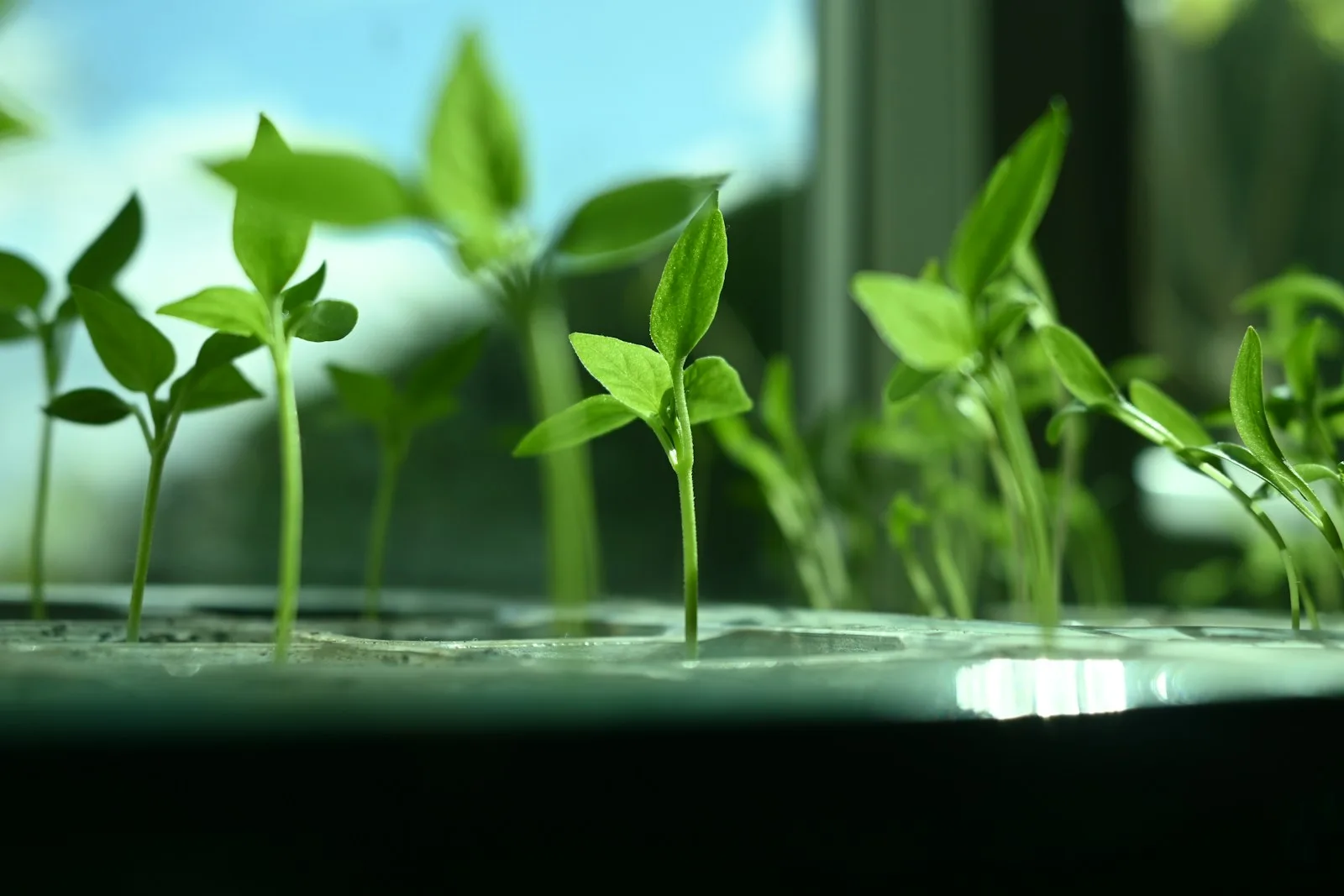
Sweet peppers reward a head start indoors, but they also need enough light and root space during that wait. Minnesota recommends sowing about eight weeks before outdoor planting. A healthy transplant should be compact, with sound leaves and a root ball that can be moved intact. Seedlings held too long in small cells need potting on; the tray's cell count does not set a safe holding time. Minnesota Extension explains pepper establishment.
Harden plants gradually to outdoor exposure and set them at the same soil level at which they grew in the pot. Unlike the usual advice for a leggy tomato, burying a long pepper stem is not the default transplant method. Wait until frost danger has passed and nights and soil are suitably warm. For Minnesota, nighttime lows above 50°F are a planting threshold; growth can still be slow in marginal warmth. Use the hardening-off guide to plan the transition without deliberately wilting plants.
Give roots, leaves and branches enough room
Peppers need full sun and a root zone that drains freely. Maryland describes garden plants that can reach three to four feet tall and recommends at least a five-gallon container for peppers. Treat that minimum as a starting point: a compact cultivar in a sheltered pot differs from a large bell pepper on a hot, windy patio. Space plants according to their cultivar and local growing guidance, leaving access for harvest. Maryland Extension covers pepper spacing and containers.
Plan support before branches carry heavy fruit. Pepper stems can become brittle, and a loose tie or suitable small cage can reduce branch movement without squeezing the stem. Preserve a leafy canopy around fruit instead of pruning peppers as if they were staked tomatoes. In containers, use an appropriate potting mix and free drainage. The hot-weather container guide is useful when increasing leaf area makes the original watering routine inadequate. A broad fabric pot is an option when its drying behavior fits your maintenance capacity.
Maintain growth without trying to force flowers
Pepper roots need access to moisture throughout flowering and fruit growth. Water the useful root zone and inspect below the dry surface before deciding whether to water again. A wilted plant in wet soil needs a drainage or root assessment, while a light, dry pot needs effective rewetting. Keep mulch from trapping moisture against the stem. Utah State Extension discusses pepper water, fertility and environmental stress.
Base garden fertilizer on a soil test and account for nutrients supplied by compost or potting mix. Excessive feeding, especially nitrogen, can encourage foliage and delay production. Conversely, chronically weak growth needs a closer look at light, root health and nutrition. Do not add separate products for flowers, calcium and general growth without checking their combined nutrient contribution. A useful record distinguishes the date fertilizer was applied from the date flowers actually opened; an improvement in later fruit set may coincide with better weather rather than prove the feed was necessary.
Distinguish a fruit-setting pause from a harvest decision
Pepper flowers are largely self-fertile, so a solitary healthy plant can bear fruit. A second pepper is not universally required. Very hot conditions can slow pod production, and cool periods can slow growth. If flowers keep dropping, first note temperature, moisture and transplant stress. The pepper flowers but no fruit guide follows that diagnosis in detail. Maryland Extension explains self-fertility and temperature limitations.
Once fruit is present, judge it against your chosen harvest stage. Full-size, firm green bells are usable; leaving sound fruit to develop its cultivar's ripe color gives a sweeter flavor but takes longer. Harvest with a clean cut through the fruit stem while supporting the branch, rather than twisting a loaded branch until it snaps. Iowa State's harvest guidance describes green and ripe stages. Inspect sheltered fruit inside the canopy as well as the conspicuous outer peppers, and pick usable fruit before a forecast frost.
Locate the damage before naming the problem
Sunscald and blossom-end rot can both leave pale or tan damaged tissue on a pepper. Sunscald develops where fruit was exposed to strong sun; blossom-end rot more often affects the blossom end, although lesions can occur along a side. That position, the canopy above it and the sequence of injury matter more than color alone. NC State compares these lookalike pepper injuries.
Blossom-end rot reflects inadequate calcium reaching developing fruit, which can result from disrupted water supply even when soil calcium is present. Steady moisture and avoiding root injury are better first checks than an unmeasured mineral addition. Damage already present will not turn back into sound tissue; assess subsequent fruit. For curled leaves, look for insects and honeydew as well as mottling or stunting. NC State lists pepper pest and disease possibilities. Persistent wilt, spreading spots or distorted new growth warrants photographs and a local diagnosis before treatment.
Sources and scope
Research-based guidance informed by institutional references. Cultivar, region and growing conditions can change the advice. Product inclusion does not imply hands-on testing of every model.