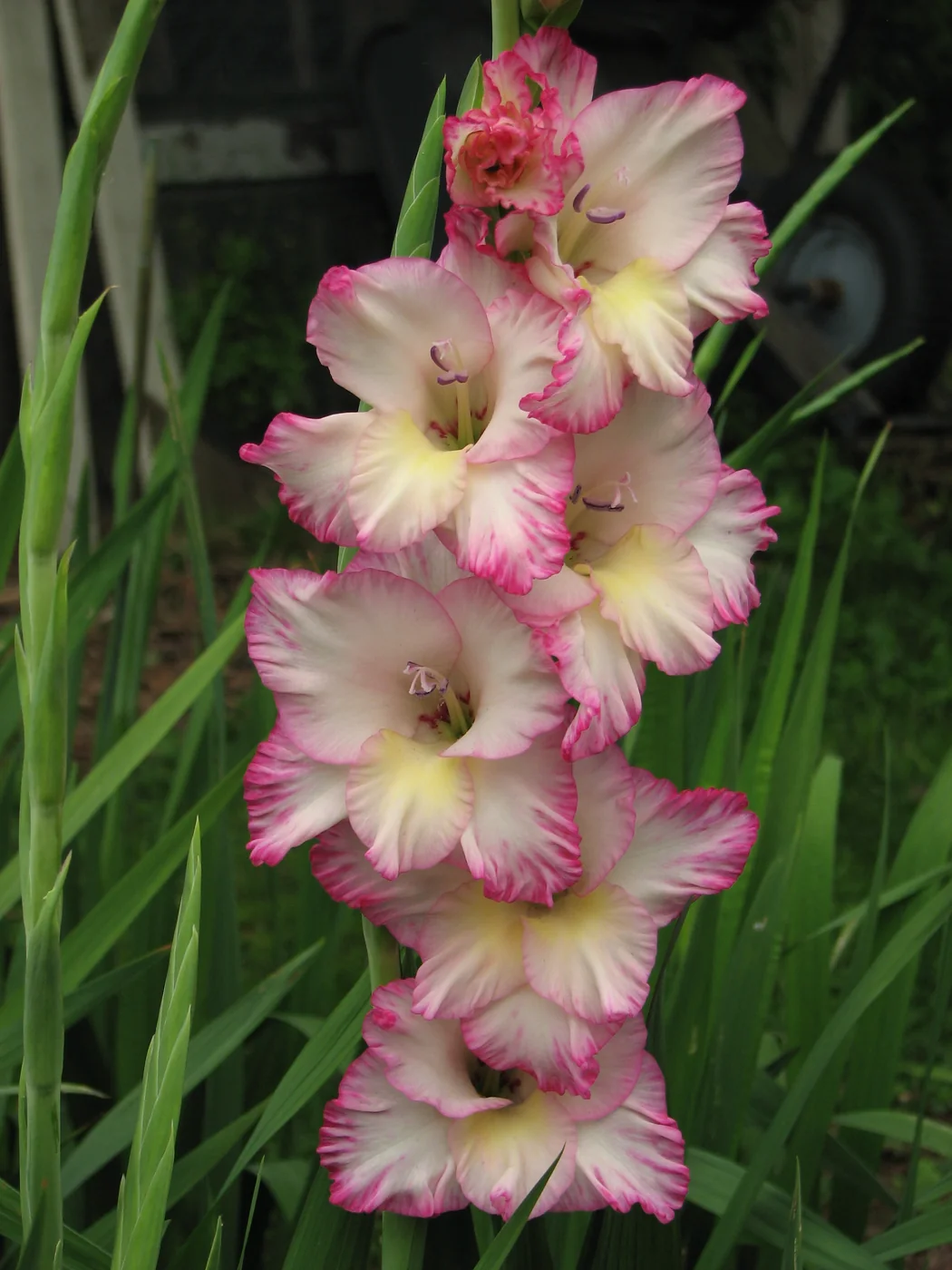
Decide how many spikes you can use at one time
Begin with the vase, not the bulk packet. Decide whether you want a few stems for the house, a short run of gifts or a garden display that will mostly remain uncut. Choose a manageable batch size from that use. A large simultaneous flush can be impressive, but it may leave more stems ready than you can place or enjoy.
A staggered plan should reserve separate positions for each planting. Labels help connect dates to real plants once leaf fans look alike. Soft ties are useful for connecting tall stems to an established support, so compare those two practical tools before considering a larger equipment list.
This guide concerns ordinary summer-flowering garden hybrids. The RHS separates them from hardy species and specialist types with different seasonal requirements. Keep the exact group on the order, especially if a seller offers several kinds under gladiolus. RHS: Growing gladioli
Read the corm grade as a measurement
Corm size and flower-size class are different pieces of information. A catalog description of giant florets describes flowers, while a jumbo corm grade describes planting material. Missouri Extension defines jumbo corms as at least 2 inches in diameter, Number 1 as 1½–2 inches and Number 2 as 1¼–1½ inches. Missouri Extension: Summer flowering gladiolus
For a first-season cutting project, compare sound flowering-size material of the same named cultivar. Ask sellers to clarify whether their measurements refer to diameter or circumference, and do not compare an ungraded bargain bag with a specified grade as though the only difference were price. If sizes are mixed, sort them before planning batches.
Treat tiny cormels as a separate propagation project. They can be useful if growing future stock is part of the goal, but their number should not inflate your expected harvest. Record both purchased count and the count of sound corms assigned to cutting batches. Keep enough flexibility to shrink a batch if arrival inspection removes unsuitable material.
Turn delivery into a labeled inventory
Inspect the order before planting any of it. Mississippi State advises choosing corms without soft spots or discoloration. Retain cultivar and grade labels, and photograph questionable material while its package identity is clear. Mississippi State: Gladiolus for the farmer florist
Make one inventory line per cultivar and grade. Give each future batch a simple code, intended planting window, quantity and bed position. For example, twelve corms can be divided into three batches of four as a planning exercise; that describes the schedule, not a promise of twelve usable spikes. Use the scale that matches your needs.
Keep unplanted batches in conditions recommended by the supplier for the intended holding period and inspect them before each planting. A succession plan is not an excuse to leave material forgotten in a hot delivery box. If the final batch cannot be planted within a useful season, change the order or reduce the number of successions before the corms arrive.
Use regional bloom estimates as a range
Iowa State gives roughly 8–10 weeks from planting to bloom, while Missouri describes 70–90 days or more depending on variety and weather. These are different regional references, not competing exact countdowns. Ask the supplier about your named hybrid and record local experience rather than averaging the figures into a falsely precise date. Iowa State: Gladiolus planting depth Missouri Extension: Summer flowering gladiolus
Choose the first planting from locally suitable soil and frost conditions. Mississippi State describes batches 7–14 days apart for its production setting. A two-week interval can be a useful initial planning choice for a home trial, adjusted as you learn how the batches develop. Mississippi State: Gladiolus for the farmer florist
Weather can compress or stretch the gap between bloom periods even when planting intervals are equal. Keep that uncertainty in plans for gifts or events. If an exact occasion matters, maintain another flower source rather than relying on one field-planted batch reaching the correct stage on a single day.
Reserve space after the cutting date
Draw the succession as occupied bed positions from planting through leaf recovery. The first batch will still have roots and leaves when later batches begin to flower if you intend to retain corms. Do not schedule a new planting in the same position immediately after taking its spike.
Use the spacing planner to check quantity after choosing appropriate spacing for the corm grade and use. Deduct paths, support positions and the space needed to handle a full bucket. A mathematical fit does not establish that every plant can be reached. Check the longest reach from both sides of the bed.
Keep cultivar and grade consistent when using batches to learn timing. If every batch contains a different cultivar or corm size, a later flower may reflect the plant rather than the planting date. Mixed-color rows are fine for casual enjoyment, but mark their mixture honestly and avoid treating them as a controlled timing comparison.
Support the row before the flowers need rescuing
Build support into the bed layout before shoots make access difficult. Individual stakes work for a few stems; a shared support may be easier for a continuous cutting row. Whatever the design, it must stay anchored and let you see, reach and cut the spikes without pulling neighboring plants sideways.
Place ties so they support stems without constriction, and revisit them as the plants grow. Keep the working path free from low crosspieces and loose material. Check the arrangement after wind or rain, when a previously acceptable structure may begin leaning as a unit. Tightening ties on a loose support does not fix its foundation.
Maintain consistent growing conditions across batches where practical. Observe soil moisture at the row, check actual water delivery and correct failed outlets promptly. Record unusual heat, missed irrigation or storm damage beside the batch notes. Those events help explain a weak or delayed crop without assigning every difference to cultivar quality or corm grade.
Harvest for immediate use and corm recovery
For household use, Iowa State advises cutting as the lowest floret opens and retaining at least three or four leaves on the plant. Decide your required vase length before cutting so the retained leaves are part of the plan. Iowa State: When to cut gladiolus
Take a clean container of water into the garden and choose the spikes you will actually use. Place stems in water promptly and keep them upright; Mississippi State notes that gladiolus stems respond strongly to gravity and can curve during horizontal holding. Mississippi State: Gladiolus for the farmer florist
If keeping corms is a goal, do not strip the plant to obtain the longest possible stem. Choose a shorter arrangement or designate some plants for a one-season harvest. Mark cut batches and record useful spike count, length and bloom stage. Leave flowers outdoors when they serve the garden better than another vase; a cutting plan should make flowers available, not require every stem to be removed.
End the succession before the season ends it for you
Work backward from the local end of useful growth, allowing for flowering and, where corm retention matters, a recovery period afterward. Missouri describes several weeks of continued growth after flowering for corm development. Its early-July final-planting example belongs to its regional schedule, not every climate. Missouri Extension: Summer flowering gladiolus
When a spring delay shortens the season, reduce the final successions instead of squeezing the original calendar into inadequate time. A late batch that remains leafy until frost can be an experiment, but it should not carry the promise of an autumn bouquet. Record that experiment separately from batches planted within the expected window.
At season’s end, compare planned and actual flowering order. Retain the supplier, grade and timing information for successful batches. Use the summer-bulb storage guide for the separate decision about saving corms. Expand next year only if the flower supply, occupied space and post-harvest care all fitted comfortably. The aim is a sequence you can use and repeat, with its uncertainty visible.
Sources & further reading
We favor university extension guidance and original product documentation. Linked sources support the specific facts cited; they do not endorse Garden Gear Atlas.
- Missouri Extension: Summer flowering gladiolus
- Mississippi State: Gladiolus for the farmer florist
- Iowa State: When to cut gladiolus
- Iowa State: Gladiolus planting depth
- RHS: Growing gladioli