Identify the flower before calling it a failed squash
A male squash flower has a pollen-bearing center and a stem without an immature fruit behind the petals. A female flower carries the ovary, which resembles a miniature squash. UConn explains that male flowers often appear before female ones. A fallen male flower has completed its role; it was never a fruit that the plant failed to enlarge. UConn Extension: squash flower identification
Follow the flower back to its base instead of judging by petal size. Photograph one of each type and keep the images with your garden notes. This makes later observations quicker and helps everyone tending the bed use the same terms. Count open female flowers separately from the total number of blossoms if you are trying to understand why the harvest is delayed.
Give a newly flowering plant time to show its pattern. Check it on several mornings before deciding there is a persistent problem. A single visit can catch only one moment in its flowering sequence. If you remove every male blossom for cooking or tidiness, you also remove a potential pollen source, so decide which harvest matters before picking flowers indiscriminately.
Watch the morning visitors
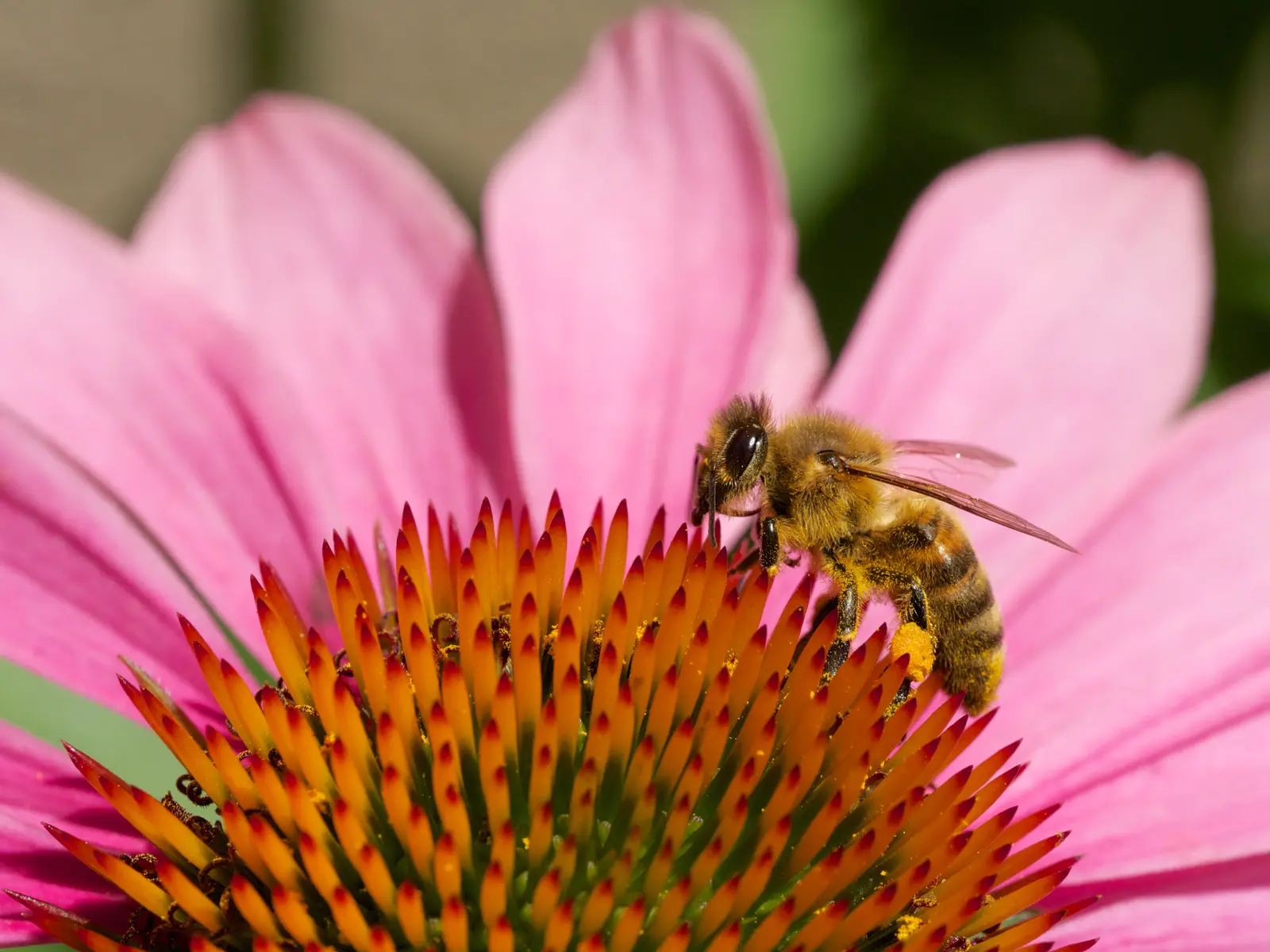
Squash relies heavily on bees to move pollen. USDA's Agricultural Research Service describes native squash bees as specialist, ground-nesting pollinators that forage early, sometimes before honey bees become active. An absence of honey bees during an afternoon visit therefore does not establish that the crop lacks effective pollinators. USDA ARS: squash bees and pollination
Spend a few quiet minutes beside open blooms in the morning. Watch whether insects enter both flower types rather than simply passing over the bed. Note wind, rain and temperature conditions along with what you see. Repeat on another day before drawing conclusions. This small observation exercise can prevent unnecessary hand pollination and gives you a clearer explanation when it is useful.
Think beyond one flower-filled pot placed beside the squash. Protect existing flower visitors and consider the surrounding garden as habitat. If you notice bees entering soil nearby, avoid casually disturbing that patch until you understand what they are doing. You do not need to purchase a colony to respond constructively to a small-garden pollination problem; first work out which visitors already use the space.
Check covers, heat and plant condition
An insect-excluding cover can also exclude the pollinators needed by ordinary squash cultivars. Maryland advises opening access when pollination is required and notes that heat or insufficient light can shift flowering toward more males. Some documented parthenocarpic cultivars can form fruit without pollination, but that trait should be confirmed rather than inferred from the word zucchini. Maryland Extension: pollination and hand pollination
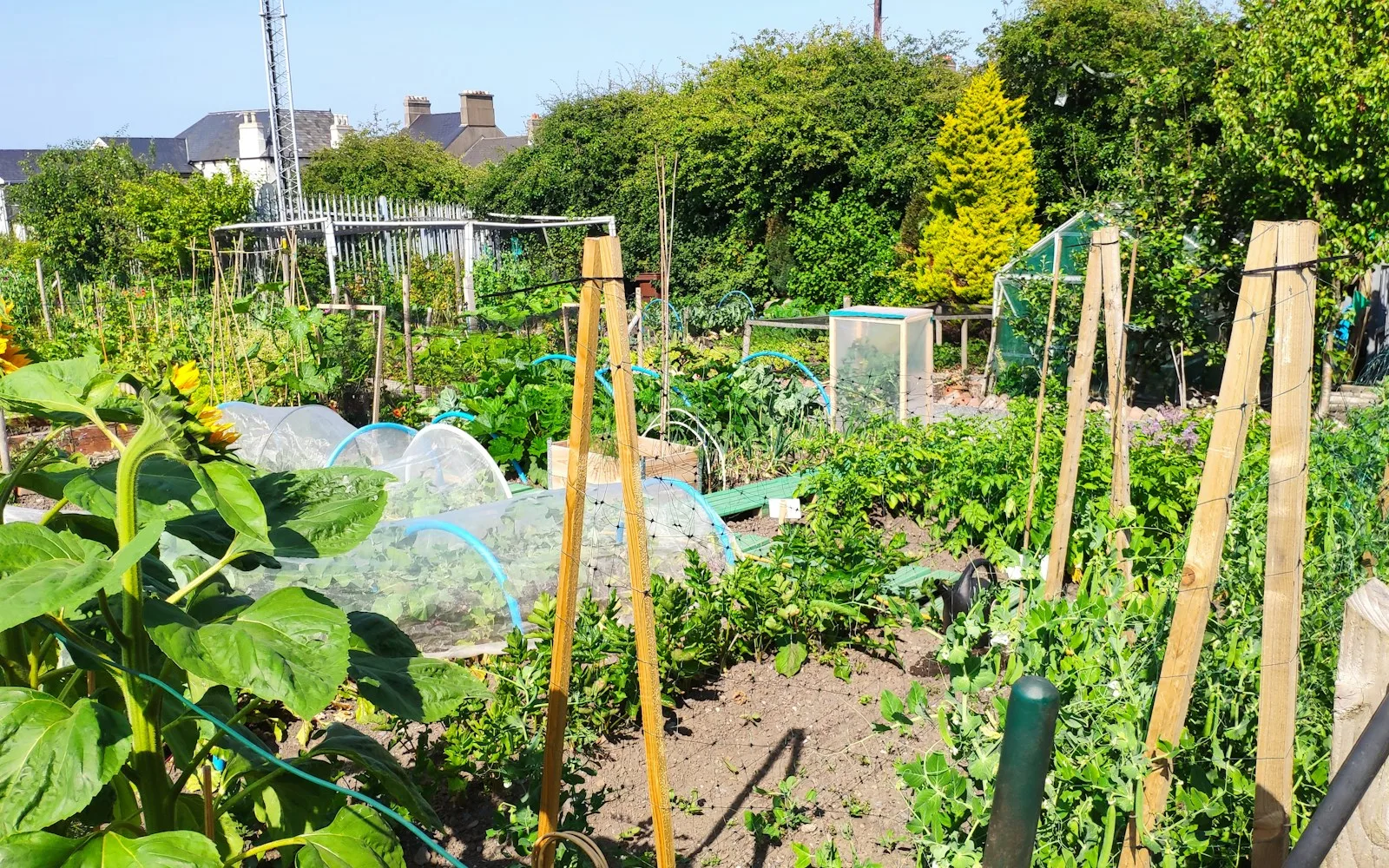
Check the cultivar label and the cover arrangement together. If you chose a conventional cultivar and kept it completely sealed, decide between giving bees access and a practical hand-pollination routine. Do not rely on a small accidental gap as a managed solution. If the crop is planted in a sheltered structure, ask whether suitable flowers will be accessible every morning you need them.
Look at the entire plant before blaming bees. Review shade from neighboring crops, crowding and the moisture conditions you find in the root zone. If only one plant is struggling, compare it with the nearest healthy plant. A pollination diagnosis should fit the pattern of flowers and fruit, not simply the fact that the plant has not yet produced dinner.
Hand pollinate with a clear purpose
When a fresh male and female flower are open, gently transfer pollen from the male flower's anther onto the female flower's stigma. Maryland illustrates using the exposed male flower like a small brush after removing its petals. Work carefully in the morning and avoid damaging the female flower while trying to improve fruit set. Maryland Extension: pollination and hand pollination
Use pollen from the same cultivar when available, or from a known compatible plant of the same species. Iowa State explains that cucumbers and melons do not supply interchangeable pollen for squash. Shared membership in the cucurbit family does not mean every yellow flower in the vegetable garden can fertilize every other one. Iowa State Extension: cross-pollination between vine crops
Mark the pollinated flower with a loose label on a nearby support, recording the date without tying tightly around its stem. Compare its later development with other fruit. This turns hand pollination into a useful small experiment rather than a ritual performed on every bloom. If no male or no female flower is open, wait for a suitable pairing; brushing petals together cannot replace missing pollen or a receptive flower.
A shriveling fruit is a clue, not a complete diagnosis
Iowa State notes that inadequate pollination can allow a small fruit to begin developing and then shrivel. Cold, rainy or windy conditions can reduce pollinator activity. It also identifies blossom-end rot as another cause of fruit loss, associated with calcium delivery to developing tissue and often uneven moisture rather than a simple shortage of calcium in the soil. Iowa State Extension: reasons for poor fruiting
Look for the sequence. Did the flower open recently and the whole tiny fruit quickly stall? Did a larger fruit develop a localized dark, soft blossom end? Is the whole plant wilting? Photograph the fruit while it is still attached, and include a wider view of the plant. These observations are more useful than a photograph of a completely decomposed squash on the compost pile.
Check moisture consistency before adding lime or calcium supplements. If the pattern remains unclear, obtain a local diagnosis. Remove unusable fruit so it does not confuse future observations, and keep following newly opened female flowers. A healthy new fruit can demonstrate that conditions have improved even while the earlier aborted fruit remains visibly disappointing.
Keep fruit quality and seed saving separate
Cross-pollination between compatible squash cultivars affects the seeds and the plants grown from them; it does not turn the current plant's zucchini into a pumpkin-shaped hybrid during that season. Iowa State makes this distinction explicitly. If you save open-pollinated seed where several compatible cultivars flower, the next generation may differ from the parent crop. Iowa State Extension: cross-pollination between vine crops
For an eating garden, focus on healthy plants, access for pollinators and timely harvest. For a seed-saving project, first choose a reliable method to control which flowers exchange pollen. These are different levels of work. Do not let a fear of strange current-season fruit lead you to isolate every zucchini unnecessarily, or let an ordinary eating harvest become an accidental seed-purity claim.
At the end of the season, note whether poor set was brief or persistent and which change coincided with improvement. If removing a cover solved access, that is a practical lesson for the next planting. If hand-pollinated flowers also failed, revisit growing conditions and diagnosis. Keep the record specific enough to guide a decision, rather than concluding that all squash in your garden require daily brushing forever.
Sources & further reading
We favor university extension guidance and original product documentation. Linked sources support the specific facts cited; they do not endorse Garden Gear Atlas.
- UConn Extension: squash flower identification
- USDA ARS: squash bees and pollination
- Maryland Extension: pollination and hand pollination
- Iowa State Extension: reasons for poor fruiting
- Iowa State Extension: cross-pollination between vine crops