Understand what a slip is
Sweet potato, Ipomoea batatas, belongs to the morning glory family. It is different from ordinary potato and from true yams. The edible underground crop consists of enlarged storage roots. Delaware identifies slips as the normal planting material, while Mississippi State explains that these are vegetative shoots or stem-tip cuttings raised from sprouted storage roots. Delaware Cooperative Extension: sweet potato crop identity Mississippi State Extension: sweet potato slips and curing
Order slips of a named culinary cultivar from a reputable source. Ask when they will arrive and what immediate care they need. Do not assume that a decorative sweet potato vine sold for foliage is the best choice for a root harvest. Likewise, a supermarket root used for a sprouting experiment does not provide the same documented starting information as planting stock selected for that purpose.
Decide whether growing your own slips is part of the project or simply a delay before the crop you want. Buying a modest number can be sensible when your real interest is harvesting roots. If you do raise slips, keep the cultivar and source identified, set aside a suitable warm propagation area, and plan the work backward from the outdoor planting window. Include room for holding the plants if weather delays planting, and set a limit on how many you will keep. Surplus slips need a planned destination just as purchased transplants do.
Wait for the soil, not only the calendar
Sweet potatoes are a warm-season crop. Utah State recommends planting slips after frost danger, with regular watering to help them establish. A conventional layout places slips about a foot apart within rows spaced several feet apart. Treat that as a bed-planning reference and adjust to local guidance and the cultivar, rather than compressing the crop into unused gaps. Utah State Extension: sweet potato growing
Before the shipment arrives, confirm that the bed is ready and conditions are appropriate. A warm afternoon does not tell you the overnight or soil conditions. Check a local planting calendar and the forecast, and have a supplier-approved holding plan if conditions are unsuitable. Buying plants earlier than you can accommodate them is not necessarily an advantage.
Use the waiting period to mark the planting line, prepare labels and establish a watering route. If you are experimenting with a season shorter than local growers usually have, start with a locally recommended cultivar and a small planting. Record the real outdoor planting date. The crop's time in suitable warm conditions matters more than the date you placed the order.
Reserve a footprint for roots and vines
Sweet potatoes need loose, well-drained soil and full sun; Delaware lists those conditions alongside the crop's identity. Mississippi State describes trailing vines and warns against placing them where taller crops block their light. The plant's above-ground spread and the soil space for enlarging roots both belong in the layout decision. Delaware Cooperative Extension: sweet potato crop identity Mississippi State Extension: sweet potato slips and curing
Draw the planting row and then draw the area vines may occupy. Keep the route to your water supply and nearby harvests clear. If your available space is only a narrow strip between taller crops, consider a different location or a smaller trial. A vine that can physically fit through a gap has not necessarily been given a useful growing position.
For container growing, choose a vessel that can accommodate the root crop and a position where vines remain accessible. Compare the actual usable medium volume and width, and check the cultivar's habit. Treat the container as a trial with its own watering and harvest demands. Do not assume that tying vines upward allows an unlimited number of slips to share a small root zone.
Support establishment, then follow actual moisture
Newly planted slips need moisture while roots develop. Once established, sweet potatoes tolerate some dryness but generally produce better with adequate water. Utah State also cautions that excessive late watering can contribute to cracking. The practical goal is an appropriate, reasonably consistent root-zone supply, not keeping a fixed irrigation schedule throughout every stage and weather pattern. Utah State Extension: sweet potato growing
Inspect the planting line shortly after watering. Check whether moisture reaches the slips rather than running away down the bed surface. Keep a record of substantial rain and irrigation changes as the season progresses. If one section repeatedly dries before the rest, correct that distribution problem instead of increasing water across the entire patch without checking the result.
Use a soil test to guide feeding and keep the fertilizer history simple enough to review. If vines look impressive but roots later disappoint, investigate planting time, cultivar, light and the growing season alongside fertility. You cannot judge the final underground harvest from foliage alone. Resist making repeated corrective applications before you have evidence that a specific nutrient problem exists.
Investigate damage without repeatedly disturbing roots
Utah State recommends shallow weed control while plants establish and warns that deep cultivation can damage roots. Sweet potatoes can also suffer from insects and diseases; a spreading canopy is not evidence that the crop is immune. When damage appears, inspect the affected tissue and seek local identification before choosing a control. Utah State Extension: sweet potato growing
Keep a marked point where each plant was set so the crowns remain easy to locate. When inspecting vines, avoid pulling long stems merely to expose the soil beneath them. Photograph chewing or discoloration while it is still distinctive. If wildlife is removing foliage, document the pattern and consider an appropriate barrier before assuming fertilizer or disease treatment will restore the lost growth.
As the likely harvest window approaches, check a representative plant carefully rather than repeatedly digging through every crown. Decide what root size is useful for your kitchen and watch the weather. If roots are already suitable and cold is approaching, the calendar should not persuade you to leave them simply because a packet number suggests another week.
Separate harvest, curing and storage
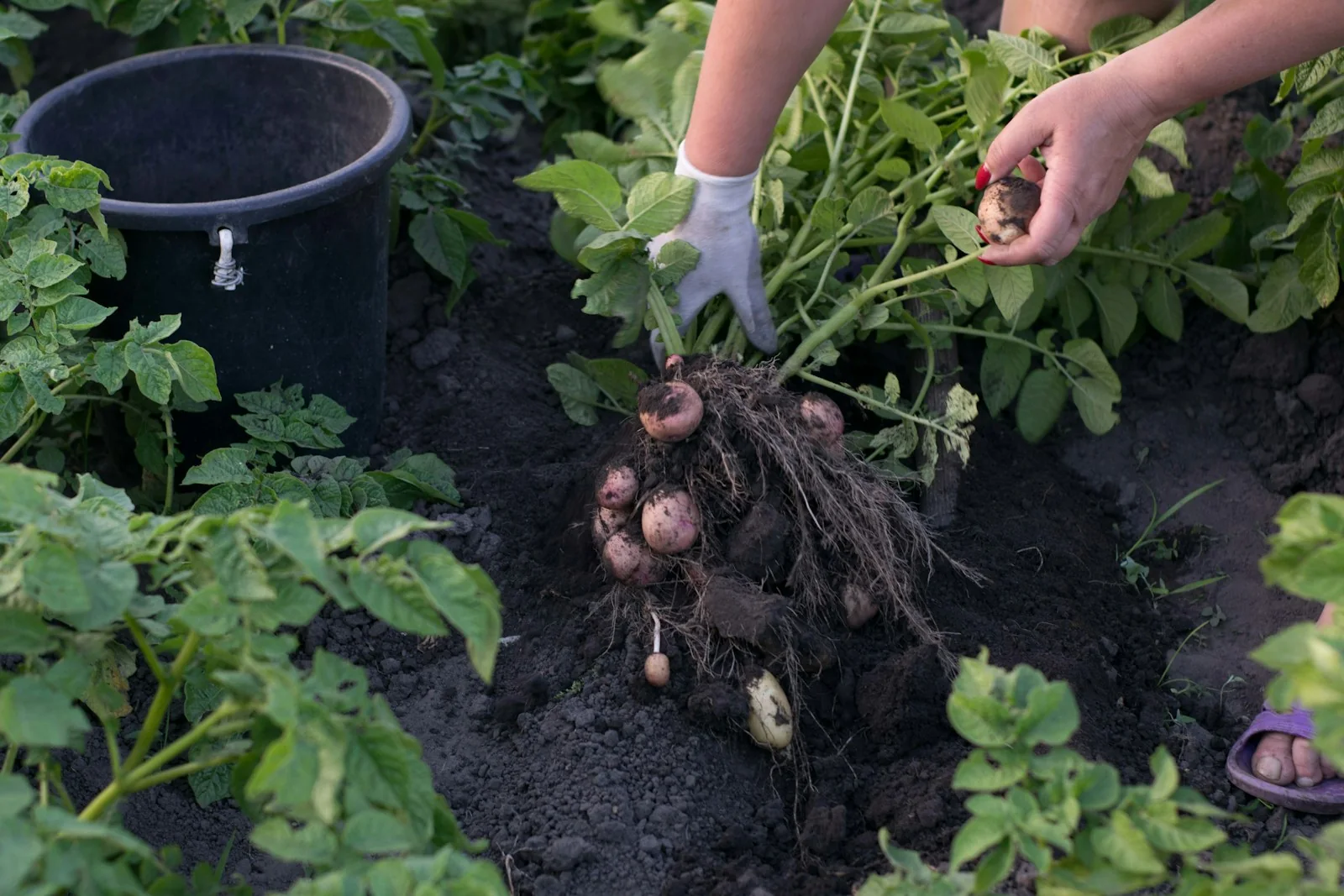
Maryland advises harvesting before frost and describes chilling injury in cold soil. Handle roots gently, remove loose clods and avoid washing before storage. It also notes that reproducing commercial curing conditions at home is difficult. A protected porch may provide partial curing in suitable weather, but it should not be described as equivalent to a controlled curing room. Maryland Extension: sweet potato harvest and home storage
Mississippi State gives a curing target of about 80–85°F with high humidity for roughly a week to ten days, followed by storage around 55–60°F. Raw sweet potatoes should not be refrigerated. Curing helps wounds heal and improves eating quality, so identify suitable conditions before the harvest is sitting in a pile waiting for a plan. Mississippi State Extension: sweet potato slips and curing
Keep damaged roots separate, inspect stored roots and use the crop according to its condition. Measure temperature rather than assuming that any garage is warm enough to cure or any basement is suitable for storage. At season's end, compare usable root harvest with the vine space, care time and storage losses. Expand the planting only if the whole process, including the after-harvest work, suited your household.
Sources & further reading
We favor university extension guidance and original product documentation. Linked sources support the specific facts cited; they do not endorse Garden Gear Atlas.
- Mississippi State Extension: sweet potato slips and curing
- Utah State Extension: sweet potato growing
- Maryland Extension: sweet potato harvest and home storage
- Delaware Cooperative Extension: sweet potato crop identity