Recognize the shrub behind the flower photograph
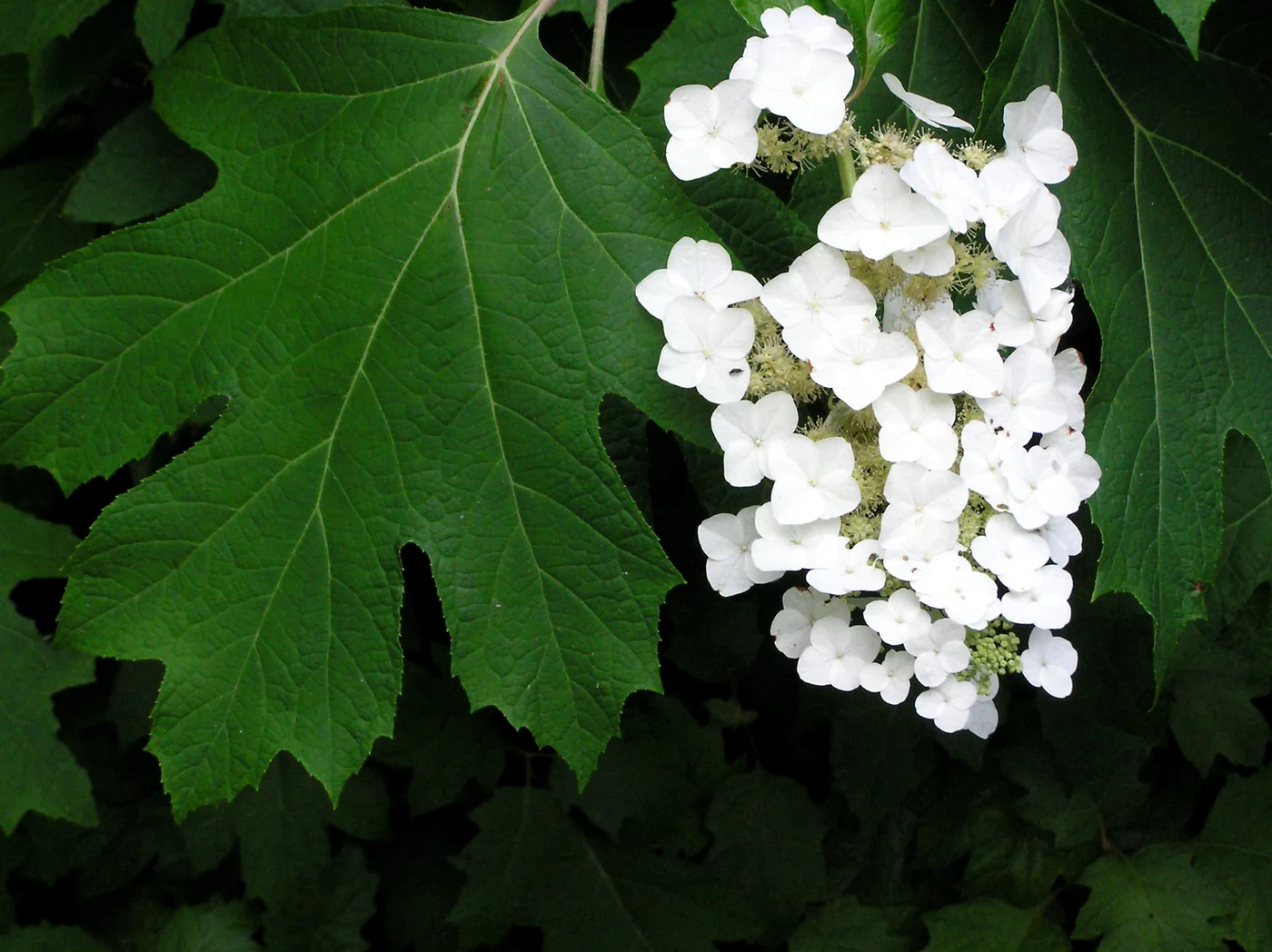
Oakleaf hydrangea has lobed leaves, conical white flower clusters and peeling bark on older branches. It is native to the southeastern United States. Those features distinguish the species from a generic hydrangea purchase; a cone-shaped flower alone does not identify it. NC State Extension: Oakleaf hydrangea
Keep the full plant label, including any cultivar name, with a photograph of the entire nursery plant. A small flowering specimen can conceal the difference between a shrub intended for a broad border and a compact selection for a courtyard. Ask for an adult specimen photograph showing a person, fence or other scale reference.
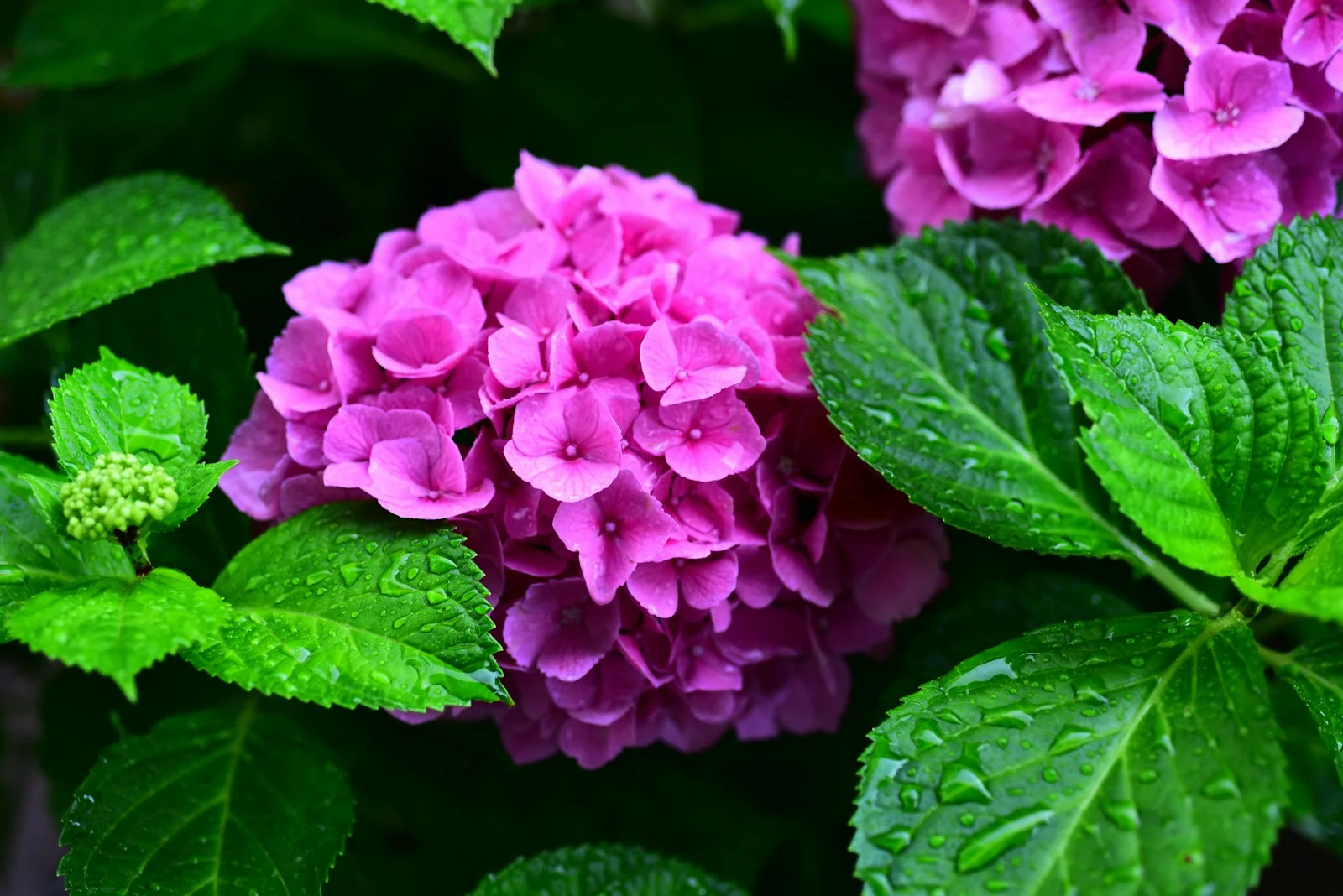
Decide what you want to see from the house: a single broad leaf mass, several separate shrubs, or an informal flowering boundary. Each use requires a different amount of open ground. If you are chiefly collecting flower colors, compare actual oakleaf cultivars rather than importing expectations from blue and pink bigleaf hydrangeas.
For a specimen intended to anchor a bed, inspect how many main stems the nursery plant has and whether you can see its base clearly. Keep that photograph as the starting framework. You are not choosing a permanently symmetrical object; you are choosing the beginning of a woody plant. An obscured or tightly tied canopy is a reason to ask to see the plant more clearly before deciding how it will sit in the garden.
Fit the foliage before fitting the nursery pot
Measure the usable depth of the bed after allowing room to walk, open windows and reach any wall fittings. Treat that depth as a constraint on the eventual canopy, even when the current plant occupies only a small circle. A border that looks empty today may already be fully allocated on a mature planting plan.
Piedmont Master Gardeners describes 'Ruby Slippers' at approximately 3.5 feet tall and 5 feet wide, and 'Munchkin' at about 3 feet tall and 4.5 feet wide. These are cultivar examples, not maximum-size warranties; both illustrate how a short shrub can still need considerable lateral room. Piedmont Master Gardeners: Oakleaf hydrangea
For a new purchase, put the larger expected outline on the ground with a hose. Walk past it carrying the things normally taken through that space. For an inherited shrub, measure where the outer branches actually reach before deciding whether the problem is the whole plant or one awkwardly positioned stem.
If the plant is going beside an outdoor seat, test the space with the chair occupied and pulled back, not tucked underneath a table. Keep the outline clear of that working area. The large-leaf effect is easier to enjoy when you can sit at a comfortable distance instead of pushing branches aside to use the furniture.
Inspect the growing place at two different times of day
Visit the candidate site while you can observe its real sun and shade. Note the exposed afternoon side as well as the sheltered morning side. Include reflected heat from paving, access to water and the changing shadow of nearby trees in your description, rather than reducing the place to a single label such as shady.
A practical arrangement should let you inspect the root area without crawling underneath a mature canopy. Keep a small approach from the rear or side if the shrub will sit deep in a mixed border. This approach is particularly valuable when nearby summer plants make the ground hard to see.
After rain, look for runoff arriving from a downspout, a slope or the edge of a path. A moist-looking bed is not necessarily an evenly moist rooting area. If the proposed position collects water while the surrounding soil drains, investigate that difference before buying a plant to fill the hole in the design.
Let establishment have a manageable routine
Choose a planting time when you can check the shrub regularly during its first growing period. A bargain purchase immediately before an extended absence creates an avoidable care problem. Arrange access to the water source before the plant goes into the ground, including a route that remains usable after neighboring foliage expands.
When checking moisture, examine both the original root ball and the adjacent soil. Write down which one is dry or wet instead of treating the whole bed as a single condition. Adjust attention to what you find; a fixed weekly calendar is less useful than knowing whether the plant's own rooting area received water.
Keep the label and baseline photograph in the same place as your watering notes. If the plant struggles, that record helps separate a problem present on arrival from one that developed after planting. Avoid changing water, fertilizer and pruning all at once, because doing so makes the result difficult to interpret.
Keep the flower-bearing framework legible
Maryland Extension places oakleaf hydrangea among the shrubs that form flower buds on old wood. Those buds develop before winter; routine pruning is unnecessary, and faded heads can remain for ornamental interest. When size work is needed, the usual flower-preserving window is just after bloom. Maryland Extension: Pruning hydrangeas
Make the reason for each proposed cut visible to yourself. A stem rubbing against a window has an identifiable conflict; a branch that merely makes the outline irregular may be doing exactly what you bought this shrub to do. Mark the difficult area on a photograph before bringing out cutting tools.
Keep flower-head grooming separate from shortening the entire plant. If you need broader identification help, use the hydrangea flowering-wood guide. For this species, the footprint and flower-budget guide works through the decision between a few purposeful cuts, a revised bed edge and a different plant position.
Consider the view after the flowers age
The UF/IFAS account describes flowers changing from white through pink to tan. That progression means the summer display is not a fixed color swatch. Evaluate the plant with its older heads present if you intend to keep them, rather than buying only for the brief appearance of newly opened flowers. UF/IFAS: Hydrangea quercifolia
Photograph the shrub from your main viewing point after flowering and again when the leaves change. Decide which surrounding objects improve that view: a quiet fence, open lawn, a contrasting leaf shape or simply enough breathing room to see the outline. This is a visual choice, not a requirement to buy a prescribed set of companion plants.
Keep lower planting modest enough that you can still inspect the shrub's base. An elaborate underplanting that must be pulled apart for every maintenance visit may cost more effort than it contributes. If the winter view is important, include it in the assessment before masking the lower branches permanently.
Choose equipment and a review point together
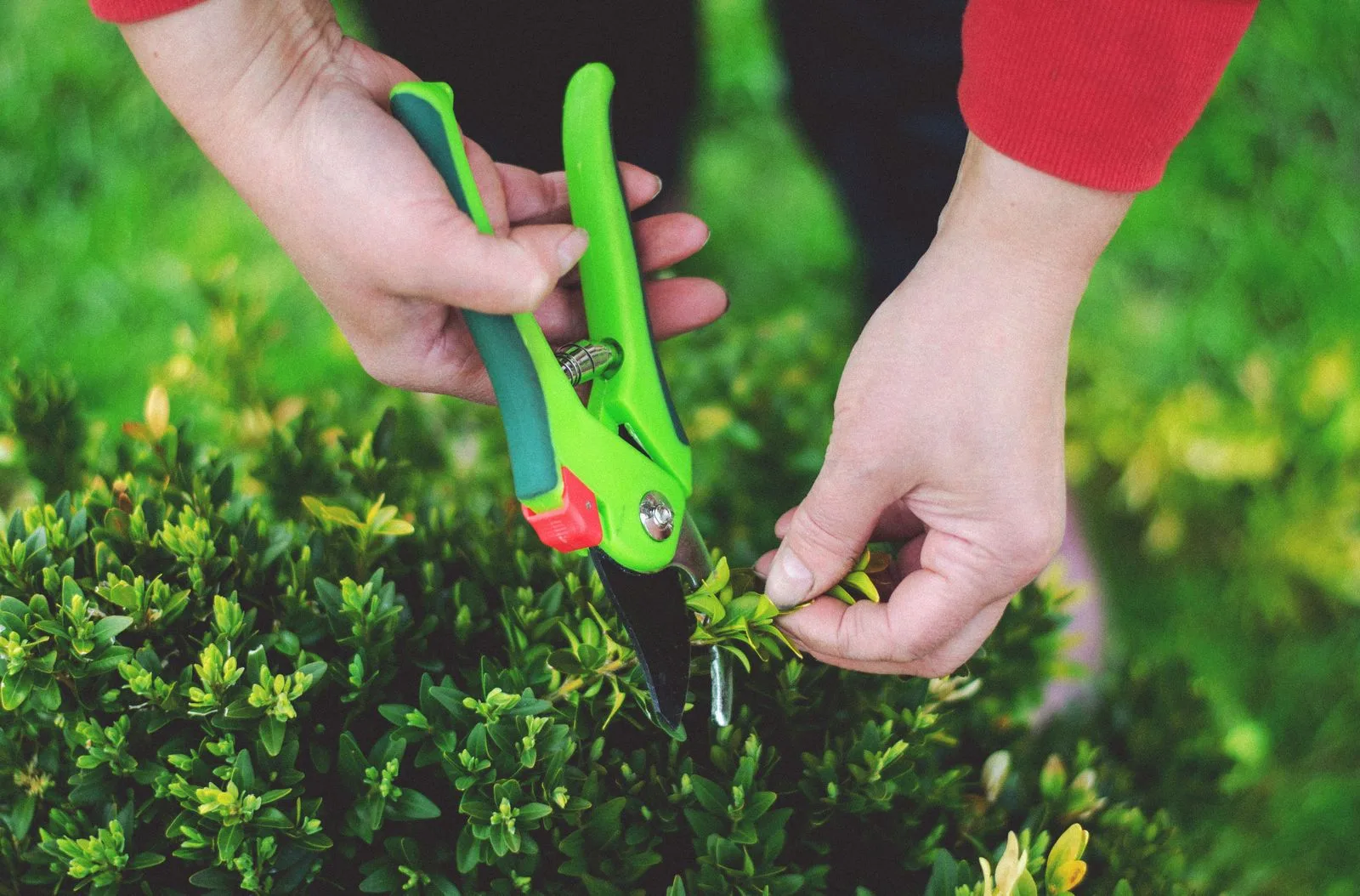
A hand pruner belongs here for selected small stems, not as an annual size-setting device. The FELCO 6 and FELCO 9 offer different hand configurations; choose by your hand and the actual cut, not by the species name. Larger or crowded cuts require a separate tool assessment.
At the next full flowering season, compare the plant with your original goal. Did the route remain comfortable? Could you see the flowers from the place that mattered? Was the work a brief inspection or a repeated negotiation with the same branches? These answers are more useful than judging the shrub solely by whether it survived.
If its position remains unsuitable, use the small-shrub moving guide to assess the practical work before disturbing it. For another purchase, carry forward the measured width, local flowering record and access requirements. Those observations make a cultivar choice much more reliable than choosing the next plant by the pot size.
Sources and scope
Research-based guidance informed by institutional references. Cultivar, region and growing conditions can change the advice. Product inclusion does not imply hands-on testing of every model.