Overview
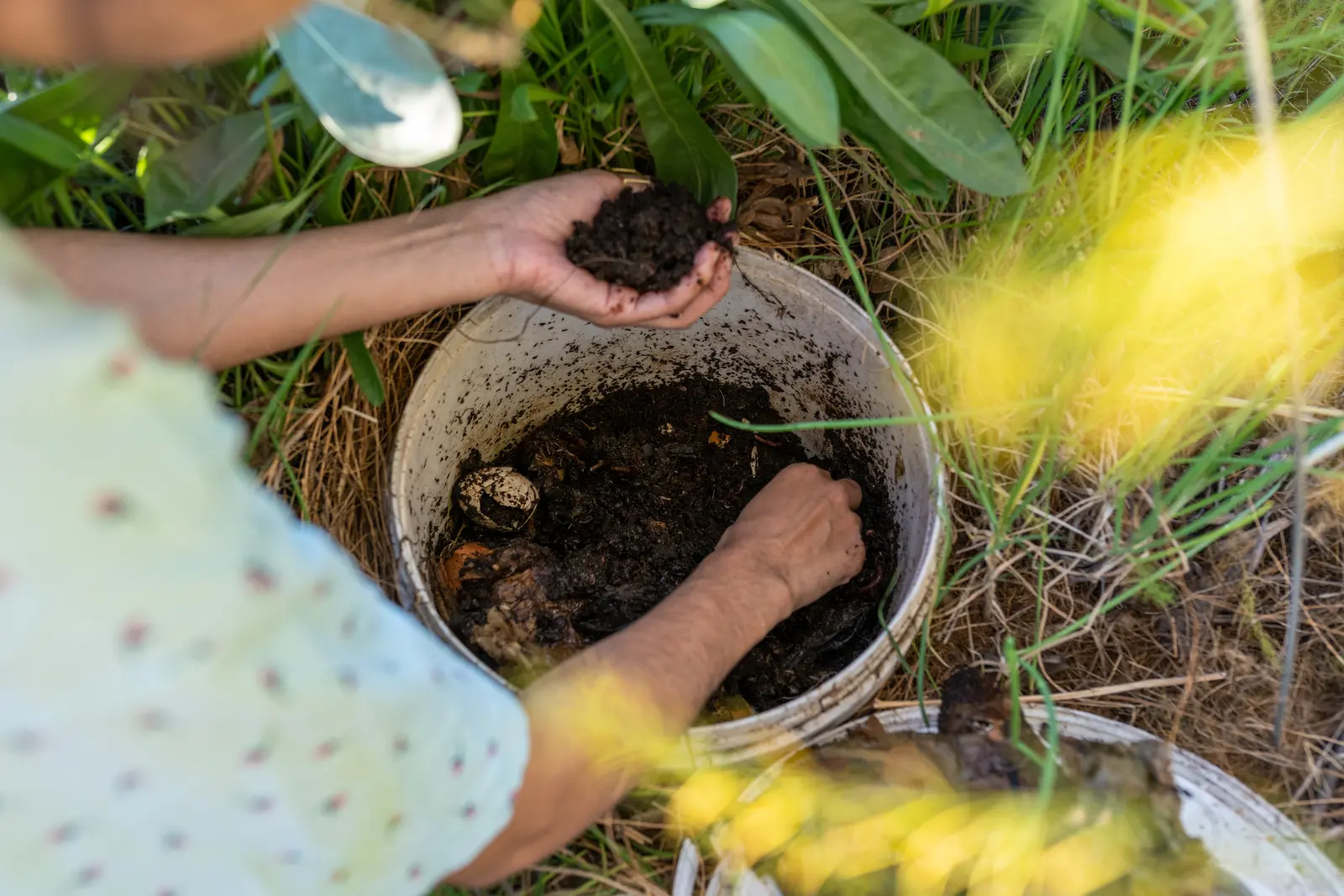
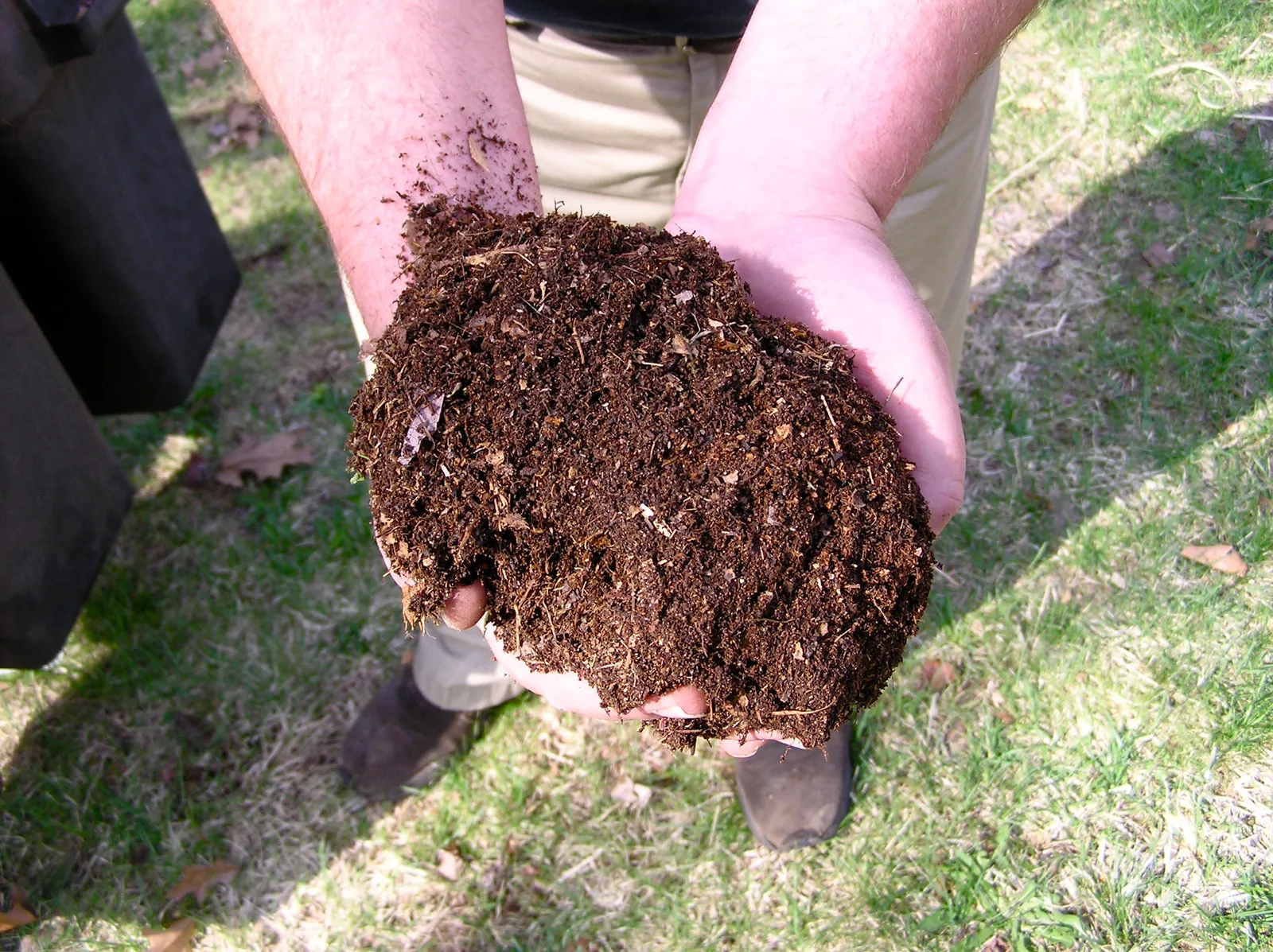
The most useful compost tool is the habit of checking the inside of the pile. A dry-looking top can hide a wet center; a crusted exterior can surround material that never became evenly moist.
“Green” describes its job, not necessarily its color
Greens supply relatively more nitrogen. Common examples are fruit and vegetable scraps, fresh grass clippings, and coffee grounds. Browns contribute relatively more carbon; dry autumn leaves, shredded plain paper, and woody materials belong in that group.
Coffee grounds are the memorable exception to a color-based rule. They look brown but function as a nitrogen-rich ingredient compared with leaves or shredded cardboard. Cornell’s compost chemistry guide also shows how widely carbon-to-nitrogen ratios vary among different materials. Cornell Composting: compost chemistry
That variation is why a bucket recipe is approximate. A loose bucket of dry leaves is not equivalent to a tightly packed bucket of sawdust. The familiar laboratory target of around 30 parts carbon to one part nitrogen is a ratio by weight of those elements; it does not mean thirty buckets of browns per bucket of greens.
Use the simple volume mix to get started. Use observations to improve it.
If it smells sour or like rotten eggs
Investigate moisture and compaction first. Wet, matted ingredients leave too little space for air. Unpleasant sulfurous odors are associated with oxygen-poor decomposition, a different problem from merely having a pile that is taking its time. New Mexico State University: backyard composting
Pull apart compacted clumps with a garden fork and mix in dry, coarse-textured browns. Add material throughout the wet area, not just as a decorative layer on top. If rain is repeatedly soaking the pile, address the exposure while retaining ventilation and a route for excess water to leave.
The important action is rebuilding air spaces. Continually stirring a saturated, fine-textured mass without changing its structure may give only a brief improvement. After mixing, check the middle again rather than judging the result from the surface smell alone.
If it smells sharply of ammonia
Pause additions of fresh nitrogen-rich material and mix in browns. Cornell Cooperative Extension of Tompkins County identifies an ammonia smell as a sign of excess greens and recommends rebalancing with carbon-rich material. It separately identifies sour or rotten odors as an aeration problem. Those two smells can point toward related but not identical adjustments. Troubleshooting your compost
For example, a pile receiving a large load of fresh grass may need both more browns and physical separation of the clippings. Do not dump in a thick layer of another fine ingredient and assume that the category label fixes the texture. Mix, then observe.
If the pile is dry and almost unchanged
Wet the material as you turn it so moisture reaches more than the outer layer. Aim for a damp, sponge-like feel rather than a dripping mass. In New Mexico State’s guidance, squeezing a handful is a practical moisture check; a dry pile should be turned and watered. Backyard composting
Once the pile is evenly moist, consider its ingredients. A heap dominated by large woody pieces can still decompose slowly even when the proportions look reasonable. Chopping increases exposed surface area; size and the availability of carbon matter as well as the overall carbon-to-nitrogen number. Cornell: compost chemistry
Keep the response proportionate. You do not need to pulverize every twig. Return stubborn pieces to the next batch when the finer material is ready.
If it never becomes hot
Ask what kind of composting you are doing. A small, continually fed bin is not the same process as assembling a large, balanced batch for fast hot composting. Heat is easier to retain in a sufficiently large pile. Ohio State Extension discusses volume as particularly important when the goal is rapid, high-temperature composting. Ohio State: composting at home
A cool pile can also be dry, short of nitrogen, or near the end of active decomposition. Check these possibilities before buying an additive. If the material is gradually breaking down and the pile is not causing odor or pest problems, slower progress may fit your needs perfectly well.
Do not assume a warm center proves the whole pile has destroyed weed seeds or plant pathogens. Home conditions vary, so keep diseased plants, aggressive weeds, and seed-laden weeds out of a routine low-attention system. The EPA also advises avoiding meat, dairy, greasy foods, pet waste, and treated wood in ordinary backyard piles. EPA backyard compost ingredients
Make the next adjustment easier
Keep a dry-brown supply near the bin. Tear plain cardboard before you need it, save suitable leaves, and mix fresh food scraps into existing material rather than leaving them exposed. Cornell’s troubleshooting sheet recommends covering food scraps with browns to reduce access for flies and other pests. Cornell Cooperative Extension troubleshooting
For a week or two, note what went in and what you changed. “Added a large bag of wet grass; mixed in leaves” is more useful than “ratio wrong.” It helps you recognize whether a recurring problem comes from the ingredients, the weather, or the way the bin is filled.
Composting does not require an exact recipe every time. It requires a workable balance and enough attention to distinguish slow decomposition from conditions that need correction.
Sources & further reading
We favor university extension guidance and original product documentation. Linked sources support the specific facts cited; they do not endorse Garden Gear Atlas.
- EPA: composting at home
- Cornell Composting: compost chemistry
- New Mexico State University: backyard composting
- Troubleshooting your compost
- Ohio State: composting at home