Start with a cross-section, not a diagnosis from the lid
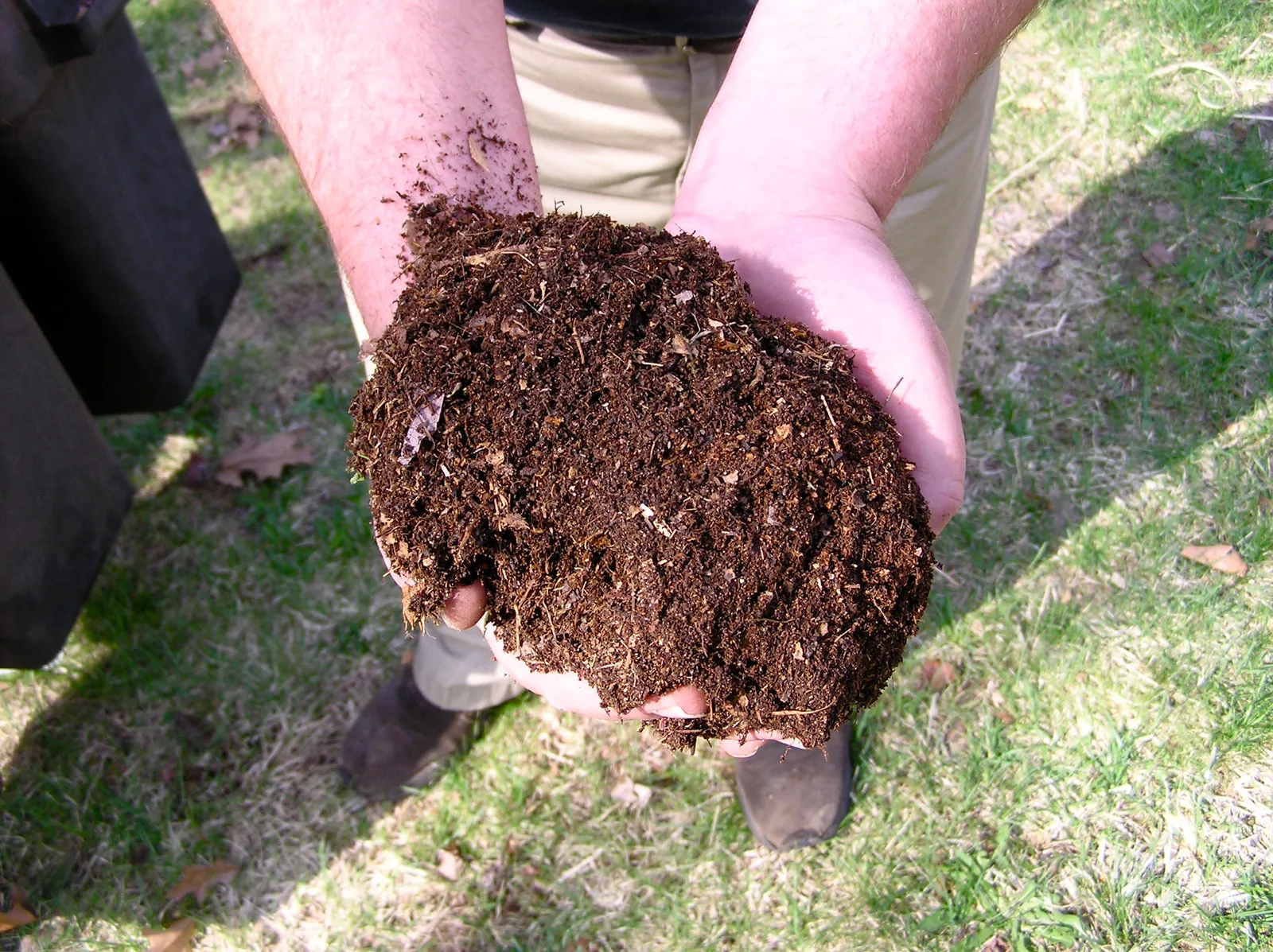
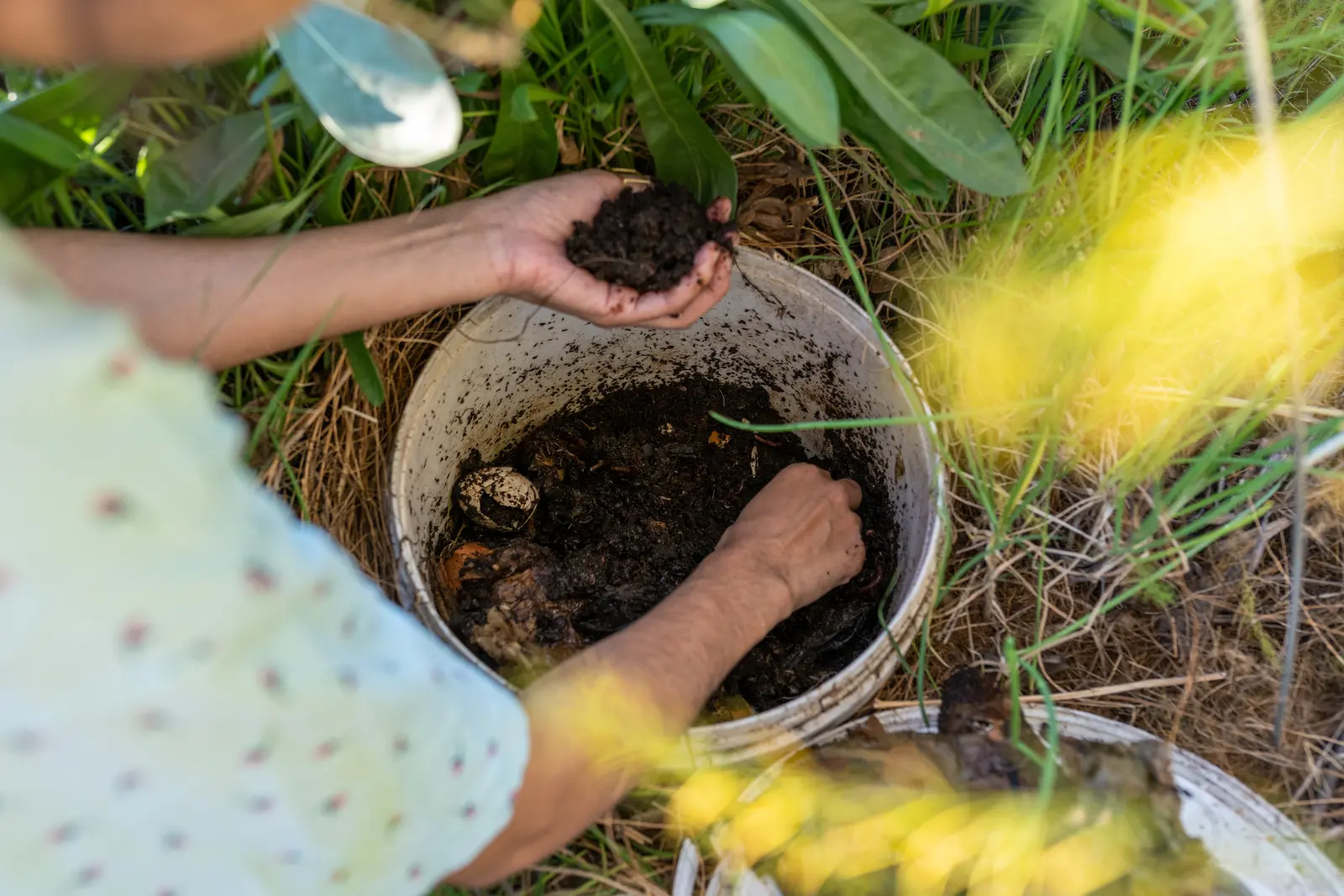
A lid opens onto only one part of the compost. The surface may be crisp while food scraps below are wet and matted; a damp top may hide a dry pocket against the wall. Before adding water or a large quantity of leaves, inspect material from several accessible positions. Use a tool appropriate to the bin, wear gloves, and avoid leaning into an unstable container. Note texture, recognizable ingredients, moisture differences, and any persistent odor.
Write a short baseline such as wet compressed center, dry leaf layer at back, and recent melon scraps near opening. This is more useful than simply writing bad compost. It tells you which material to separate or mix and gives you something to compare after the intervention. If you encounter sharp objects, chemicals, unknown waste, or substantial animal contamination, stop handling it as ordinary garden compost and seek appropriate local disposal advice.
Separate moisture from structure, while recognizing their connection
Water and airflow are linked, but they are not interchangeable observations. Cornell explains that excessive moisture restricts oxygen transport because water occupies spaces that otherwise contain air. A waterlogged mixture can therefore remain oxygen-limited even when the container itself has ventilation holes. Opening a lid does not automatically create useful air pathways through a dense mass. Cornell's explanation of excess moisture
Structure concerns how the ingredients pack together. A compressed mat of fine material behaves differently from a loose mixture, even when both feel damp. Cornell separately identifies inadequate porosity as an obstacle to oxygen movement. Cornell on porosity and compost odors This distinction helps explain why repeatedly adding a small amount of absorbent powder may not solve a bin whose contents remain physically compacted.
Make a recovery area before emptying anything
Choose a contained work area where you can inspect and remix manageable portions without spreading material onto a walkway, storm drain, or a neighbor's property. Have a suitable cover ready if rain is expected. Gather the dry structural material you intend to use before beginning. If the bin has a removable wall or door, read its instructions so that releasing a panel does not unexpectedly spill a heavy mass toward your feet.
Decide how much work you can complete comfortably in one session. A full rebuild is not always necessary, and a large wet bin can be much heavier than its appearance suggests. Work in smaller loads with a container you can safely lift. If you cannot reach the affected portion without unsafe bending or climbing, change the handling arrangement or obtain help. The recovery method should fit the person as well as the biology.
Correct a wet, matted portion by redistributing ingredients
Loosen the affected material and blend in an appropriate dry, bulky ingredient rather than sealing it beneath another uninterrupted layer. Cornell's moisture-monitoring guidance discusses adding dry absorbent or bulking materials when a mixture is too wet. Cornell: monitoring compost moisture Inspect the result as you work. The goal is a more evenly conditioned, open mixture, not an arbitrary number of buckets added regardless of the starting condition.
Use this as a small-batch trial. For example, remix one tub of the troublesome material, observe whether it remains a dense wet lump, and adjust before treating everything else. Record the approximate ingredients and volumes for your own repeatability, but do not publish that ratio as a universal recipe. Shredded cardboard, dry leaves, and woody particles differ in absorbency and structure; even two loads of leaves can behave differently depending on size and moisture.
For a manual redistribution option, review the Lotech Compost Crank’s working method, including reach, overhead clearance and the crank-and-lift movement. Equipment does not replace correcting the ingredients and moisture.
Rewet dry pockets gradually rather than flooding the whole pile
If a portion is genuinely dry, loosen it and add water gradually while mixing so that the interior is reached. Pouring a large volume onto the top can produce runoff or preferential wet channels without conditioning the rest. Check several handfuls of the remixed material with gloves rather than relying on the first damp piece you touch. Stop before you create a new wet zone at the bottom of the container.
An example helps distinguish the choices. Suppose the front half contains damp vegetable scraps and the back contains crisp, tightly layered leaves. Adding water everywhere would ignore the already wet portion. Mixing appropriate amounts of the two may improve uniformity, with additional water only where the resulting mixture needs it. That is a diagnostic example, not a fixed formula: the actual decision depends on what the material feels like after redistribution.
Find the route by which the imbalance keeps returning
Look beyond the ingredients at how water enters and leaves. Is a roof edge directing rainfall into the bin? Does the lid sit as intended? Is the container resting where runoff collects? Are drainage openings obstructed by material or an unsuitable installation? Address those conditions within the manufacturer's instructions. Do not drill structural parts or create an uncontrolled drainage outlet simply because the contents are wet; the installation may need a different location instead.
For a repeatedly dry bin, examine exposure, lid position, and the way dry material is added. A fresh layer that never gets mixed may remain separate from the active material below. Keep a brief weather and loading record through the next few additions. A recurring pattern such as wet after every uncovered storm or dry after every large leaf addition points to a practical change more clearly than a single observation made weeks later.
Measure change without treating temperature as a pass-fail score
If you use a compost thermometer, record where and how deeply it was inserted, along with the date. A reading from a warm center cannot describe every edge or prove that all material received a pathogen-reduction treatment. Equally, a modestly warm household batch is not automatically a failure. Evaluate the recovery using the original problem: are compressed pockets reduced, is moisture more uniform, and is a persistent objectionable odor declining?
Change one major management variable at a time when practical. If you add several ingredients, flood the bin, move it, and begin a new turning schedule on the same day, you will have little evidence about what helped. Sometimes several corrections are necessary; record them honestly as a combined intervention. A useful record needs only a date, observation, action, and next check, not a laboratory notebook or an expensive collection of sensors.
The REOTEMP FG20P thermometer profile documents a 20-inch Fahrenheit model. Compare the probe length and readable range with the locations you need to measure.
Keep recovery and fresh loading from working against each other
A bin that is being corrected may not be ready for the normal volume of new scraps immediately. Use an appropriate temporary collection or another authorized composting route while you reassess capacity. Do not hide a large new load inside the remixed portion and then attribute the next odor entirely to the old problem. Label a finishing chamber or separate batch so that other household members know where new material belongs.
This is especially important after a seasonal surge. A party, harvest cleanup, or lawn-cutting session may produce more material than the routine system comfortably manages. Plan a destination for that exceptional volume in advance. The best correction may be a smaller accepted load, another holding area, or a community collection service, rather than a larger tool. Equipment helps only when the operating routine leaves enough room and time to manage its contents.
Turn the incident into a short prevention rule
At the next check, compare with the baseline and write one specific operating rule. Examples include breaking up damp leaf mats before adding them, checking the rear corner during weekly inspection, keeping suitable dry material within reach, or protecting the opening from a known rain path. Make the rule observable so another person can follow it. Be cautious with slogans such as add more browns: they omit particle size, moisture, quantity, and the reason for adding them.
If the same problem persists despite an appropriate correction, bring photographs and the input record to your local extension service. Include the container type, approximate dimensions, installation surface, recent ingredients, and what you changed. That information supports a more useful conversation than a photograph of the lid alone. The objective is a repeatable process that works in your setting, not a promise that every batch will behave identically or finish on a fixed date.
Sources & further reading
We favor university extension guidance and original product documentation. Linked sources support the specific facts cited; they do not endorse Garden Gear Atlas.
- Cornell University — Excess Moisture
- Cornell University — Inadequate Porosity
- Cornell University — Monitoring Compost Moisture