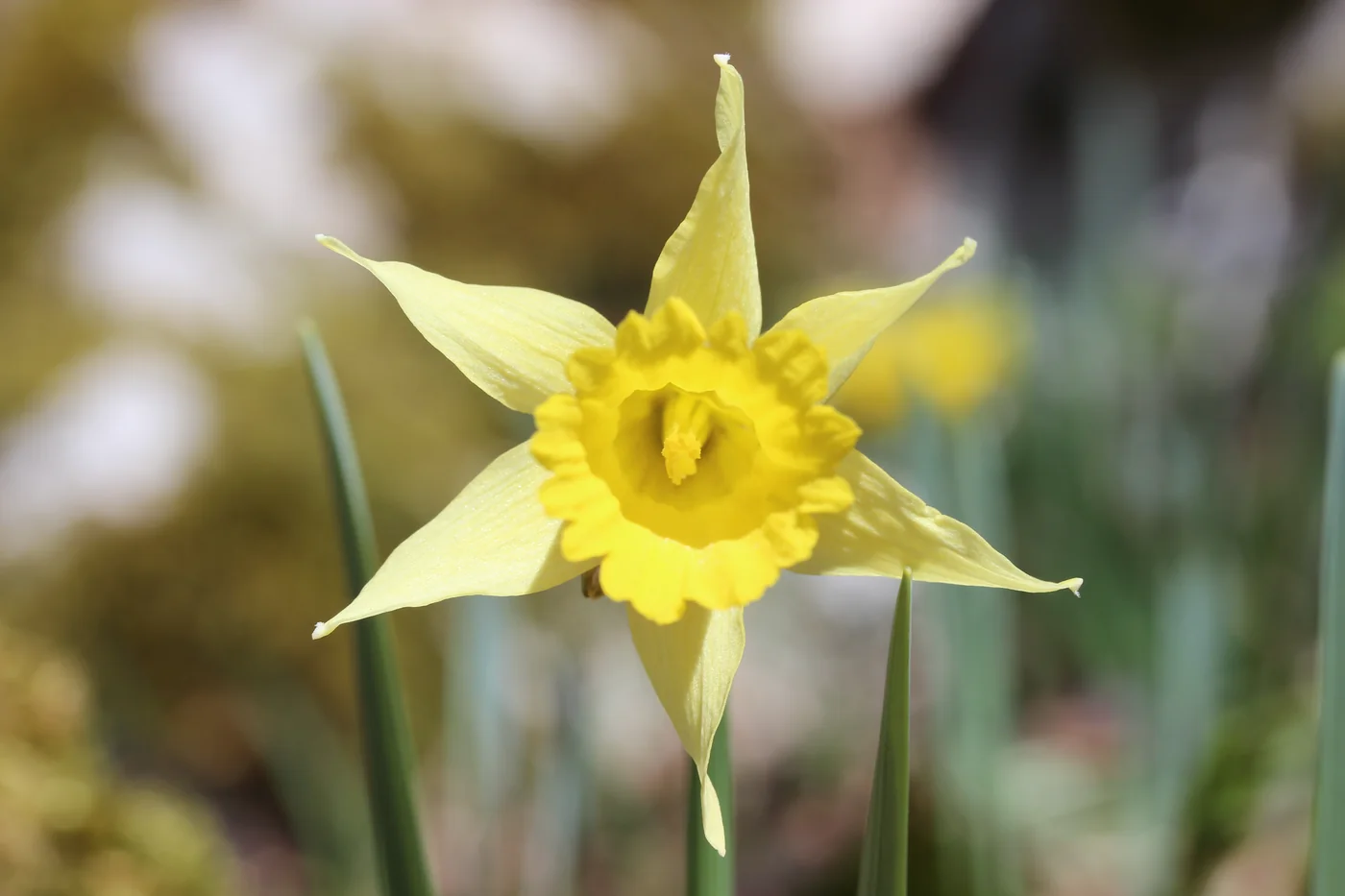
Decide whether crowding is actually the problem
A mature clump with many leaves and progressively fewer flowers may need division, but flowering can also decline after early leaf removal, increasing shade or poor drainage. Illinois Extension explains how offsets form around true bulbs and why congestion can reduce flower size. It also notes that some tulip and hyacinth displays decline with time. Dividing every disappointing bulb bed therefore does not address every cause. Bulb growth and overcrowding
Mark the clumps while their foliage is visible. Use a label and a photograph that includes a fixed reference such as the path edge, recording flower color, approximate height and whether the whole clump or only its center flowered poorly. A hand trowel is useful for careful inspection around a small group; larger established clumps may need a border fork and a wider approach. Plant markers serve a different job: they preserve the location through summer, when foliage has vanished and an unmarked bulb bed looks available for digging.
Let daffodil foliage finish rebuilding the bulb
Once flowers fade, leave the leaves exposed until they yellow naturally. The RHS gives roughly six weeks after flowering as a common interval, while emphasizing the foliage's role in replenishing reserves. Avoid knotting, braiding or cutting green leaves to make the bed look tidier. Remove spent flowers if seed production is not your aim, but distinguish the fading flower from the leaves still working below it. RHS daffodil care
Use that waiting period to investigate the planting. Has a nearby shrub grown enough to shade the leaves? Does irrigation for summer annuals leave the area wet throughout dormancy? Did someone mow the bulbs before their leaves died last year? Record the answer before lifting so you can change the new site if needed. If early mowing was the obvious problem, restore the leaf-growth period and observe another flowering season before assuming division must happen immediately. Plan access for weeding that does not repeatedly trample the recovering foliage.
Match the lifting window to the bulb and local season
Iowa State says daffodils can be dug and replanted after foliage turns brown in early summer, or moved in autumn if the site was marked earlier. Its October reference is an Iowa timing example. Use local seasonal conditions rather than copying that month into a warmer or colder climate. Once the leaves have disappeared, accurate marking becomes part of the job, because exploratory digging can slice through bulbs you intended to preserve. When to move daffodil bulbs
For many spring bulbs, Illinois describes dormancy after the foliage matures as the appropriate lifting stage, with immediate replanting or ventilated storage for fall planting depending on the plan. If the destination is already prepared, replanting avoids a separate storage task. If you must wait while a bed is rebuilt, decide where the bulbs will be held before digging. Keep this schedule separate from the summer-bulb winter-storage decision, which involves different plants and seasonal risks. Spring-bulb lifting and storage
Lift outside the clump and separate only ready offsets
Begin beyond the visible outer leaves or the marked clump edge and work downward carefully. Loosen soil around the group before levering from beneath it. If you encounter a bulb, widen the excavation rather than forcing the tool through. Support the lifted clump, remove enough loose soil to see its structure and keep the label with it. Avoid pulling on old leaves as handles. A small preliminary excavation can reveal how widely the offsets have spread before you commit to a larger lift.
Separate offsets that come away readily by hand. Each retained bulb needs a sound base; this is division of existing bulbs, not an instruction to cut an intact bulb into arbitrary pieces. Sort large sound bulbs from smaller offsets and from damaged or decaying material. The RHS notes that offsets reproduce the parent type and that small offsets may need several years to reach flowering size. Label their growing area accordingly so a season of leaves is not mistaken for failure. RHS bulb propagation
Work on one named clump at a time. Put its sound bulbs and smaller offsets in separate labeled containers before starting the next. If identities have already become mixed, record the mixture rather than assigning every bulb the name of the one flower you remember. Do not share soft or visibly diseased bulbs; seek help with recurring unexplained decline before moving it around the garden.
Handle snowdrops with roots and foliage still attached
Snowdrops need a different handling emphasis from a dormant daffodil batch. The RHS describes lifting and dividing as their foliage turns yellow, with minimal disturbance and replanting at the previous depth. Its broader propagation guidance also describes moving snowdrops after flowering 'in the green' because dry bulbs can establish poorly. These descriptions overlap around the post-flowering period; neither means cutting away green leaves to manufacture dormancy. RHS snowdrop growing guide
Prepare the new holes first, lift when the soil is suitably moist and keep the roots from drying during separation. Small groups may be easier to handle without damage than individual tiny bulbs. Replant promptly at the previous soil level, using the transition from pale underground tissue to green as a practical clue where visible, then water to settle the roots. Work in manageable portions rather than exposing the entire patch while you search for a destination. Leave foliage to decline naturally after the move.
Replant for years of growth rather than one dense display
Choose a site that suits the species and where its leaves can remain until they finish. For daffodils, the RHS uses a planting depth of roughly three times bulb height. Check whether a supplier's stated depth is measured to the base or as soil cover; those are different measurements. Space bulbs for future clump growth using species and cultivar guidance. A densely packed temporary container display is not a useful spacing model for a permanent bed.
Use the available area to decide how many sound bulbs return and where the extras belong. For example, if the original clump occupied the only suitable planting pocket, returning every offset simply recreates the same congestion. Put the strongest bulbs in the display and smaller offsets in a marked growing area, or share sound surplus bulbs with their identity and flowering-size caveat. Do not solve a spacing problem by burying the extras deeper. Water after replanting to settle soil, then respond to rainfall, drainage and active growth rather than maintaining constant saturation.
Track recovery through the next flowering season
Record how many large bulbs and small offsets were replanted, approximate spacing, location and any drainage or light change. If storage was necessary, inspect the batch periodically and keep it ventilated according to species guidance; do not leave freshly lifted damp bulbs sealed in a plastic bag. Replant within the appropriate local season. The regional spring-bulb guide helps review chill and drainage limits if a move also changes the setting.
Next spring, compare emergence and flowering separately. Small offsets may produce healthy leaves before they reach flowering size. Large bulbs that still fail despite renewed space should prompt another look at light, foliage care, planting depth and bulb health. Avoid setting an automatic divide-every-year reminder: observe whether the clump remains productive and manageable. Keep the summer marker until the new layout is firmly established, especially where companion plants hide bulb foliage and make the edge of the planting difficult to remember.
Sources & further reading
We favor university extension guidance and original product documentation. Linked sources support the specific facts cited; they do not endorse Garden Gear Atlas.
- Illinois Extension: Bulbs
- RHS: Growing Daffodils
- Iowa State: When Can I Move Daffodil Bulbs?
- Illinois Extension: Planting Bulbs
- RHS: Bulb Propagation Methods
- RHS: Growing Snowdrops
.jpg)