Name the problem before picking up the pruner
A vine can be vigorous and still be wrong for its support. It can also be compact, healthy and temporarily between flowering flushes. Stand back and choose the problem you actually need to solve: stems falling forward, a gate being blocked, flowers hidden above eye level, or very little bloom anywhere on the plant.
Take one photograph of the full framework and one of a representative shoot. Note whether the vine was recently planted, cut hard, moved or affected by unusual weather. Include the approximate date of the last flowers. This short record stops a normal seasonal pause from being treated as a permanent failure.
Before applying this guide, confirm the name. Japanese honeysuckle is Lonicera japonica, an invasive vine whose white flowers age yellow and whose berries are black. It needs an identification and management decision, not instructions for improving its garden display. Screen a vine for regional invasiveness when the label is missing. Maryland Extension: Japanese honeysuckle
Inspect the structure from the base to the last usable rung
Start where the main stems leave the ground, then follow their routes with your eyes. Identify which stems carry most of the upper growth and where the frame connects to posts or another structure. Do this before cutting an apparently expendable strand in a tangle; it may be the stem supporting the part you intend to keep.
Check the boundary of the useful support. A gate hinge, drainpipe or narrow space behind a panel is not extra trellis. Mark those areas on the photograph. If the desired leafy outline already occupies them, decide where that growth should go before detaching anything.
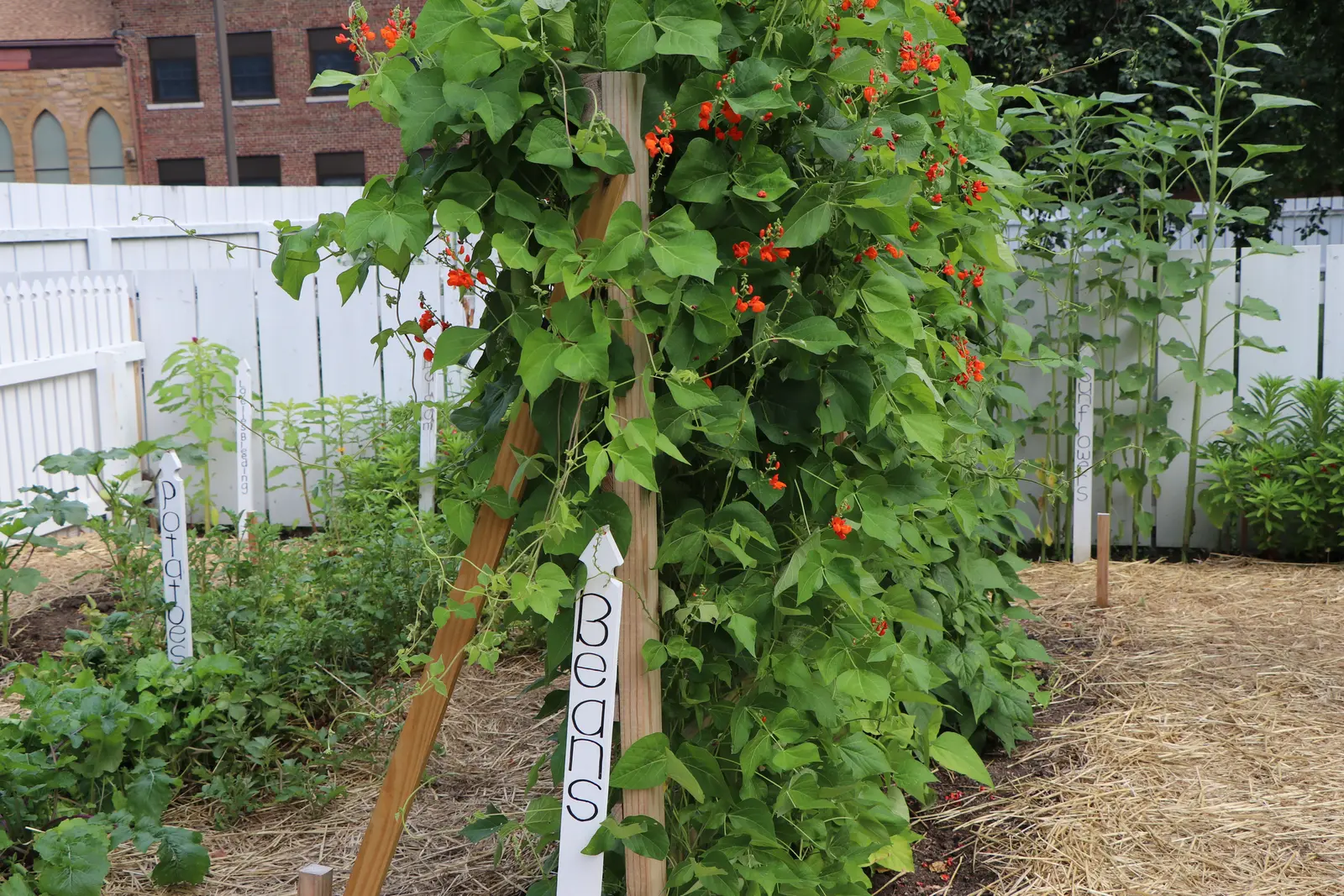
Ask whether the framework can be inspected and repaired after the vine fills it. A decorative seasonal support may give shoots something to climb without being a suitable permanent structure. Choose a frame for the mature woody planting and the installation, then add useful twining points. The vine-support selection guide explains that distinction.
If a frame has become unstable or detached, treat the support repair as the immediate job. Avoid pulling a loaded panel upright by its stems. Arrange appropriate help for a structure you cannot control from a secure working position; the plant can be trained only after its support is dependable.
Redirect flexible growth before making it shorter
RHS recommends spreading newly planted climber stems across their support and using ties that leave space for thickening. Where stems rub in wind, a figure-of-eight tie separates stem from support. Check ties regularly and replace constricting ones; even flexible material can eventually become too tight. RHS: How to tie in climbers
Choose an empty area of the frame for each shoot you want to retain. Guide it gently along a route it can take without a sharp bend. If a woody section resists repositioning, leave that part in place and work with flexible growth beyond it. Training should not require levering an established stem into a new shape.
After positioning a few shoots, step back. Check whether the flowers and foliage will remain visible from the viewing side and whether the working route is still open. Stop once the immediate conflict is solved. Filling every gap today can recreate the crowded outline you were trying to correct.
For sparse flowers, compare light, cutting and feeding history
Look for a useful comparison within the same plant. Does an upper, sunnier section flower while a shaded lower section stays leafy? Do untouched tips have buds while clipped sections do not? Those observations help choose the next action without pretending that a single symptom proves the cause.
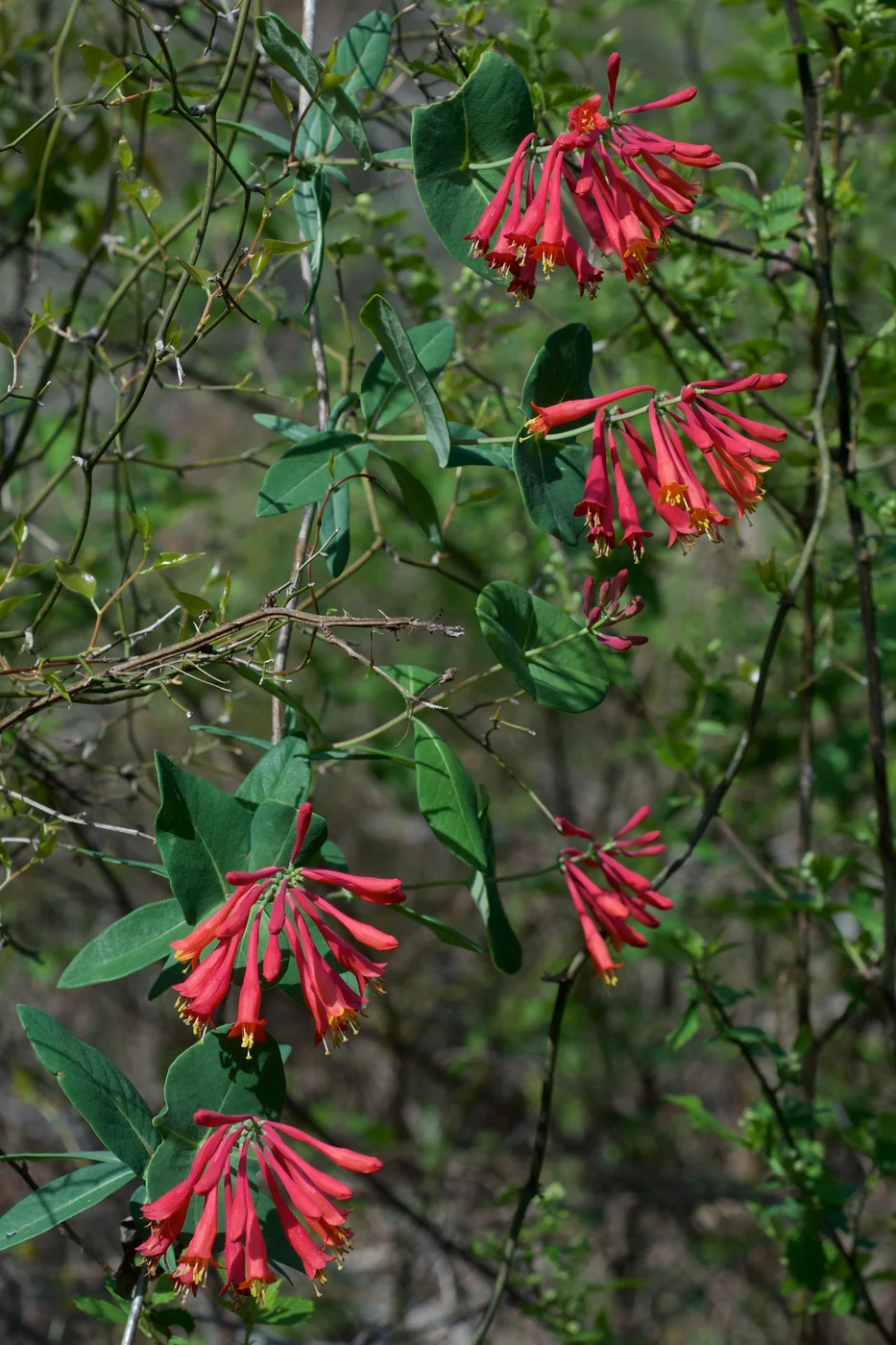
NC State reports stronger flowering in full sun and warns that high nitrogen fertilizer favors foliage over flowers. Therefore, record fertilizer used on the vine and nearby planting before adding more. A flower-promoting product is not the starting point for a plant already producing abundant leafy growth. NC State Extension: Coral honeysuckle
Check whether nearby trees or shrubs now shade a previously open framework. Record the actual light during the vine’s growing season, not just the winter view. If increasing light would require damaging a valuable tree, changing the vine’s position or accepting a quieter display may be the better garden decision.
For a recently planted vine, inspect root-ball moisture and the growing site before judging flower performance. UF/IFAS describes established drought tolerance but specifically excludes dry sand as a suitable condition. That does not provide a watering calendar for a nursery plant. Check the root area and respond to its condition. UF/IFAS: Coral honeysuckle
Use the main bloom as the routine shaping reference
For ordinary size control, let the main flower display finish before making selected cuts. NC State recommends pruning after flowering. Maryland’s regional table records coral honeysuckle flowering on both old and new wood; avoid translating a general new-growth description into permission to remove the whole established vine immediately before its spring display. NC State Extension: Coral honeysuckle Maryland Extension: Vines for Maryland gardens
Write down the purpose of each proposed cut: clearing a latch, removing a broken shoot, separating rubbing growth or shortening a stem that has no usable support left. Locate a suitable retained side shoot or bud and make the cut with the remaining framework in view. Remove the severed piece in manageable lengths if it is intertwined.
Routine maintenance and renovation are different decisions. A few wayward stems do not require a wholesale reset. If the vine has filled an inadequate structure, repeated hard cutting will not repair the original mismatch. Assess a larger appropriate support, a different plant position or a smaller planting before choosing an aggressive reduction.
Where major renovation is needed, get local advice for the named plant and accept that the next display may change. Keep photographs of the framework you retain. Do not promise a particular bloom date, regrowth height or recovery time from the amount removed.
Check damaged leaves separately from the pruning plan
Maryland lists aphids and powdery mildew among potential coral honeysuckle problems. Use those as possibilities to investigate, not diagnoses from every curled or pale leaf. Inspect young tips and leaf surfaces closely, noting whether the symptom affects one stem, the shaded interior or most of the vine. Maryland Extension: Vines for Maryland gardens
Photograph the symptom and the whole plant in the same visit. Include watering, recent treatments and weather when asking a local diagnostic service for help. Avoid removing large amounts of healthy framework merely to make a patch of affected foliage disappear from view.
Keep ordinary leaf loss, pest assessment and support maintenance as separate notes. That makes follow-up useful: you can tell whether a structural correction worked even while a leaf problem needs further identification. It also prevents a new spray, more feeding and a hard prune from becoming an uninterpretable single experiment.
Use a small tool set and a seasonal review
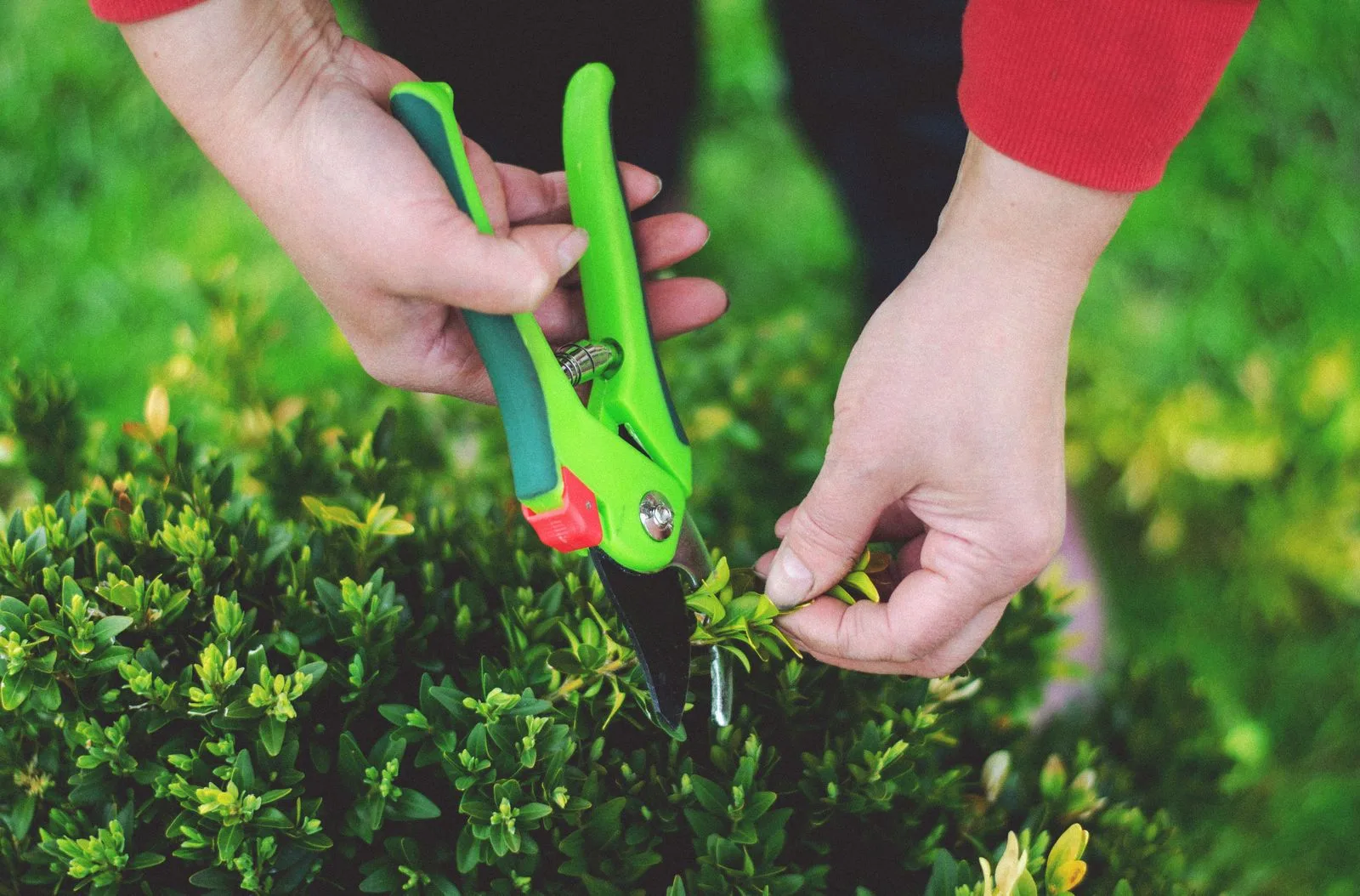
A comfortable bypass pruner suits selected accessible live stems within its working capacity. Compare the FELCO 6 with the FELCO 9 left-handed model by hand fit and control. They are choices for different users, not two tools every honeysuckle owner needs. Larger or awkward cuts require a different assessment.
Clean and inspect the tool before continuing if it starts crushing, dragging or leaving torn cuts. Pruning-tool maintenance helps distinguish sap buildup, adjustment and edge care. Do not keep forcing a one-handed tool through a cut simply because the stem appears close to its stated maximum.
At spring growth, check the framework and ties. At the main bloom, photograph where flowers appear. After that flush, make any purposeful size corrections. Before winter, note which stems and access routes remain manageable. These are observation points, not fixed monthly pruning appointments.
The next season’s useful outcome is specific: the gate opens, the supported stems remain accessible and flowers occur where you can enjoy them. If the same conflict returns repeatedly, revisit the site or structure. The solution may be a changed planting arrangement rather than another round of harder cutting.
Sources & further reading
We favor university extension guidance and original product documentation. Linked sources support the specific facts cited; they do not endorse Garden Gear Atlas.
- Maryland Extension: Japanese honeysuckle
- RHS: How to tie in climbers
- NC State Extension: Coral honeysuckle
- UF/IFAS: Coral honeysuckle
- Maryland Extension: Vines for Maryland gardens