Start with the botanical name and the flower
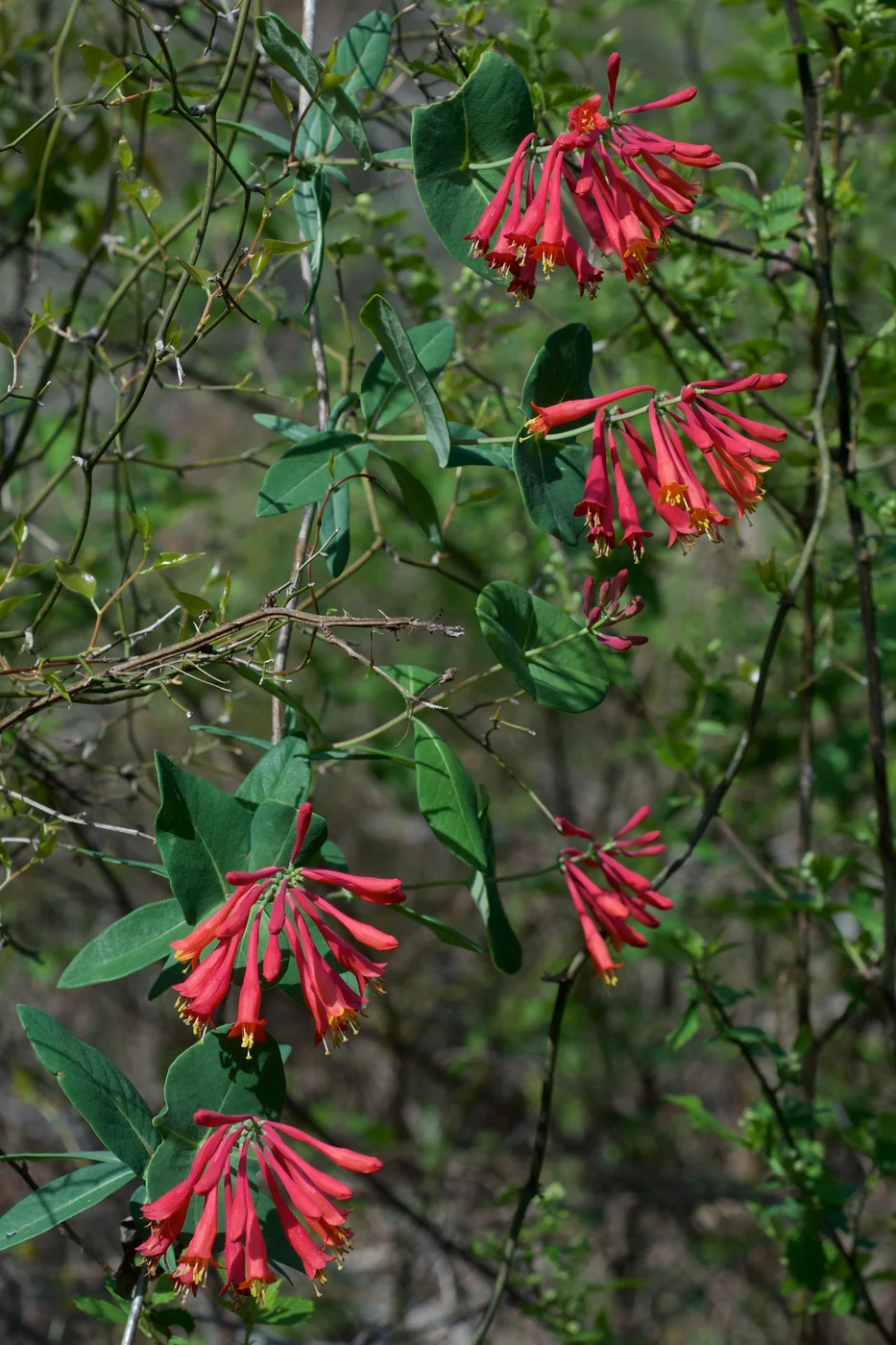
Coral honeysuckle is a woody, twining vine native to the eastern United States. Its narrow red to orange tubular flowers are generally unscented; the paired leaves immediately below flower clusters join around the stem. Those features are more useful than the word honeysuckle on a nursery bench. NC State Extension: Coral honeysuckle
Japanese honeysuckle, Lonicera japonica, typically has fragrant white flowers that age yellow and paired black berries. Maryland Extension describes its spread by seed and runners and its ability to smother neighboring vegetation. Do not buy an unidentified honeysuckle on the assumption that every climbing form is the native species. Maryland Extension: Japanese honeysuckle
Keep the full nursery label, including the cultivar, and photograph flowers, leaves and the whole plant. Yellow-flowered coral honeysuckle selections exist, so flower color alone cannot settle identification. If a mature vine is inherited with the garden, resolve its identity before propagating it or moving rooted stems to another property. The regional vine-screening guide explains the wider check.
Give the display a place in a real garden
Choose the view before choosing the trellis. Stand where you expect to enjoy the flowers and mark the portion of fence or framework you can actually see. A vine on the far side of a boundary may put much of its display outside that view. A low, reachable framework can make more sense than the tallest available structure.
List what must remain accessible: a gate latch, path, hose connection, fence panel or inspection point. Then draw the intended leafy area around those objects. This makes the planting decision concrete. The available support is the space you can maintain, not every surface a stem could eventually reach.
If the purpose is habitat planting, confirm that this species belongs in the regional plan and include plants that contribute at other times. Choosing native perennials for the actual site helps connect a native label to light, moisture and garden use. A single vine need not provide the whole season of interest.
Check both the canopy light and the rooting place
Observe the proposed position while neighboring trees are in leaf. Record where direct sun reaches the upper framework and where it reaches the soil. A fence can have a bright top and a deeply shaded base; the light label attached to the garden as a whole may miss that difference.
Look at the ground after substantial rain and during a dry spell. Note runoff from paving, a roof edge or a slope, and whether the planting point stays wet while nearby soil drains. Make those observations before filling a low spot with a vine simply because the support is already there.
Arrange a way to water the root area without dragging a hose through other plants. During establishment, check the original root ball and adjacent soil separately. Record which area is dry before adjusting the routine. A wet-looking bed does not tell you whether the nursery root ball received water.
Build a framework the stems can use
A twining vine needs something its stems can wind around. Plan a permanent frame plus reachable training points, rather than expecting a bare wall to provide attachment. The climbing-method support guide distinguishes the grip surface from the structure that carries the mature plant.
RHS guidance recommends installing supports before planting, spreading young stems onto their framework and checking ties as stems thicken. Soft ties should hold a stem without constricting it; bare wire ties can cut into growth. A temporary cane can bridge a gap to the lowest permanent support. RHS: How to tie in climbers
Keep the major stems visible from your working side. Before attaching a shoot, imagine having to remove it several years later. Do not thread woody stems through a narrow space that will make inspection or fence repair impossible. Guide flexible tips while they can still be positioned comfortably.
Let flowering guide ordinary pruning
For routine shaping, wait until the main flowering flush has passed and remove only growth with a clear reason to go. NC State recommends pruning after flowering. Continuous clipping of all the newest tips is a poor way to preserve a flower display, even when the plant is making plenty of leaves. NC State Extension: Coral honeysuckle
If blooms are disappointing, write down what happened before assuming the vine needs a stronger feed: recent cutting, shade from a newly filled tree canopy, or a difficult establishment period. Look for flowers on portions that escaped trimming. Those comparisons are more informative than changing several care practices at once.
The paired support, flowering and pruning guide works through an overfilled trellis and a leafy vine with few flowers. Use its sequence when deciding whether the next step is training, a selected cut, or a better planting position.
Treat a container as a separate growing commitment
A pot may work where ground planting is unavailable, but make the support and winter plan part of the initial decision. Sketch how the root container and the leafy framework connect. A portable pot becomes difficult to move if its stems have been woven permanently into a fence.
Choose usable root volume, open drainage and a container planting medium before choosing decorative finish. NC State explains that container size and growing medium influence the balance of water and air around roots. A long-lived woody plant needs a repotting plan as well as enough room on planting day. NC State Extension: Plants grown in containers
An exposed container also needs its own cold assessment. The ground hardiness range does not describe an unprotected pot on paving. If winter protection requires a move, measure the route with the support attached. If moving and long-term root care are impractical, use the vine in the ground or choose a smaller seasonal planting.
Watch the whole plant through the season
Photograph a few representative stems after planting, at the main bloom and after leaf fall or winter color change. Keep notes on the part of the support that filled, the number of training visits and whether you could still reach the base. This is a practical record of fit, not a race to cover every open square.
For small accessible cuts, a FELCO 6 bypass pruner is an existing option to assess for hand fit; choose a tool that suits the stem and the user. There is no need for a special honeysuckle cutter. If a tangled section prevents you from seeing what you are cutting, open the view before doing more.
At the next season review, decide whether the original goal still makes sense. A manageable flower panel, an informal fence planting and a permanent privacy screen are different jobs. Keep the vine where its actual seasonal appearance and maintenance needs match the one you want.
Sources and scope
Research-based guidance informed by institutional references. Cultivar, region and growing conditions can change the advice. Product inclusion does not imply hands-on testing of every model.