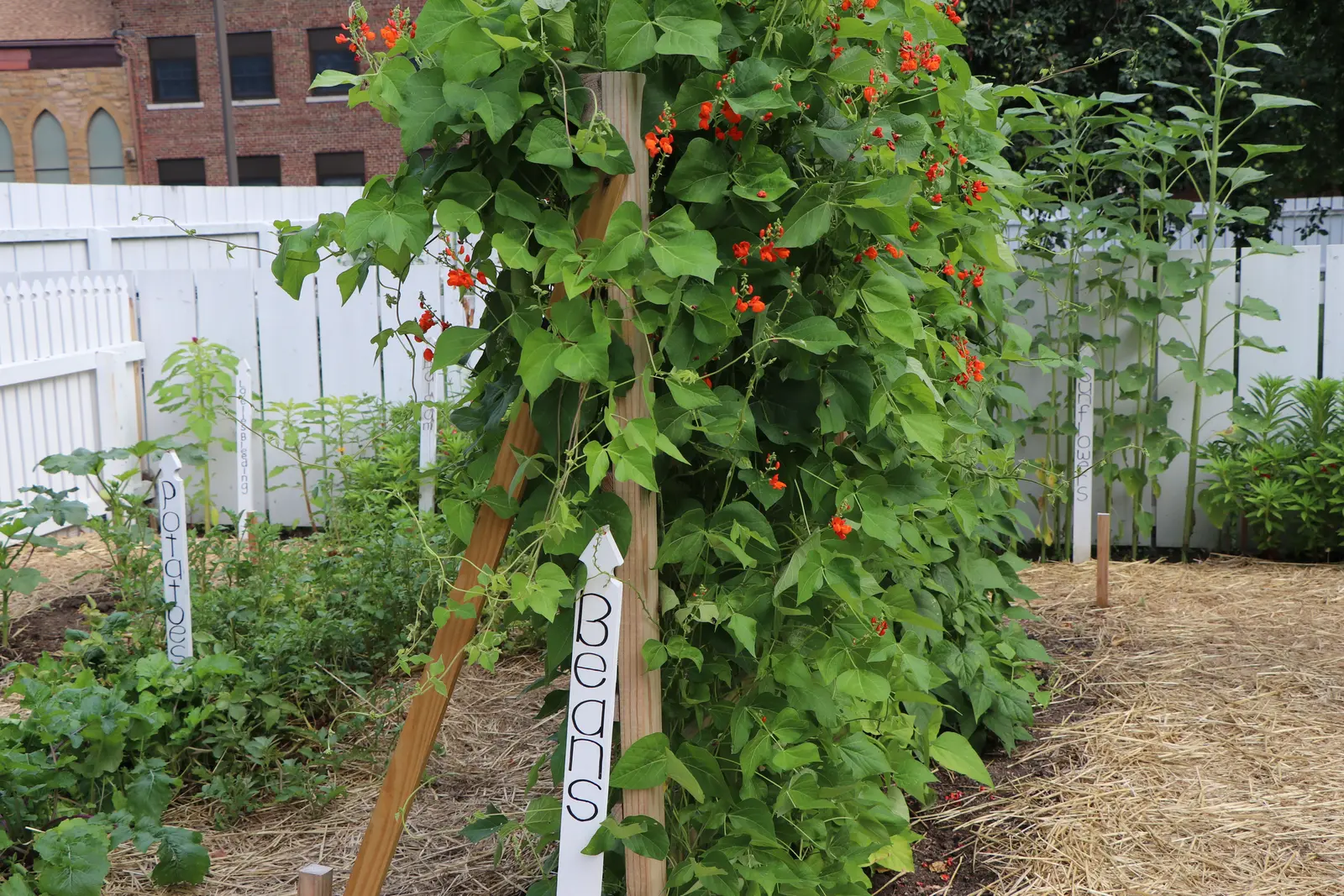
Use the botanical name as the starting point
Words such as honeysuckle, wisteria, or clematis can refer to plants with very different origins and behavior. Photograph the nursery label and record the full botanical name, including a hybrid name or cultivar when given. If a seller cannot identify the plant beyond a common name, postpone the purchase until you can establish what it is.
The USDA National Invasive Species Information Center distinguishes non-native from invasive: invasive status involves a non-native organism and actual or likely harm in the ecosystem under consideration. Fast growth alone does not supply the whole definition, and a plant's foreign origin alone does not settle the question either.
Apply the same care to a cutting offered by a neighbor. A vine that has behaved acceptably in one managed yard may spread differently beside woodland, a stream, or neglected ground. Free material still deserves identification. You are choosing a long-term plant with routes beyond its original support, not just a season of flowers.
Check the region and the date of the advice
Start with your state's agriculture or natural-resources agency and the local extension service. Look for invasive assessments, prohibited or regulated plant lists, and regionally documented garden alternatives. Read the geographic scope and update date. A national distribution map can show occurrence without answering whether planting is appropriate in your county.
For a concrete example, Maryland Extension's Asian-wisteria guide discusses Chinese, Japanese, and hybrid wisterias as invasive in its regional context. It also cautions that American wisteria does not naturally occur in Maryland. That is more useful than replacing every reference to Asian wisteria with a universal recommendation for anything called American.
Keep regulatory status and ecological judgment in separate notes. A plant being sold legally does not mean it is a sound choice for every natural area nearby. Likewise, absence from one short prohibited list is not evidence that all other species have been assessed and cleared. When sources are incomplete or conflicting, ask the local service to interpret the specific name and location.
Investigate every route of spread
Ask whether the vine spreads through seed, creeping stems, suckers, rooting nodes, or fragments. A trellis can organize upward growth while doing nothing about spread across the ground or seed carried away by animals. Pruning the visible canopy is therefore not necessarily a containment plan.
The University of Maryland's Japanese-honeysuckle profile documents both vegetative runners and bird-dispersed seed. In that setting, a small maintained patch is not isolated simply because its stems remain on a fence. This example illustrates why the reproductive behavior deserves as much attention as eventual height.
Walk beyond the intended bed and identify places where escapes would be hard to find: dense hedges, an inaccessible slope, neighboring land, or the far side of a fence. If your maintenance plan depends on removing every seedling promptly, ask whether those places can realistically be inspected. A plan that works only while every stem stays visible is fragile by design.
Match an alternative to the original job
Write down what attracted you to the first vine: a flowering season, fragrance, hummingbird visits, dense summer shade, or coverage of a trellis. Then separate the essential feature from optional ones. An alternative can be a better garden choice while having different flowers, and it need not always be another vine.
NC State Extension's coral-honeysuckle profile describes Lonicera sempervirens as a twining vine native to the eastern United States, with tubular flowers attractive to hummingbirds and best flowering in good light. It also identifies substantial mature growth. Consider it only where its regional status, site needs, and available support fit.
If fragrance was the main goal, a locally suitable fragrant shrub beside the sitting area may meet it with less vertical maintenance. If privacy was the goal, an appropriately spaced shrub screen may be more dependable than a vine needing a large support. Reconsidering the job expands the shortlist without pretending that unrelated plants are exact substitutes.
Verify the limits of a native alternative
Native is a geographic relationship, not a promise of small size or restrained growth. A vine may be native to part of the country but absent from your region; another may be locally native and still vigorous enough to overwhelm a modest arbor. Confirm both origin and growth habit before using native as the deciding word on a label.
NC State's American-wisteria profile describes a southeastern and south-central native range, large eventual size, and the need for a sturdy support. Its relative restraint compared with Asian wisterias does not make it a compact plant. Those are separate comparisons with separate consequences for a small garden.
Use a locally appropriate list to investigate other candidates. The University of Maryland's vine guide includes growth mechanism, moisture, light, and regional origin, and notes vigorous habits among native options. Read the plant's complete entry. A wildlife benefit is useful evidence, but it does not erase structural weight, suckering, or maintenance access.
Turn the shortlist into a practical decision
For each candidate, keep a short record that can be checked later. Avoid a simple safe or unsafe column; it hides whether your conclusion concerns legal status, ecological risk, or garden fit. Those questions overlap, but a plant can pass one and fail another.
For example, a vigorous locally native vine may work on a large freestanding structure where shoots can be inspected on every side. The same species may be a poor choice on a narrow boundary against a neighbor's garden. You can reject the second placement on practical grounds without mislabeling the species as invasive in its native ecosystem.
- Record the exact name and the source used to confirm it.
- Note the region covered by the invasive assessment or native-range information.
- List seed and vegetative spread routes, including anything still unknown.
- Compare mature size and climbing method with the proposed structure.
- Name the routine inspection and pruning you can actually provide.
If the vine is already present, plan identification and follow-up
An established vine deserves the same identity check as a new purchase. Photograph leaves, stems, flowers, and fruit without climbing into the plant. Confirm whether the observed spread belongs to that vine or a different plant intertwined with it. Many garden boundaries contain more than one species, making a single distant photograph unreliable.
For a confirmed problematic species, use local control guidance that addresses its regeneration and disposal. Removing top growth once may not resolve underground regrowth or the seed bank. Do not dump material in natural areas or assume a routine home compost pile will make every viable piece harmless. Follow the advice for that species and your local waste system.
Keep work within what can be safely reached from the ground. Vines entangled in overhead utilities, large trees, or damaged structures need qualified help. After removal, plan replacement planting and repeat inspections. The long-term improvement comes from choosing a suitable successor and recognizing regrowth early, not merely from clearing the first visible mass.
Sources & further reading
We favor university extension guidance and original product documentation. Linked sources support the specific facts cited; they do not endorse Garden Gear Atlas.
- USDA National Invasive Species Information Center: invasive species definition
- University of Maryland Extension: Chinese and Japanese wisteria
- University of Maryland Extension: Japanese honeysuckle
- NC State Extension Plant Toolbox: Lonicera sempervirens
- NC State Extension Plant Toolbox: Wisteria frutescens
- University of Maryland Extension: vines for Maryland gardens
.JPG)