Use identity to set expectations, not a guaranteed date
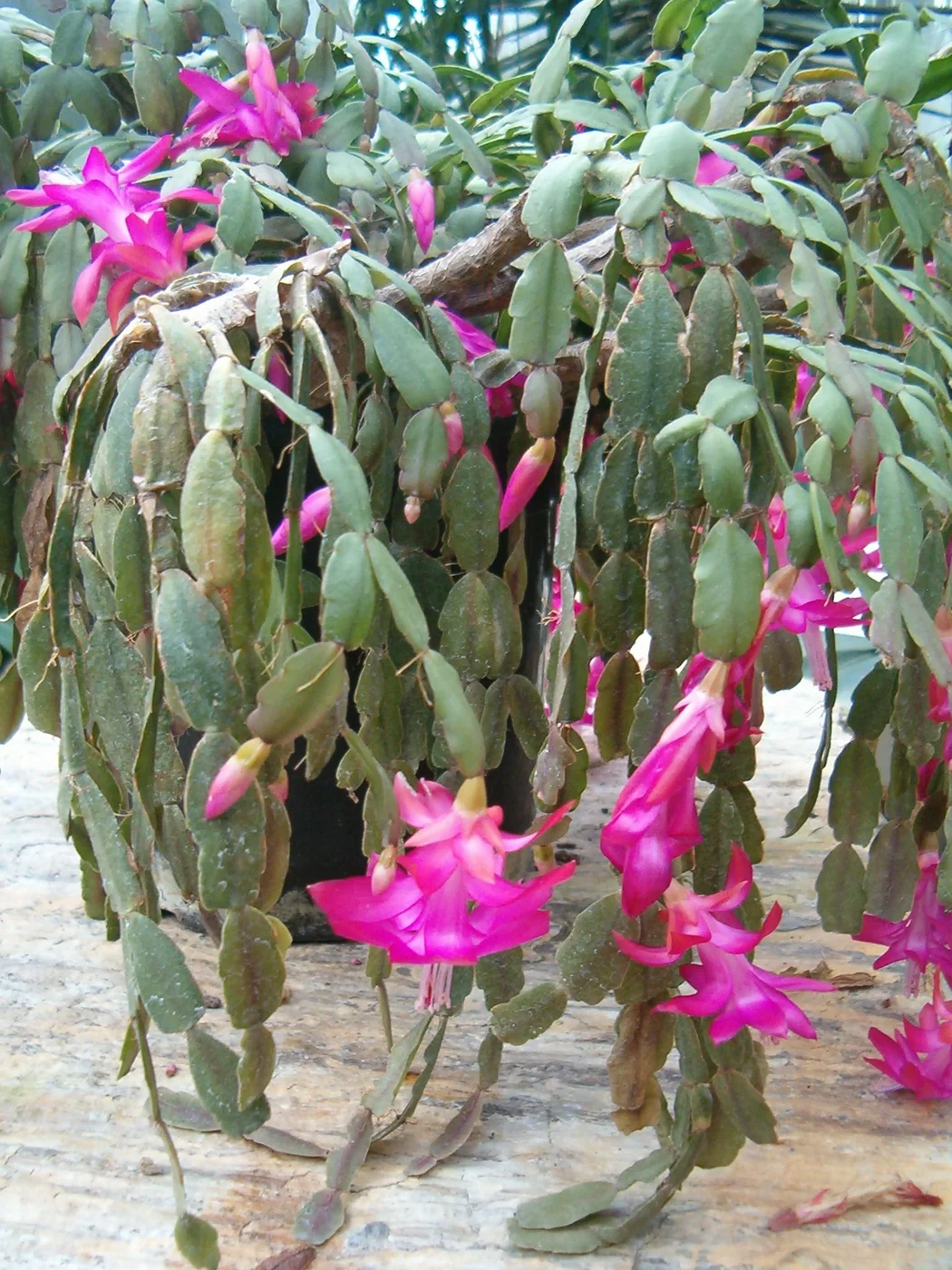
Christmas cactus, Schlumbergera × buckleyi, has rounded stem margins, while Thanksgiving cactus, S. truncata, has pointed teeth. Wisconsin explains that Thanksgiving types generally flower earlier and hybrids can fall between the familiar seasonal patterns. Wisconsin Extension: Holiday Cactus Identify the stem pattern and keep any cultivar label. A plant purchased in December may already have been grown under conditions intended to bring it into flower.
If your plant has been in the family for years, record when it usually forms buds in your home. That history is useful even when its exact ancestry remains uncertain. Avoid making the entire care plan depend on flowers opening on a single holiday. A realistic goal is a healthy plant that forms and carries buds under the conditions you can provide. If a particular display date matters, choose a purchased plant whose bud stage suits that use while continuing to manage the long-term plant on its own cycle.
Separate seasonal stages before making changes
Divide the work into four observations: ordinary vegetative growth, the period when you seek bud initiation, the interval with visible developing buds, and the quieter period after flowering. Write the current stage on a care note. This makes it easier for you or another caretaker to understand why the plant’s routine differs from the one used earlier in the year. It also prevents a treatment intended for one stage from continuing after its purpose has passed.
RHS describes reduced-water rest periods before budding and after flowering, with more regular watering once buds develop. RHS: How to Grow Christmas Cactus Its calendar examples reflect UK seasons; translate the sequence to the plant and conditions in your home. You do not need to perform every action on a predetermined date. Instead, identify the stage, check the root zone and choose a change that has a specific purpose. Avoid scheduling repotting, major reshaping and a move into a new display at the same time simply because a holiday is approaching.
Audit the room after sunset
Go into the growing room during its ordinary evening use. Note reading lamps, kitchen lighting, nearby room spill and outdoor light entering the window. This observation is easy to miss when all plant care happens during the day. Decide whether the current spot can provide a dependable dark period or whether a different room is more practical. The best plan is one you can repeat without moving an increasingly bulky plant through the house every night.
Iowa State reports that many holiday-cactus cultivars need fourteen to sixteen hours of uninterrupted darkness to initiate buds, with variation among cultivars and an interaction with temperature. Iowa State: All About Holiday Cacti Use that as a source-based planning range, not a guarantee that every plant flowers after the same number of nights. Keep bright daytime conditions available. A permanently dark closet is not a complete growing environment. If you use a temporary darkening arrangement, check that it does not create excessive heat, damage stems or become an inconsistent household chore.
Measure conditions where the plant sits
Check the temperature at the growing position instead of assuming the thermostat describes it. A sill beside glass, a shelf over a radiator and the middle of the room may differ. Iowa State recommends a cool, bright daytime location without artificial light at night for bud initiation, describing an approximate fifty-five to sixty-five degree Fahrenheit setting. Iowa State: All About Holiday Cacti Treat that as guidance for suitable plants and conditions, with protection from chilling and frost.
If uncertainty about temperature is the actual obstacle, an existing room thermometer may be sufficient. The AcuRite indoor monitor is one option to compare if you lack a way to observe the site; a monitor reports conditions but does not control them. Put it where its reading helps answer your question. If the location warms sharply when heating starts, solve placement first. Do not buy a device simply because the plant has not produced buds on the date you expected.
Change priorities once buds become visible
When buds appear, record their position and photograph a representative group without rotating and handling the plant unnecessarily. The priority is now carrying those buds through development. Minnesota warns that drafts and sudden changes in temperature, humidity or light can contribute to bud loss. Minnesota Extension: Holiday Cacti A display site beside a frequently opened exterior door deserves special scrutiny even if the plant looks attractive there.
Choose the most stable feasible position early and keep major changes to a minimum. Extension guidance differs on the best timing of a necessary display move, so avoid treating one exact stage as a universally safe transport window. If possible, develop buds where you can also enjoy the flowers. If a move is unavoidable, compare temperature, light and watering access at both locations in advance. Keep the transition modest and document it if bud loss follows. That information is more useful than repeatedly moving the plant in search of an immediately perfect response.
Investigate bud loss through the root zone and recent history
If buds begin falling, check whether the pot has been allowed to dry excessively or has remained wet, and inspect the saucer or decorative cover. Iowa State notes that both overwatering and excessive dryness can contribute to bud loss. Iowa State: How to Care for Holiday Cacti This is why a desert-succulent rule of prolonged dryness is a poor substitute for observing a flowering holiday cactus.
Write down what happened before the first loss: relocation, heating changes, missed watering, water retained in a cover or transport from a shop. Check whether stems remain firm and whether the problem is limited to buds or includes a wider decline. A wet, wilting plant warrants a root-health question. A plant with firm stems that lost a few buds after a move may call for stable care and observation. Avoid making fertilizer the automatic response. Adding products without identifying the relevant change makes it harder to understand what the plant actually needs.
Use the end of flowering to plan structure
When the main display ends, remove spent material carefully and review the plant’s outline. Does it still fit the shelf? Can you reach the root zone? Are a few long stems likely to be damaged when you move the pot? Save structural work for an appropriate period after flowering rather than shortening bud-bearing tips immediately before you want flowers.
RHS explains that removing selected tip segments in spring can encourage branching and that flowers form at stem tips. RHS: How to Grow Christmas Cactus Use that information to choose a limited shaping objective. You might shorten a branch entering a walkway while preserving the rest of the arching outline. If you retain healthy pieces for propagation, label them and prepare their own growing space. A family specimen may justify making an established backup, but a tray of unlabeled cuttings is not a requirement for routine seasonal care.
Keep a record you can reuse next season
At the end of the cycle, write a brief note containing identity confidence, growing location, evening-light routine, approximate temperature conditions, first visible buds and flowering period. Include the care changes that coincided with bud loss. Keep the record factual: buds appeared after a particular routine, rather than assuming one product caused flowering. Over successive seasons this becomes a useful description of the plant in your home.
Before buying additional equipment, compare the next season’s problem with that record. You may need a stable display position, better drainage access or a way to observe temperature; you may need no new purchases at all. For the complete identity and routine-care context, use the Christmas cactus profile. For root-zone choices, see the succulent pot and medium guide. A successful plan connects ordinary growth, bud initiation and flowering without forcing the plant into the same routine as every other succulent on the shelf.
Sources & further reading
We favor university extension guidance and original product documentation. Linked sources support the specific facts cited; they do not endorse Garden Gear Atlas.
- Wisconsin Extension: Holiday Cactus
- RHS: How to Grow Christmas Cactus
- Iowa State: All About Holiday Cacti
- Minnesota Extension: Holiday Cacti
- Iowa State: How to Care for Holiday Cacti