Give every pot an identity
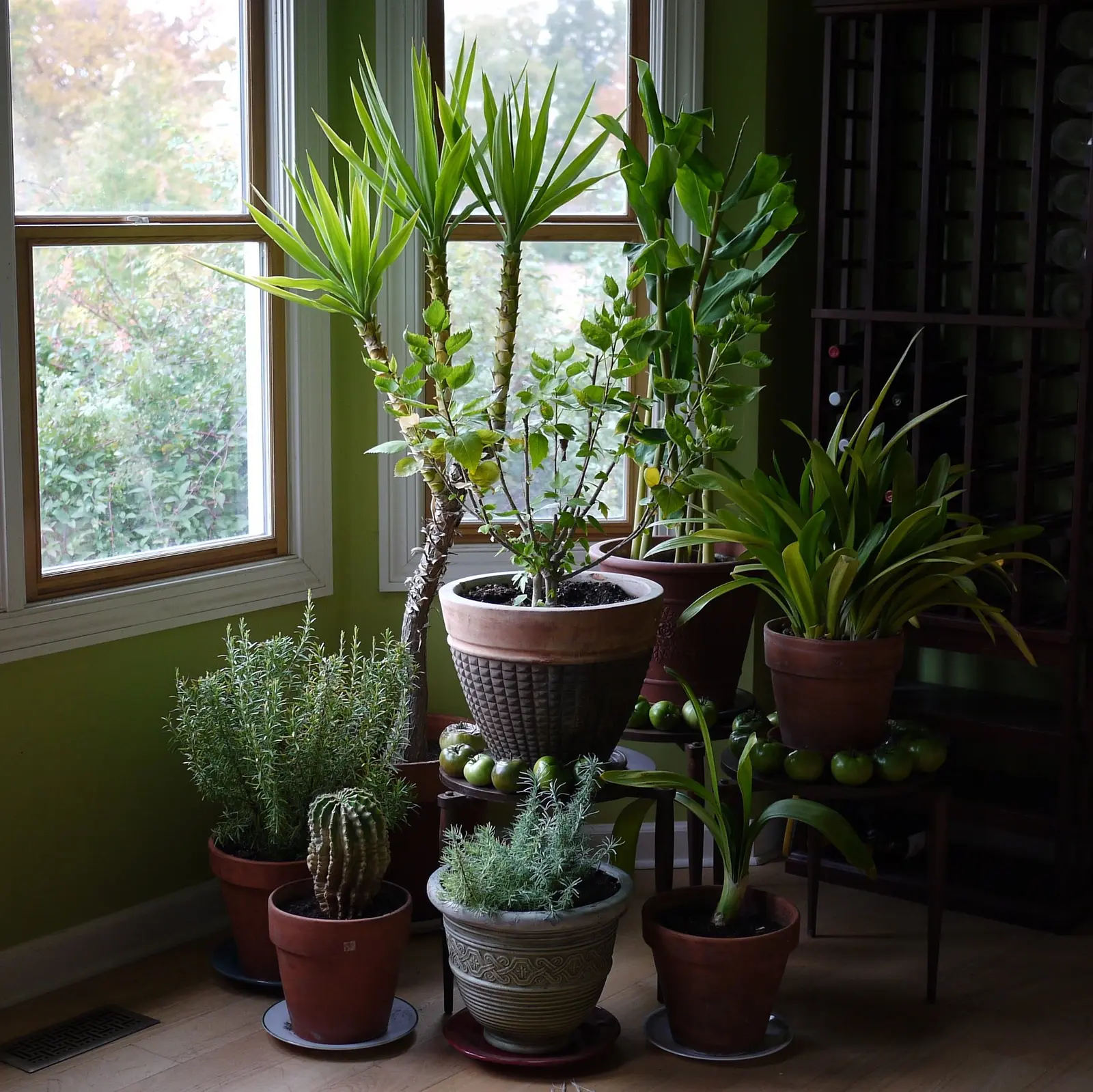
A collection becomes easier to water when each pot has a small set of known facts: plant name, growing medium, container type, and location. A fern in a moisture-retentive mix and a cactus in coarse mineral-rich medium may stand beside one another, but proximity does not make their watering needs alike. If identification is uncertain, resolve it before adopting a very wet or very dry routine. 'Tropical plant' and 'succulent' are not precise care instructions.
Add a note about whether the plant is newly repotted, rooted from a cutting, or established. The visible foliage does not reveal how much of the pot is occupied by functioning roots. For a first pass, divide the collection into plants that prefer more even moisture and plants that need more substantial drying, then refine those groups with species guidance. Keep each pot independently checkable even if matching decorative covers make the display look uniform.
Check conditions rather than trusting the calendar
Light, temperature, air movement, humidity, plant size, medium, and pot construction can change the interval between waterings. University of Maryland Extension specifically advises against watering by a fixed schedule and describes combining moisture and weight checks. Its finger-depth suggestion is a practical check for many ordinary pots, not an instruction for every plant and every pot depth. Maryland Extension: watering indoor plants.
Use a recurring reminder to inspect the collection, then water only those plants that need it. Record a brief result such as 'still moist,' 'ready,' or 'unclear; inspect more closely.' This is more informative than recording that all plants received water every Sunday. An indoor watering routine can be orderly without forcing plants into identical timing. When a particular pot repeatedly behaves differently from its neighbors, regard that difference as information to investigate.
Read the root zone using more than one clue
Touch accessible medium below the decorative surface, avoiding roots and stems. Lift only pots you can handle safely, and learn their relative weight after drainage and before the next appropriate watering. This comparison works best within the same pot; a heavy ceramic container should not be compared directly with a small plastic one. A dry-looking top layer is weak evidence when a deeper root zone can still be moist.
Combine your observations. If the surface looks pale but the pot remains unusually heavy, pause rather than following the color alone. If a lightweight pot has shrunk mix pulling away from its walls, inspect for poor rewetting. Moisture probes can be supplementary tools, but their readings depend on medium and placement, and they do not identify the plant's needs. Clean and use them according to their instructions. Never treat one meter number as a universal watering command.
Understand how the medium changes the check
Fine, organic-rich mixes and coarse bark or mineral-rich mixes do not hold or display moisture identically. A finger test that feels straightforward in peat-based potting mix can be hard to interpret in large bark pieces. Clear pots may help you observe some roots and condensation, but the outside remains a partial view of the center. Learn the actual medium instead of assuming that every bag labeled 'indoor' behaves the same way.
Consider two newly acquired plants of the same species. One remains in a dense nursery plug inside a chunky outer mix, while the other has a more uniform root ball. Water may move through them differently even when the pots look identical. During a suitable inspection, note such transitions so you do not repeatedly soak a wet central plug because the outer bark appears dry. Do not dismantle healthy roots routinely; use the information when repotting is otherwise justified.
Deliver water to the medium, then finish the job
For conventional pots, water at a pace the medium can absorb and allow excess to drain. Moving smaller plants to a sink can make that simpler. Avoid relying on a tiny splash that darkens only the top while leaving the lower root zone dry. If a root ball has become difficult to wet, use the plant-appropriate rewetting approach and verify the result instead of assuming runoff proves saturation.
Bottom watering is another delivery method, not permission to leave a plant permanently in standing water. Let the medium take up water, then remove the pot and empty excess as appropriate. Keep diseased or pest-affected plants out of shared soaking water. A designed reservoir planter follows its own instructions, including any establishment or dry phase. Label it clearly so a helpful plant sitter does not accidentally combine top watering, a full reservoir, and an unsuitable routine.
Adjust when seasons or rooms change
A plant can need less frequent watering when light and growth decrease, even while indoor air feels dry to you. Iowa State's winter guidance notes that watering frequency depends on species, mix, and environmental conditions. The useful implication is to reassess individual pots when their circumstances change rather than cutting every plant's water by an arbitrary fraction. Iowa State: winter houseplant watering.
Recheck after adding a grow light, moving a plant away from a window, changing its pot, or starting seasonal heating. A fern hung near the ceiling can experience a different environment from one at table height; Minnesota Extension specifically cautions that high hanging positions can be hotter and drier. Minnesota Extension: growing tropical ferns indoors. Change the checking routine first, then let actual moisture observations determine the water supplied.
Treat wilt as a question, not an order
A drooping plant may have a dry root ball, but it can also have damaged roots in wet medium or be reacting to a temperature or light problem. Check below the surface before reaching for the watering can. If the pot is wet, adding water because leaves look tired can compound the problem. If it is dry, verify that the next watering reaches the root zone and that excess escapes.
Write down what you find before trying multiple fixes. A note such as 'leaves drooping; pot heavy; medium wet; water pooled in cover' points toward a specific corrective action. 'Looks unhappy' does not. Persistent decline, soft tissues, or suspected root disease needs a closer diagnosis rather than a new watering slogan. Avoid adding fertilizer to an unresolved moisture problem; it does not replace healthy roots, suitable light, or a functioning drainage path.
Leave a routine another person can follow
For a short absence, arrange plants so their labels and pot surfaces are visible, and leave a clear location for draining smaller containers. Explain which plants should be checked but may need no water. A written instruction to check a specific pot's medium is more useful than 'water lightly,' because different people interpret lightly in very different ways. Keep reservoir planters on a separate instruction sheet with the correct fill and inspection steps.
After several weeks, review the notes rather than turning the observed intervals into permanent rules. The goal is to recognize normal behavior and catch changes early. A reliable routine has a predictable time for checking, a plant-specific decision, a complete watering-and-draining action, and a quick follow-up when results are unexpected. That approach scales from three windowsill plants to a larger indoor collection without pretending they all share the same thirst.
Sources & further reading
We favor university extension guidance and original product documentation. Linked sources support the specific facts cited; they do not endorse Garden Gear Atlas.
- University of Maryland: watering indoor plants
- Iowa State: winter watering frequency
- University of Minnesota: indoor tropical ferns