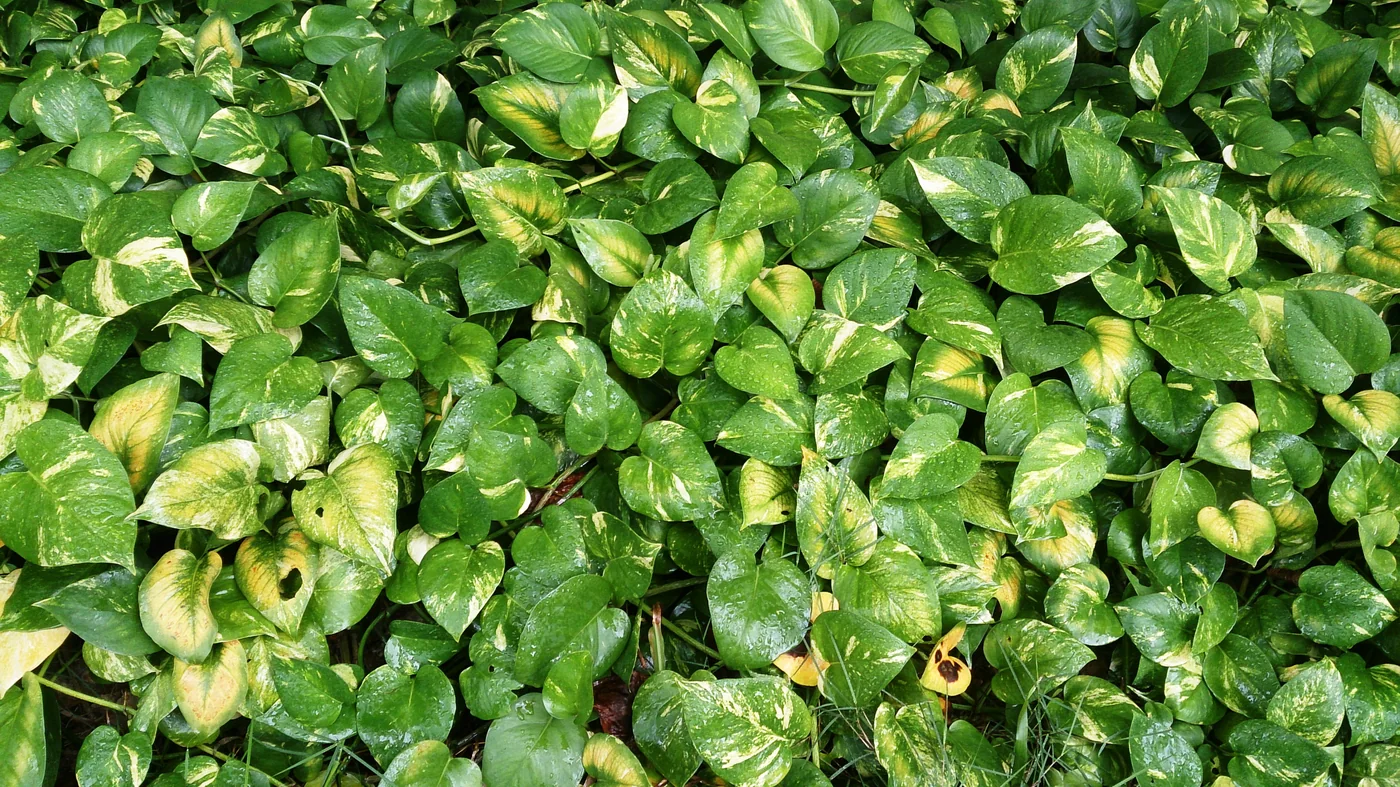
Recognize the golden plant and its growth stage
Golden pothos is Epipremnum aureum in the arum family, Araceae. Familiar indoor plants have glossy, heart-shaped leaves irregularly marked with yellow or cream. Aerial roots let stems attach as they climb, and adult tropical foliage can look very different from the small entire leaves in a hanging pot. Wisconsin Extension: Pothos
Look at several leaves and a length of stem when choosing a plant. One unusually pale leaf is a poor basis for assigning a cultivar, and a photograph of an adult vine is a poor promise of how a small basket will look next season. Ask whether the listing shows the actual plant size. A full retail pot can contain several separate rooted stems; that matters when deciding how many vines you can train or remove without leaving a sparse display.
Pothos is often confused with heartleaf philodendron. Grooved petioles are a useful pothos characteristic; petiole means the stalk joining a leaf to the main stem. Use the combination of foliage and stem features, rather than heart shape alone. Illinois Extension: Philodendron or pothos identification
Decide where the next length of vine can go
Start with the display shape you can maintain. A trailing plant needs an unobstructed drop below its container and a way to lift that container without dragging the vines across furniture. A climbing plant needs a support that can stay with it during watering and future moves. A compact tabletop plant needs a pruning plan. None of these forms is inherently the correct way to grow pothos, but leaving the decision until stems tangle through a bookshelf makes routine work unnecessarily difficult.
NC State describes a relationship between adequate light, climbing support, and the production of larger mature leaves. That is a growth opportunity, not a promise that buying a pole immediately changes the next leaf. NC State Extension: Epipremnum aureum
Set a practical boundary before training: the bottom of the curtain, the edge of the cabinet, or the height you can reach comfortably. When a vine crosses it, redirect or shorten that particular stem. Work with visible growth points rather than gathering every strand into a tight decorative bundle.
Put the leaves where daylight reaches them
Choose the position of the foliage, not only the position of the pot. A pot beside a window may send most of its vines under a shelf or into a dark corner. Lay out the intended route and inspect it with the blinds in their normal daytime position. If the brightest leaves and darkest leaves will be far apart, plan a shorter display or a different stand before expecting one watering routine to compensate for the uneven arrangement.
Filtered light suits pothos; persistently wet roots, excessive dryness, and fertilizer salts can all contribute to leaf damage. A darker appearance or damaged edge should therefore lead to a review of conditions, not an automatic dose of fertilizer. Wisconsin Extension: Pothos
Use photographs taken from the same angle to compare new growth. Note whether the latest stem section carries leaves close together or a long bare interval. Keep the old leaves in the picture as a reference, but judge a placement change mainly by the foliage produced afterward. Older blemishes do not need to disappear for the adjustment to have been worthwhile.
Make a repeatable watering decision
At each check, lift a manageable pot and feel the accessible mix rather than watering because another plant needs it. Record what a recently drained pot feels like so that later comparisons have a useful starting point. If the plant is high on a shelf, bring it down for inspection; pouring through a foliage curtain makes it harder to see where the water actually goes. A container that cannot be checked is an installation problem worth fixing.
Pothos needs a well-drained root zone. South Dakota State Extension recommends thorough watering followed by drying between applications and cautions against continually damp soil. South Dakota State Extension: Pothos propagation and care
Separate the decision to water from the decision to return the plant to its display. Let runoff finish, then check that the outer cover or saucer is empty. Revisit the interval after moving the plant, changing its pot, or beginning a brighter season. Keeping the same observation method is more useful than preserving the same number of days between drinks. The pot-by-pot watering guide develops that routine.
Prune with a destination for the cuttings
A stem cutting needs a node, the place where a leaf joins the vine. South Dakota State's propagation instructions place a cut below that node and move water-rooted material into potting mix after roots establish. A leaf stalk alone is not the same planting unit. South Dakota State Extension: Pothos propagation and care
Before cutting, choose the purpose: shorten a troublesome vine, replace a bare section with new plants, or share a small start. Prepare the receiving container first and retain enough labeled stem to recognize its orientation. Taking many pieces because a vine is available can leave you managing more small pots than your windows can support. Start with the number of finished plants you actually want.
Do not assume every cut stem belongs back in the parent pot. Inspect the source plant first, and keep questionable material separate while you understand any damage. For the full sequence from node identification to choosing a trailing or climbing result, use pothos cuttings and support. The destination should influence the cutting count and future training, not just the appearance of the propagation vessel.
Buy the item that removes a specific obstacle
A support is useful when it provides a route the plant needs and can be anchored in the available container. The catalog's Mossify Original Bendable Moss Pole is one option to compare for that job. Check its usable height, insertion space, and the access needed to maintain the whole assembly. If the plant already trails conveniently from a reachable shelf, the pole does not solve an existing problem and can wait.
Adjustable garden ties can help position a stem during training, but inspect their contact points as growth changes. The VELCRO ONE-WRAP garden ties in the catalog are a relevant fastening choice; compare the width with the small stem you are securing. A large outdoor trellis or tomato cage is an awkward purchase for a modest pothos pot. Likewise, do not buy a replacement planter until you know whether the current limitation is roots, stability, or simply an inconvenient outer cover.
Budget space for maintenance as deliberately as space for leaves. A washable tray, a clear work area, and an accessible water source may solve the real problem using items already at home.
Review the plant without turning every change into a project
During a routine check, look along the stem as well as at the attractive leaves. Notice where growth stops, where the vine contacts its support, and whether one section is changing faster than the rest. A single old leaf and a whole declining vine deserve different responses. Write down the pattern before removing evidence, especially if you may need help identifying the problem later.
For a recently purchased plant, retain the label and a photograph of its starting condition. For an established plant, note the last major move, repot, or feed. These simple records let you distinguish a recurring care problem from a one-time event without collecting a shelf of treatments. Choose one correction that matches the evidence, then observe subsequent growth before adding another discretionary change. Golden pothos is easiest to manage when the owner can see the root zone, reach the vines, and explain the purpose of each item supporting the display.
Sources and scope
Research-based guidance informed by institutional references. Cultivar, region and growing conditions can change the advice. Product inclusion does not imply hands-on testing of every model.
.jpg)