Choose the decision you need the light check to answer
Begin with a concrete choice: can the plant stay on this cabinet, should it move closer to the glass, or does the room need supplemental light? A light check is most useful when it resolves one of those decisions. Trying to label every corner as low, medium, or bright can create an impressive map without telling you what to do with the plant currently struggling behind the sofa.
Missouri Botanical Garden treats intensity, duration, and light quality as separate aspects of indoor plant lighting and recommends matching the plant to the actual location. General exposure groups are a starting framework, not a substitute for inspecting the position. Missouri Botanical Garden: How much light indoor plants need
Choose two or three realistic candidate spots. Include the current one, a nearer-window option if available, and a position that preserves access for watering. Do not compare a practical spot with an imaginary one that requires leaving a door blocked or a blind permanently open when you know you will close it.
Observe at leaf height with the room used normally
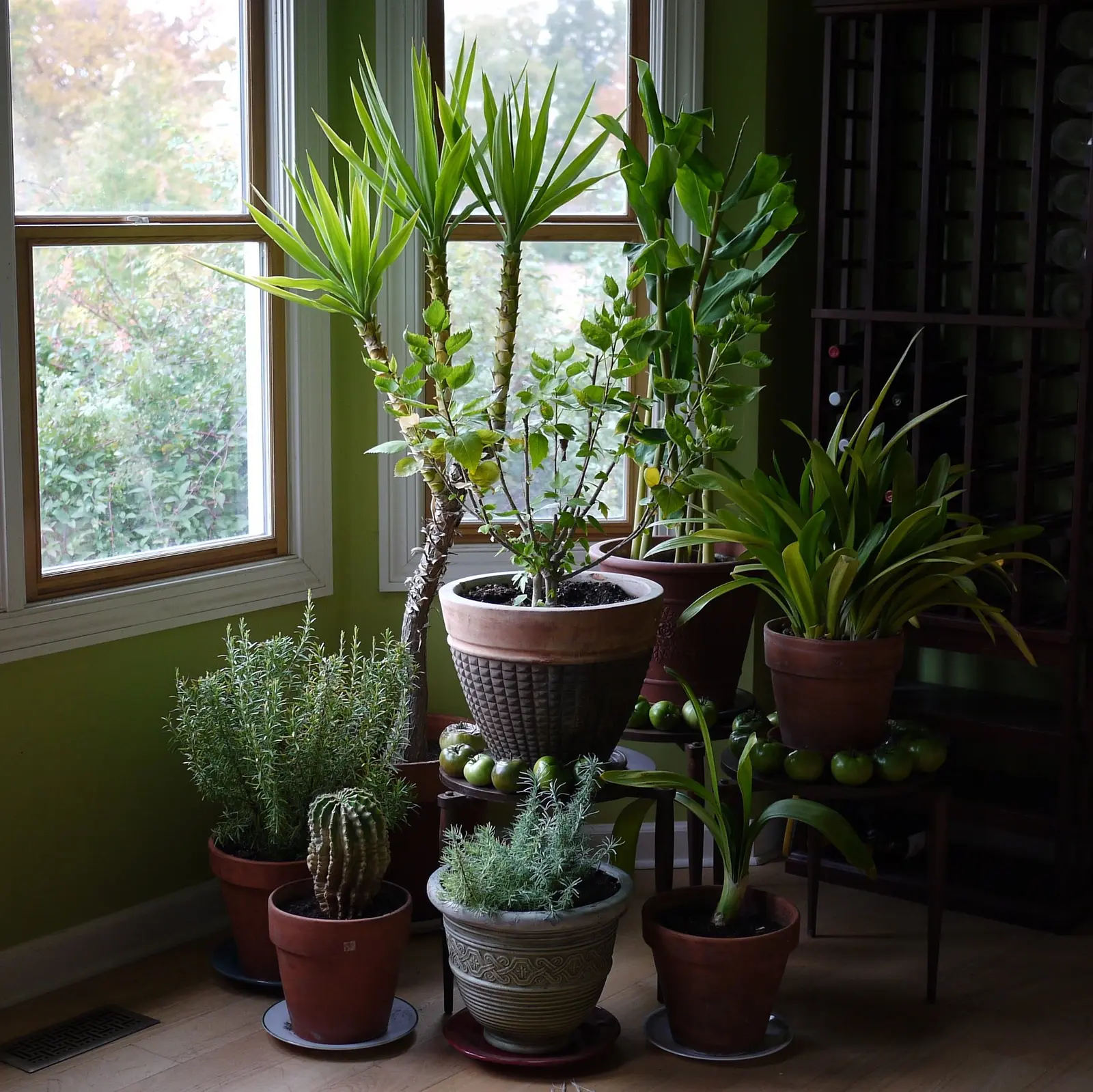
Place your eye or measuring device where the leaves would be, including the upper and lower parts of a tall display. Look toward the window. Can that position see a broad area of glass and sky, or is most of the view blocked by a wall return, cabinet, curtain, or another plant? Repeat the check at the proposed new position rather than assuming a nearby shelf receives the same light.
Iowa State notes that light can fall rapidly with distance from a window and that spots just to the side can be much darker than they appear. Window size, coverings, overhangs, and outdoor obstructions all influence what reaches a plant. Iowa State Extension: Houseplant care
Keep the normal curtains, insect screens, and blinds in place during the comparison. A plant does not receive the special display lighting used for a photograph. Also inspect the intended path of a climbing or trailing plant: the pot may be close to glass while the newest leaves extend into a shaded area.
Separate direct sun from a generally bright view
Watch whether a beam of sun actually reaches the foliage. Record when it arrives, where it falls, and when it leaves. A room can feel bright without direct sun striking the plant, while a small patch of direct sun can move across a leaf for only part of the day. These patterns matter when deciding whether to move a shade-grown plant closer or add a light-filtering curtain.
University of Maryland describes both excessive and insufficient light as problems and lists window coverings, weather, seasons, trees, and buildings among the influences on indoor intensity. It suggests distance or a sheer covering as ways to reduce excessive direct exposure. University of Maryland Extension: Indoor plant lighting
Treat the observations as a description of this window, not a rule for every window facing the same direction. A deep porch and a nearby wall can change what a south-facing window delivers. An unobstructed north-facing window may be useful for a particular foliage plant even when another north-facing window is not. Direction tells you where to look; observation tells you what reaches the leaves.
Compare several times and retain the seasonal context
Check the candidate positions in the morning, around the middle of the day, and later in the afternoon when you can. Repeat on a day with different weather if the decision remains unclear. A single reading under a passing sunbeam can make a location seem much better supplied than it is for the rest of the day. Write down the weather and time alongside the observation so future comparisons remain meaningful.
Note the date, the state of nearby deciduous trees, and whether an overhang shades the glass. You do not need a full year of records before moving a plant, but you should know that today's pattern is seasonal. Set a reminder in your own care notes to reassess when the room's daylight visibly changes or when the plant begins producing different growth.
Minnesota Extension recommends determining both the quality and hours of natural light before matching plants to an indoor space. It also notes that plants grow and use water more slowly in lower light. A seasonal light change can therefore affect the watering decision as well as the appearance of foliage. University of Minnesota Extension: Lighting for indoor plants
Use measurements to compare positions without inventing precision
If you already have a suitable light meter, compare candidate positions using the same device, orientation, time, and weather. Hold the sensor where the leaves will be rather than at the window while the plant sits farther back. Avoid shading the sensor with your body. Record the unit the instrument reports so that later comparisons use the same quantity.
A phone app can be a convenient relative check, but an unexplained number should not become a universal plant target. Device behavior, sensor orientation, and the method used by the app affect what you are comparing. Use the result to test a question such as whether the shelf beside the window receives substantially less daylight than the space directly in front of it. Keep the observation of actual sun and obstructions alongside the number.
Do not apply a simple distance formula to every window as though it were an isolated point lamp. A real window is an extended opening receiving changing daylight from different directions. The defensible home decision is based on measurements or observations at the candidate positions, followed by the plant's response, rather than a precise-looking prediction from distance alone.
Move gradually and judge the next growth
Minnesota Extension identifies stretched stems, longer gaps between nodes, leaf loss, and reduced variegation among possible low-light responses, while excessive light can scorch or bleach foliage. These are clues to investigate alongside the rest of the growing conditions. University of Minnesota Extension: Lighting for indoor plants
Choose a brighter position in a way that avoids abruptly exposing a shade-grown plant to strong direct sun. Record the date and the main change. Keep watering decisions responsive to the mix, since the new placement may alter how quickly the pot dries. Do not add fertilizer solely to accelerate the comparison; first see whether the new position addresses the light question you identified.
Photograph subsequent growth from the same angle. On a vine, compare successive stem sections. On a rosette, watch the newer central foliage. Existing damage and old stretched growth do not provide the same evidence as the leaves formed after a move. If the plant worsens, review actual moisture and temperature exposure before attributing every change to light.
Apply the check to different plant forms
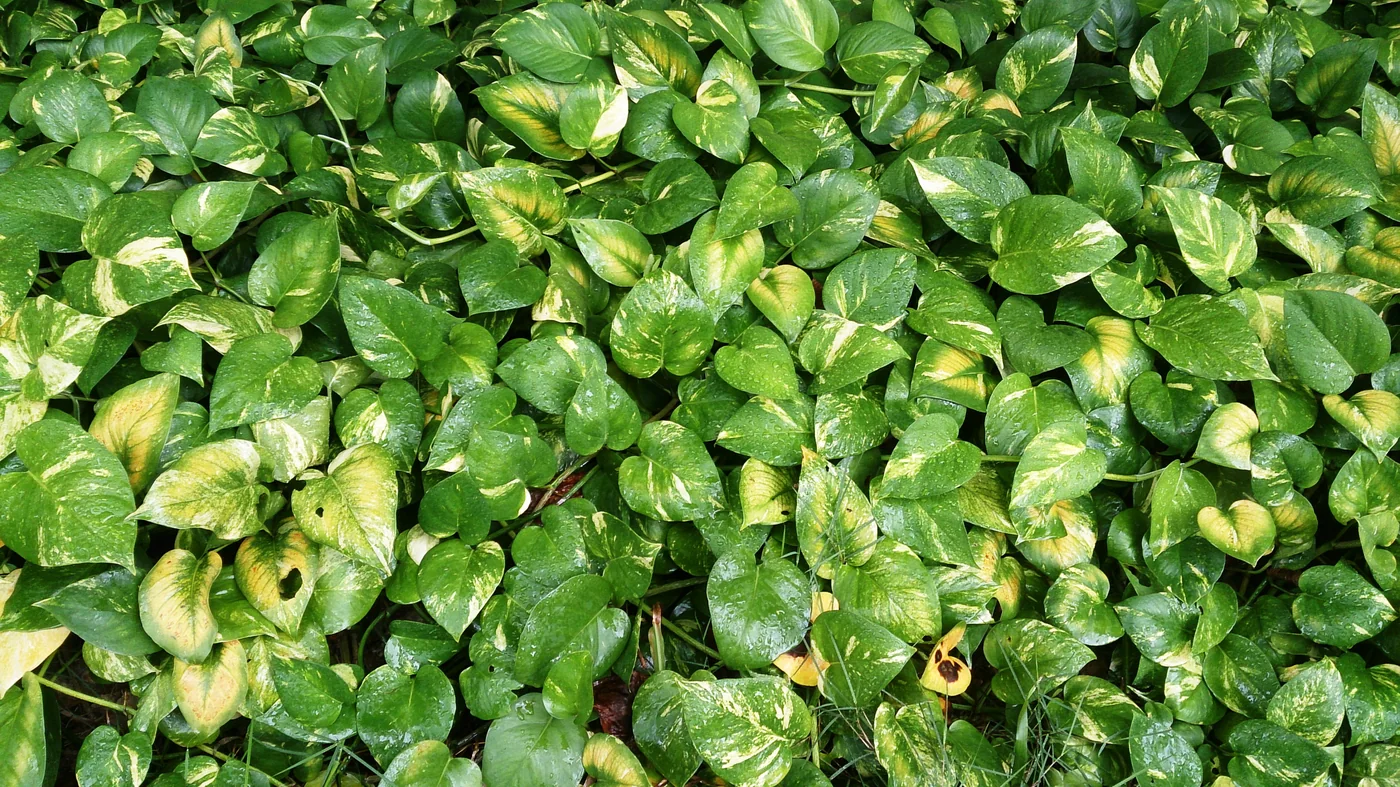
For golden pothos, inspect the route taken by the newest vine, not only the basket at the window. A long trail beneath a cabinet may be the dimmest part of the display. For snake plant, check whether a floor-level pot sits below the sill while only its upper leaves reach the window's view. These are placement questions that a single room label will miss.
For spider plant, include the hanging rosette and its plantlets in the observation. A small offset can sit behind the parent canopy even when the main plant is well positioned. For Monstera deliciosa, follow the growing tip and the upper leaf plane as the support becomes taller. The relevant position changes with the plant.
These checks do not require a different numerical rule for every leaf. They help you decide whether shortening a display, moving the pot, raising a stand, or changing the support route would place more of the plant in the daylight you already have. Use space more effectively before assuming the solution must be another fixture.
Buy supplemental light only after locating the gap
If no practical window position supplies the plant adequately, define the area that needs supplemental light and the hours the fixture could operate without disrupting normal use of the room. The problem may be one tall specimen, a narrow shelf, or a group of plants with different heights. Those are different purchasing tasks. A bulb that fits a lamp socket does not automatically cover all of them.
The catalog includes the Soltech Vita 20W bulb and other fixtures for comparison. Consider one only after confirming socket compatibility, a stable mounting arrangement, coverage at the leaves, and the way you will use it in the room. For fixture selection, continue to choosing grow lights; for a collection with uneven height, use mixed-height grow-light placement.
A daylight check can also conclude with no purchase. Moving a stand into the window's view or shortening a vine's shaded route may answer the original question. Retain the observations that led to the decision, then revisit them when the plant or room changes. A useful location is one that supplies the foliage and remains practical to maintain.
Sources & further reading
We favor university extension guidance and original product documentation. Linked sources support the specific facts cited; they do not endorse Garden Gear Atlas.
- Missouri Botanical Garden: How much light indoor plants need
- Iowa State Extension: Houseplant care
- University of Maryland Extension: Indoor plant lighting
- University of Minnesota Extension: Lighting for indoor plants
.jpg)