Identify Christmas cactus before planning Christmas flowers
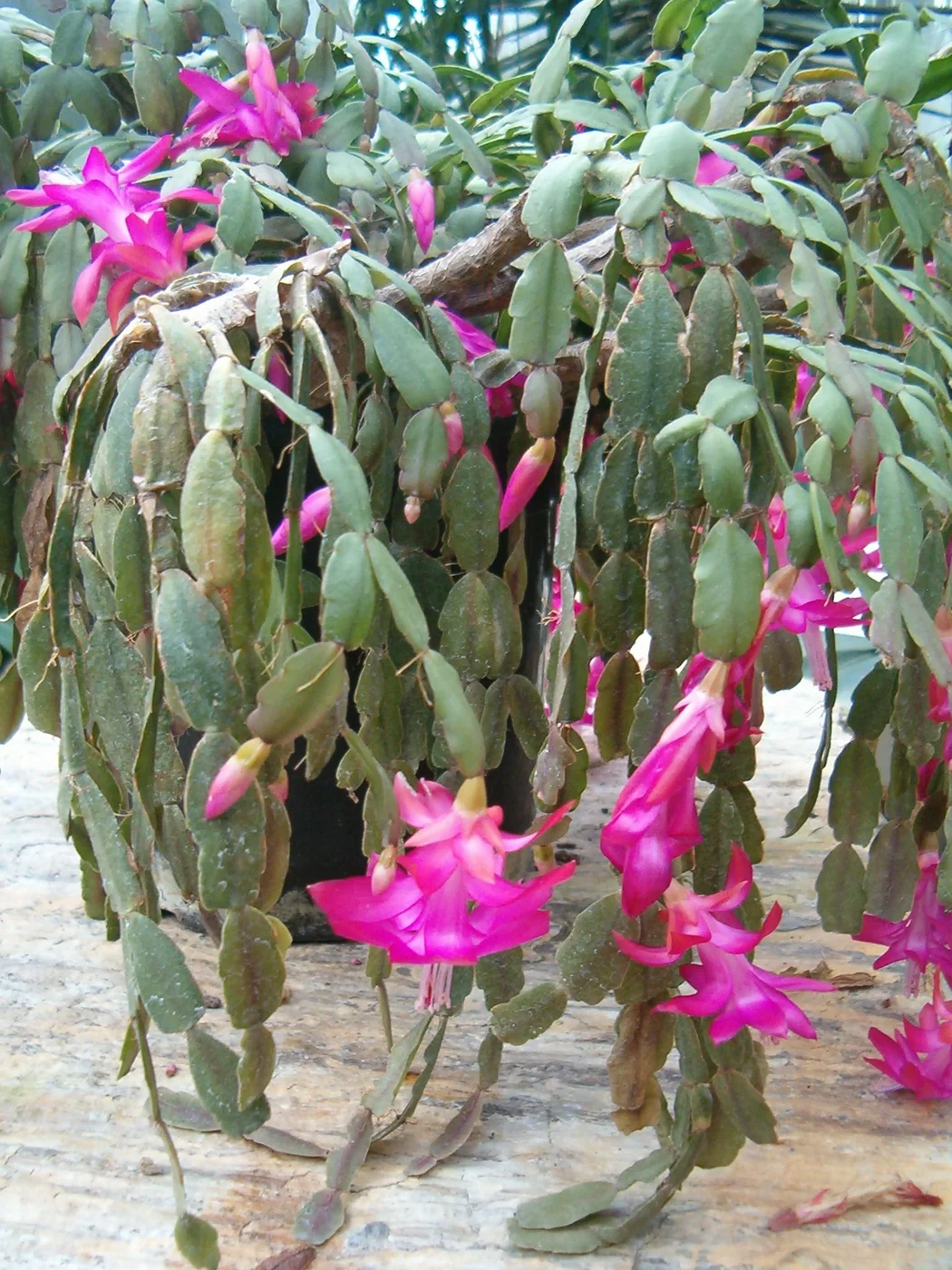
True Christmas cactus is Schlumbergera × buckleyi, a hybrid involving S. russelliana and S. truncata. Iowa State describes rounded, scalloped stem edges and arching growth, while Thanksgiving cactus, S. truncata, has conspicuous pointed teeth. Retail plants and modern hybrids can blur those categories. Iowa State: All About Holiday Cacti A plant sold in December is not identified by its sale date.
Keep the label and photograph the stem margins as well as the flowers. If a family plant has uncertain ancestry, record it as an unidentified holiday cactus rather than forcing a species name from bloom timing alone. This profile concerns the Christmas hybrid, while much practical holiday-cactus care also applies to related cultivars. The identity distinction helps set expectations, but the actual plant’s response remains more useful than insisting it perform on a holiday written on a calendar.
Design the display around arching stems
Reserve room beyond the container rim before choosing a permanent shelf or hanging position. A young upright-looking plant can become a broad, arching specimen, so account for nearby walkways, curtains and the surface below. View the plant from the position where you will enjoy it, then separately check whether you can see and reach the potting medium. The most decorative angle is not always the most practical watering angle.
If the plant hangs, make sure the support and lifting routine suit the complete wet container. If it sits on a shelf, leave room to remove the pot without dragging branches across another plant. Consider the future flowering display while locating it, because a position that already has suitable light and room for the stems reduces the need for a major seasonal move. A modest display area that stays usable can be a better long-term choice than an impressive perch you cannot inspect.
Remember that it is a forest cactus
Wisconsin describes Schlumbergera as a plant of Brazilian mountain forests, with bright indirect light and moderate temperatures. Wisconsin Extension: Holiday Cactus Its flattened green segments are stems, and its growing conditions should not be copied from a desert-cactus collection. The word cactus is an identity clue, not a complete watering instruction.
Choose a bright, filtered position where the plant can grow without repeated exposure changes. Observe the plant’s actual location when direct sun moves across the room, particularly behind glass or beside reflective surfaces. If summer outdoor space is available, first decide how you will manage rain and bring the plant back under cover. A shaded porch can still expose a container to driving rain. Think through those practical conditions before treating the move as a way to improve flowering automatically.
Make the medium and watering routine compatible
Iowa State notes that holiday cacti can grow in well-drained all-purpose potting medium; a special cactus mix is not automatically necessary. Iowa State: How to Care for Holiday Cacti Choose for aeration and usable moisture in your container. A very coarse medium that demands attention you cannot provide is not inherently a better choice simply because it is sold for succulents.
Look beneath decorative foil, sleeves and outer covers for the actual drain. When you water, let excess leave the growing container and remove what collects below. Check the medium before watering again, while also considering whether the plant is in active growth, developing buds or resting after flowering. A holiday cactus in bloom should not be forced to remain severely dry because neighboring desert succulents are waiting for water. Keep its care record separate, especially if another person helps with your indoor plants.
Give flowering a place in the room routine
Long uninterrupted nights and cooler conditions help initiate holiday-cactus buds. Iowa State explains that artificial evening light can interfere with this response and that cultivar requirements vary. Iowa State: All About Holiday Cacti Begin by observing the room after dark. A reading lamp, kitchen light or regular late-night use can change the plant’s experience even when sunset occurs early outside.
Choose a location where the necessary routine is realistic. If the only bright window is in a room used all evening, decide whether another position or a consistent temporary arrangement is feasible. Write down the date when you begin watching for buds and record the conditions you actually provide. Do not keep changing the setup every time a neighbor’s plant flowers first. Different identities, growing histories and room conditions can produce different timing, and the aim is a healthy flowering cycle rather than a guaranteed opening date.
Protect the transition from buds to flowers
Once buds appear, continuity becomes especially valuable. Minnesota Extension links bud loss with abrupt environmental changes and warns about drafts and altered temperature or humidity. Minnesota Extension: Holiday Cacti Keep the plant out of heater discharge and locations where opening a door repeatedly changes its conditions. If you expect to display it elsewhere, think through the change before the buds have developed far.
Inspect the medium and drainage whenever unexplained bud loss occurs. Do not interpret every fallen bud as a request for fertilizer. Record whether the plant was moved, dried severely, remained wet or encountered a temperature change. A few notes can reveal a pattern over successive seasons. Use the holiday-cactus buds guide to plan initiation and display as separate stages. That approach gives you a specific next check instead of encouraging several simultaneous adjustments that obscure the cause.
Use the quieter season for structure and renewal
After flowering, reassess how the plant fits its space. RHS describes reduced watering during a post-flowering rest and identifies this quieter interval within the annual care cycle. RHS: How to Grow Christmas Cactus Let actual growth and moisture behavior guide the transition instead of keeping the flowering routine unchanged throughout the year.
If the plant needs reshaping, choose the outline you want before removing segments. Keep any healthy propagation material labeled and separate from discarded, damaged pieces. Decide whether the goal is a compact parent, a backup of a family plant, or both. A spare is most useful when established before the parent develops a serious problem. Plan its growing space in advance and avoid distributing unrooted or questionable pieces as though they were finished plants. The seasonal review can also be a good time to check whether the container remains accessible and stable.
Keep the plant’s history useful
For an inherited specimen, write down the known source, approximate acquisition date and any remembered flowering pattern. Keep uncertainty in the record rather than converting a family story into an exact age or cultivar claim. A photograph each flowering season can show changes in branch structure and help you decide whether the current display still works. Record successful placement and the care changes that preceded a problem so another caretaker can follow the same practical routine.
For a new purchase, protect it during cold transport and inspect it before placing it among established plants; Iowa State warns that chilling during transport can damage holiday cacti or contribute to bud loss. Iowa State: How to Care for Holiday Cacti Avoid scheduling an unnecessary immediate repot simply to match your decor. First understand the plant and container you received. Spend on a better pot, support or monitoring device only when it addresses a defined issue, such as trapped drainage, inaccessible weight or uncertainty about the temperature at the plant.
Sources and scope
Research-based guidance informed by institutional references. Cultivar, region and growing conditions can change the advice. Product inclusion does not imply hands-on testing of every model.