Begin with identity and the event record
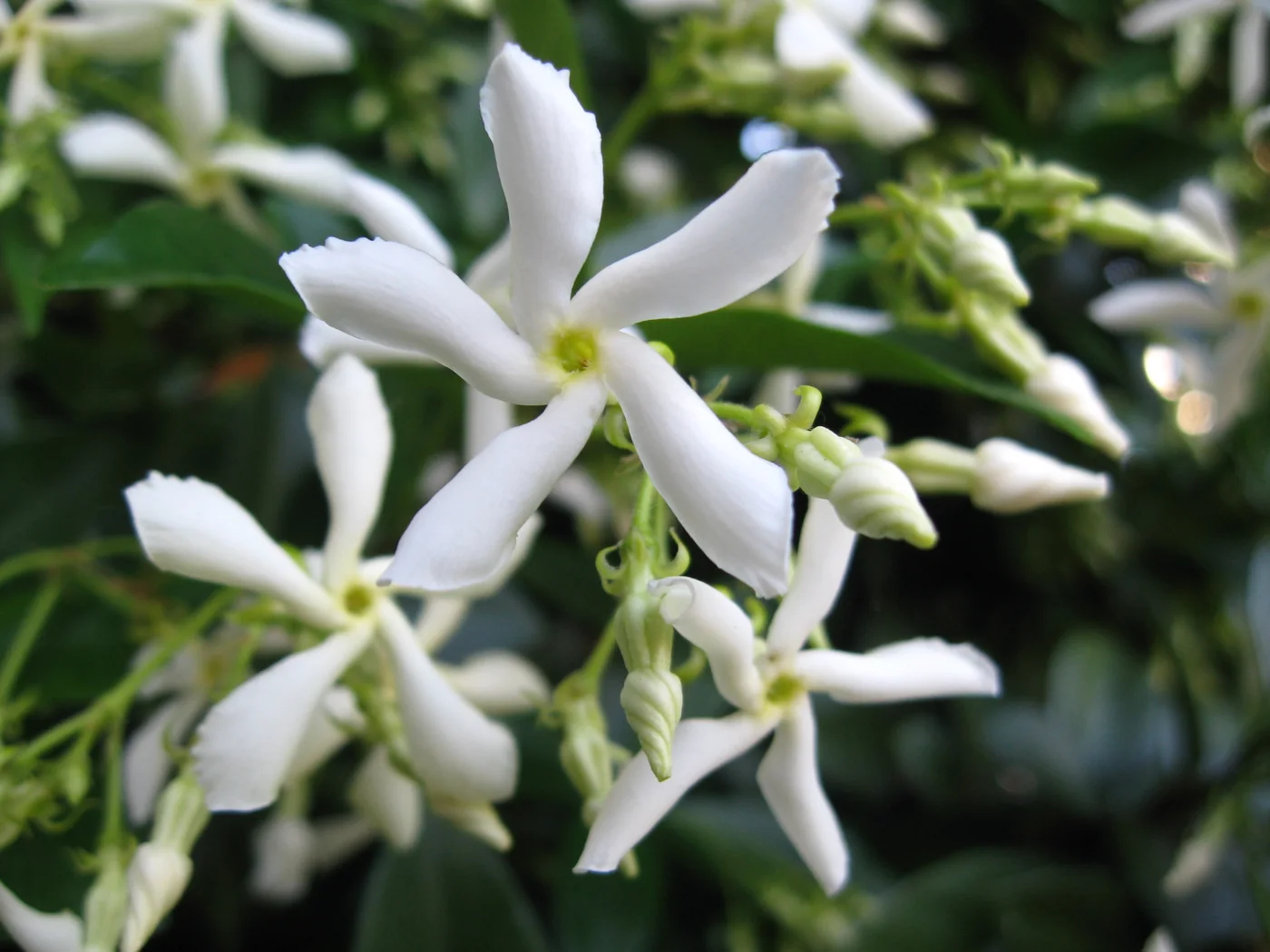
Check that the plant is Trachelospermum jasminoides. Advice for Asian jasmine, true jasmines or Carolina jessamine can lead to a different winter decision. Keep the cultivar name if there is one, but do not assume a cold-hardy label guarantees undamaged foliage at your particular site.
Record what you know about the event: local minimum temperature, duration of cold, strong wind, recent warm weather and whether the root ball was in the ground or a pot. Use an actual nearby reading if available; a regional forecast is useful context but does not measure the temperature at every exposed leaf.
Photograph both the whole vine and several representative shoots. Note whether discoloration began immediately after the event or appeared later, and whether the exposed top differs from sheltered lower growth. This establishes a starting point for review instead of relying on memory as the damage changes.
Separate leaf appearance from the fate of the framework
RHS describes winter reddening, spotting and leaf fall in star jasmine during cold snaps. It also associates heavy, damp rooting conditions with root-rot risk. Leaf color therefore belongs in a wider assessment of weather and drainage; it cannot by itself prove either normal winter response or a dead vine. RHS: Growing star jasmine
Look for intact buds and, when the season allows, fresh shoots on different parts of the framework. Mark the uncertain sections on a photograph rather than cutting each one back immediately to see what happens. Compare them again as nearby established plants begin their normal spring growth.
RHS notes that woody frost injury can take time to reveal itself and that some plants reshoot later from lower buds. Its general frost guidance supports waiting for useful evidence before writing off a damaged plant. That is a reason for patience, not a guarantee that this star jasmine will recover. RHS: Frost damage
If one section resumes growth and another does not, record the boundary. If symptoms continue to spread after the cold event, include that change when seeking a diagnosis. Avoid declaring root disease from the leaf pattern alone, and avoid declaring full recovery from one new shoot.
Check water without treating every brown leaf as thirst
Inspect the planting medium before watering. For a pot, check below the surface and look into the saucer or outer container. For a ground planting, compare the original root area with the surrounding soil. Note whether the root zone is dry, moist or persistently saturated rather than describing the plant simply as stressed.
Illinois Extension recommends emptying excess water from ordinary saucers and ensuring that an inner pot does not stand in water inside a decorative cover. Check those outlets after a storm and after adding winter wrapping. Protection that hides a blocked drainage route leaves an unresolved growing problem. Illinois Extension: Container drainage options
When the medium needs water, water the rooting area and let excess drain. Recheck the need as conditions change instead of continuing a summer schedule. Do not add fertilizer as an immediate response to cold-discolored leaves. First establish which parts are alive and whether the plant has a functioning growing environment.
Prune confirmed injury when the seasonal risk allows
RHS recommends removing frost-damaged growth when further frost is no longer expected, cutting back to an undamaged side shoot or bud. Use the local forecast and the plant’s developing growth, rather than a fixed calendar date for every region. RHS: Frost damage
Work from a view of the whole retained framework. Identify the live portion you intend to keep before removing the damaged end, and stop if the next cut would take out a useful new shoot. With a tangled vine, cut unwanted material into smaller pieces so it can be removed without pulling against retained stems.
This recovery work is separate from routine size shaping. NC State’s star jasmine account advises pruning for size after flowering. A plant with major winter injury may need a different immediate priority than a healthy specimen whose flowers have just finished. NC State Extension: Star jasmine
Keep the first assessment modest. Where life remains uncertain, give the plant time or obtain local diagnostic help instead of stripping back the entire vine. After cutting, continue observation through the growing season. Surviving stems do not establish how quickly the original screen or flowering display will return.
Decide whether the ground site still serves the purpose
Ask what you need the planting to do. A fragrance feature that is attractive in summer can tolerate a different winter appearance from a screen intended to hide a view throughout the year. If repeated cold injury defeats the main purpose, survival alone is not a sufficient reason to repeat the same arrangement.
Compare the damaged position with sheltered local plantings of the same species. Look at wind exposure, available sun, soil drainage and how long the comparison plants have been established. A mature vine in a protected courtyard is evidence for that situation, not an assurance for a young plant on an exposed boundary.
For a new ground purchase, ask a regional Extension office or knowledgeable nursery about the exact cultivar and setting. If you keep the current planting, write down the protection you can realistically provide when away from home. Preparing for the first frost helps turn a forecast into specific garden tasks.
Choose a container only when the whole winter arrangement works
A container becomes a useful alternative when it gives you a practical way to provide suitable winter conditions. RHS suggests indoor overwintering in very cold or frost-prone locations. The decision needs a destination with usable light and space, not simply the promise to bring the plant in later. RHS: Growing star jasmine
Measure the pot, attached support, doorway and turning space before planting. Include the height of the vine and the effort of moving the watered container. Keep its stems on a portable framework; growth woven permanently into a fence makes a seasonal move much harder.
NC State’s container guidance emphasizes pot weight for plants exposed to wind or moved frequently, and distinguishes suitable growing media from heavy field soil. Choose the root container and support together. There is no single pot diameter that makes every size of star jasmine stable, adequately rooted and easy to move. NC State Extension: Plants grown in containers
An outdoor pot also needs root protection assessed separately from the shoots. Illinois Extension emphasizes the container soil mass and winter moisture for evergreens. Use overwintering containers by plant type to organize that assessment, and container drainage to check where water will go. Wrapping cannot make any arbitrary climate suitable. Illinois Extension: Overwintering plants in containers
Make the indoor stay and the next move manageable
Before bringing a plant among indoor plants, inspect foliage, stems and the container for pests. Minnesota Extension recommends checking plants returning indoors and keeping them apart from existing plants while problems are assessed. Apply that inspection principle here; do not import a tropical-houseplant temperature threshold as star jasmine’s survival limit. Minnesota Extension: Bringing houseplants in for winter
Put the plant where you can inspect its growing medium and remove drainage water. Record conditions near the foliage, especially beside a window or heat outlet. The Govee H5075 is an existing indoor air-monitor option; it does not measure root moisture or supply frost protection.
Plan the return outdoors around local conditions and gradual exposure to the outdoor position. Recheck the support before moving the full planting. If the container has become too large for the route, address that at a workable seasonal moment rather than during the next cold emergency.
At the following winter review, keep three separate observations: surviving framework, ornamental appearance and the work required. Those results tell you whether to keep the ground site, continue a portable arrangement or choose a different plant for that job. No single hardiness number can make all three decisions for you.
Sources & further reading
We favor university extension guidance and original product documentation. Linked sources support the specific facts cited; they do not endorse Garden Gear Atlas.
- RHS: Growing star jasmine
- RHS: Frost damage
- Illinois Extension: Container drainage options
- NC State Extension: Star jasmine
- NC State Extension: Plants grown in containers
- Illinois Extension: Overwintering plants in containers
- Minnesota Extension: Bringing houseplants in for winter