Make an inventory before the first cold emergency
List each plant's name, container size, approximate moving weight, and current condition. Identify whether it is normally treated as an annual, a tropical houseplant, a hardy perennial, or a plant that can be stored dormant. If the label is missing, identify it while foliage and flowers are available. Guessing at dormancy needs after a freeze narrows your options and can turn a manageable seasonal job into a rushed rescue.
Decide what is worth keeping. Sentimental plants, established specimens, and hard-to-replace varieties may justify more effort than a crowded annual display nearing its end. Space, light, and safe handling are finite. A smaller intentional overwintering collection can receive better care than every outdoor pot packed into an unsuitable room. Write down the chosen method for each plant rather than applying one blanket instruction to everything on the patio.
Separate cold hardiness from container-root exposure
A plant hardy in the ground may be more vulnerable in a pot because its root zone is exposed differently. Above-ground containers experience conditions unlike insulated garden soil. Illinois Extension emphasizes protecting the soil mass and maintaining appropriate moisture when overwintering container plants. Illinois Extension: overwintering plants in containers. That is a reason to plan root protection, not a promise that a particular wrap makes every potted plant hardy.
Use local species guidance, the actual container, and the available protected locations together. Avoid relying solely on a generic claim that a pot is frost resistant; that describes the vessel, not necessarily the roots inside it. A tiny exposed pot and a large sheltered planter do not present the same situation. Likewise, snow cover can vary, so do not depend on a protective layer that may never arrive or may disappear during a thaw.
Keep tropicals growing only where conditions support them
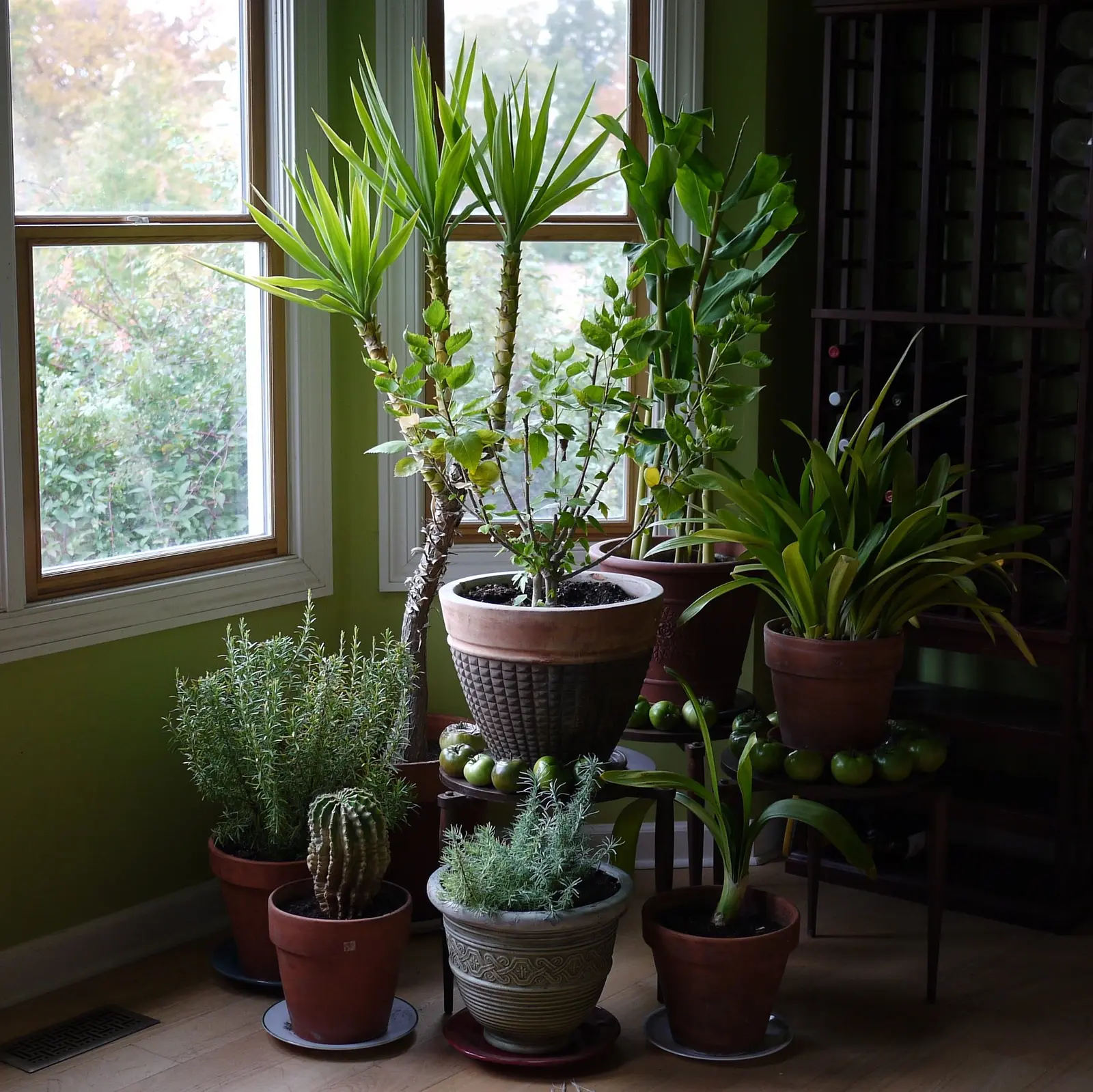
Many tropical plants can be maintained indoors, but they need appropriate light, temperature, and care. Bringing them inside prevents outdoor cold exposure; it does not automatically provide a suitable winter growing environment. Clear space near an appropriate window or install a safely mounted supplemental light before the plants arrive. Keep foliage away from cold glass, direct heater blasts, and doors that expose it to abrupt drafts.
Inspect plants and containers for pests before mixing them with the indoor collection. Minnesota Extension's seasonal guidance describes preparing outdoor houseplants for the move back inside and checking for insect problems. Minnesota Extension: bringing houseplants in for winter. Keep questionable plants separated while you investigate. Do not apply a pesticide as a universal arrival ritual; identify the problem and follow the label for the plant, pest, and intended location.
Use dormant storage only for appropriate plants
Some tender plants can be held through winter as dormant tubers, bulbs, corms, or other storage structures, while others can be managed through species-specific dormant or semi-dormant methods. Those are not equivalent to putting any leafy houseplant in a dark garage. The preparation, temperature, moisture, and inspection requirements differ. Check a reliable guide for the actual species before cutting it back or removing it from its pot.
Iowa State distinguishes keeping plants alive indoors, moving hardy plants to protected cold locations, taking cuttings, and storing suitable plants dormant. Its examples are regional and species-dependent, so use the framework without copying Iowa dates into another climate. Iowa State: how to overwinter plants. Label stored material clearly and keep it away from food storage where confusion could occur. Do not rely on memory to identify several similar dormant roots months later.
Measure the storage space instead of naming it
'Unheated garage' describes a building, not a stable temperature. A detached structure can become much colder than an attached one, while a sunny enclosed porch can warm sharply during the day. Use an appropriate thermometer to learn the actual range, then compare it with the plant-specific storage requirements. A room that is merely colder than the house may still be too warm for reliable dormancy or too cold for a tender tropical.
Think about access as well as temperature. You need to inspect moisture and condition without unstacking a wall of pots. Keep labels visible and leave walking space. Avoid locations exposed to vehicle exhaust, leaking chemicals, or household hazards. If stored plants block a door or require moving heavy equipment for every check, the plan is unlikely to receive consistent attention. Choose fewer plants or another method rather than letting access become an afterthought.
Protect containers and preserve drainage
Check the manufacturer's outdoor and freezing guidance for the pot itself. Some vessels or finishes can be damaged by freeze-thaw cycles, especially when water is trapped. Empty and store containers that are not suitable for the planned exposure after moving or removing their plants appropriately. Do not wrap an outdoor pot so tightly that outlets become blocked or rainwater accumulates in a hidden layer.
For protected outdoor plants, use the locally recommended insulation or placement method while preserving the plant's needs and the site's drainage. Wrapping is not a heat source. A protected position may reduce exposure, but it cannot make an unheated space maintain an invented minimum temperature. If the plan involves moving a large pot into the ground or another structure, confirm practical access and safe handling well before cold weather and wet soil make the job more difficult.
Continue moisture checks through winter
A resting plant often needs less water, but less does not mean never. Check the appropriate storage medium or root zone according to the species and conditions. Evergreen foliage can continue losing water, while overly wet dormant material can deteriorate. Avoid watering frozen containers or following a summer routine in cold storage. Use actual moisture and temperature observations to decide when intervention is appropriate.
Create a brief inspection record with date, temperature range, moisture condition, and any soft, shriveled, or damaged material. Investigate changes rather than repeatedly adding water or fertilizer. Remove clearly deteriorated stored material as recommended for the species and clean handling tools. Do not assume brown or leafless automatically means dead; dormancy changes appearance. Equally, do not assume a green leaf proves that the roots or storage conditions are healthy.
Plan the return trip before growth resumes
Spring return is another transition, not the reverse of a single autumn move. Indoor-grown foliage may need gradual acclimation to outdoor light and wind, and local frost risk still matters. Dormant plants may resume growth at different times depending on storage temperature. Prepare suitable pots, medium, labels, and outdoor positions in advance so emerging growth is not left in a dark corner while you decide what to do.
Review what survived and how much work it required. A plant that needed awkward heavy lifting twice a year may belong in a more manageable container next season. A storage room with unsuitable temperature swings should not receive the same collection without changes. Successful overwintering matches plant biology with a real space and a realistic inspection routine. The aim is healthy plants ready for the next growing season, not simply keeping every pot somewhere out of sight.
Sources & further reading
We favor university extension guidance and original product documentation. Linked sources support the specific facts cited; they do not endorse Garden Gear Atlas.
- Illinois Extension: container overwintering
- University of Minnesota: bringing houseplants indoors
- Iowa State: overwintering methods