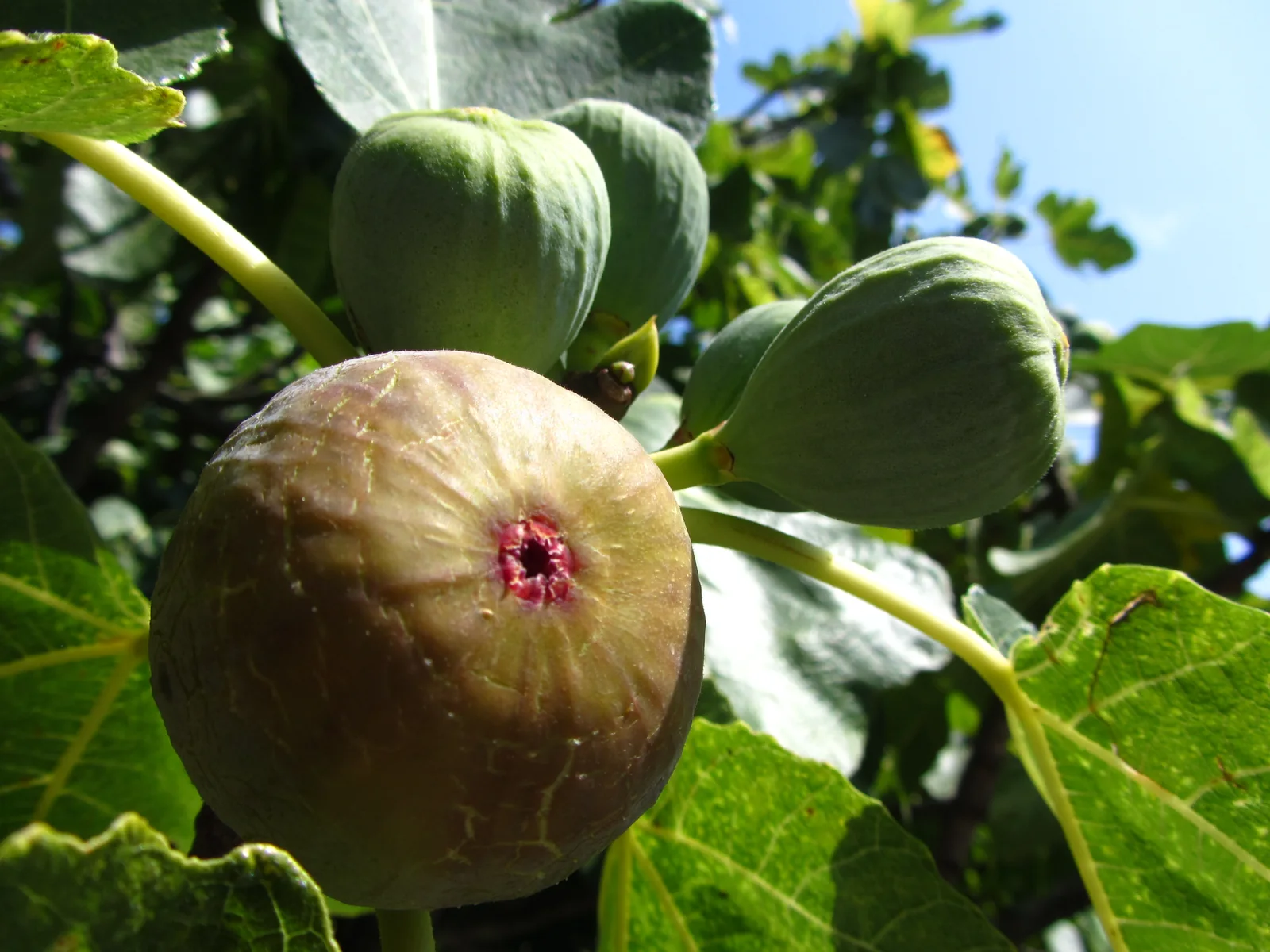
Give a spreading deciduous fig a permanent place
Common fig is Ficus carica, a woody deciduous member of the mulberry family. It can be trained as a spreading tree or maintained as a multi-stem shrub. Unrestricted plants may reach 10–30 feet tall and wide, although compact cultivars, regular management and restricted roots can produce a much smaller plant. Its broad lobed leaves provide a substantial seasonal canopy, which disappears in winter. NC State common fig profile.
Reserve room to reach fruit and remove unwanted basal shoots. A small nursery plant should not be positioned as though its current pot defines its lifelong size. Consider fallen fruit when choosing a location beside a walkway or seating area. Select a place with summer sun and enough working room for pruning and winter protection. The edible garden fig is also different from tropical ornamental Ficus houseplants; their indoor watering and temperature expectations should not be transferred to a dormant Ficus carica.
Choose fruiting type before thinking about pollination partners
Common-type figs form fruit without pollination, a process called parthenocarpy. The flowers are enclosed inside the developing fig, so gardeners do not see an ordinary open blossom. A second tree or a fig wasp is not necessary for these cultivars. This is a specific fruiting category within Ficus carica, not a claim about every fig. Smyrna types need pollination, while San Pedro types have different requirements for their early and main crops. University of Florida fig types.
Buy from a source that can confirm the cultivar and its fruiting behavior. In wet climates, fruit with a relatively closed eye can be less exposed to water and insect entry than open-eyed selections. Also compare ripening time and cold response. An attractive fruit photograph does not reveal either. Some common cultivars produce an early breba crop as well as a main crop; which crop is worthwhile depends on the cultivar, surviving wood, pruning and local season.
Plant a healthy fig in a drained, sunny root zone
Prepare a site with good drainage and dependable water access. Avoid a position where competing vigorous plants already occupy the rooting area. Figs sold bare-root and figs already growing in containers need handling appropriate to their condition, so follow the nursery’s planting instructions instead of applying a single depth or pruning prescription to every plant. Spread bare roots naturally, settle the soil with water, and protect new growth from immediate drought stress. Alabama fig establishment.
Figs can be propagated from stem cuttings or by layering a branch, preserving the selected plant’s identity. Use healthy source material and let new plants form an adequate root system before exposing them to a difficult permanent site. In areas with periodic winter dieback, a well-spaced multi-stem form can be easier to renew than a large single trunk. Begin thinking about that shape early, while stems are small, and leave enough separation for future branches to thicken without rubbing or crowding.
Keep growth steady without pushing a late flush
A fig needs enough water to establish and develop fruit, but soggy soil remains unsuitable. Use rainfall, root-zone moisture and plant response to decide when irrigation is needed. Mulch helps limit weeds and buffer drying, especially around the shallow roots. Do not cultivate aggressively under an established plant. Soil information and shoot growth are more useful feeding guides than assuming every fruit tree needs a large annual fertilizer dose. Georgia home fig care.
Too much nitrogen can favor shoots over fruit and encourage growth that is vulnerable when cold weather arrives. A vigorous plant with plenty of leaves but poor ripening may need a review of sunlight, pruning, cultivar and season, rather than additional feed. Keep the canopy open enough to inspect developing fruit and remove surplus suckers that defeat the intended shape. A fig under drought stress and a fig in saturated soil can both perform poorly; check the roots’ environment before changing the watering routine.
Make container size and winter handling one decision
A container can make fig growing possible where a permanent outdoor plant is difficult to protect. It also makes root moisture, fertility and crowding part of regular care. Maryland recommends at least a 15-gallon container, while emphasizing that larger pots become harder to move. Use a drained growing mix, assess roots as the plant develops, and prevent escape roots from anchoring a supposedly portable pot into the ground. Maryland container fig guidance.
After leaf fall, a dormant fig can be moved into a cool sheltered location. Monitor the mix and keep it from becoming completely desiccated without maintaining summer-like wetness. When spring growth resumes, reintroduce outdoor conditions gradually and protect tender leaves from frost. Virginia fig winter protection. The container fig guide develops the pot, summer position and winter move together. A container that cannot pass through the intended doorway is a planting constraint worth discovering before it is filled.
Prune with the crop in mind and pick softened fruit
The main fig crop develops on current-season growth, while any breba crop depends on retained older wood. Pruning therefore changes both canopy size and what fruiting wood remains. Remove dead or damaged branches, keep a reachable framework and avoid automatically cutting every branch back heavily. After a hard winter, wait until living growth is distinguishable before deciding how much wood has survived. Severe dieback delays the start of productive growth even if the roots recover. North Carolina fig culture.
For fresh eating, pick figs when they have softened and developed the expected mature character for their cultivar. A hard green fig should not be picked with the expectation that storage will create a good ripe fruit. Handle gently and use or cool the harvest promptly because figs spoil quickly, particularly in damp weather. Milky latex can irritate sensitive skin, so gloves are useful when handling cuts or picking. Keep sound fruit separate from split, sour or moldy fruit.
Diagnose an unripe crop before blaming a disease
Fruit that remains small at the end of a short season may simply have started too late. Repeated early fruit drop can also reflect a pollination-dependent fig type, frost, drought or other stress. Root-knot nematodes cause a different pattern: progressive poor vigor and production accompanied by galls on roots. Use a local diagnostic service to confirm the cause rather than assuming yellow foliage always means a nutrient shortage. NC State fig diseases and disorders.
Wet-weather fruit rot and souring require prompt removal of affected figs. Dead and cold-injured wood can provide entry points for canker fungi, so remove damaged material once the extent is clear. Leaf spotting late in the season is not automatically a reason to discard the entire plant; evaluate severity, timing and whether defoliation repeats. If roots survived but the top died, record that separately from a successful overwintering crop. Protecting productive wood and choosing an earlier cultivar may matter more than stimulating replacement shoots with fertilizer.
Sources and scope
Research-based guidance informed by institutional references. Cultivar, region and growing conditions can change the advice. Product inclusion does not imply hands-on testing of every model.
- NC State: Ficus carica
- University of Florida: The Fig
- Alabama Cooperative Extension: Fig Production Guide
- University of Georgia: Home Garden Figs
- University of Maryland: Growing Figs in Maryland
- Virginia Cooperative Extension: Backyard Figs in Virginia
- NC State: Fig Culture in North Carolina
- NC State: Fig Diseases in North Carolina

_in_Southern_France.JPG)