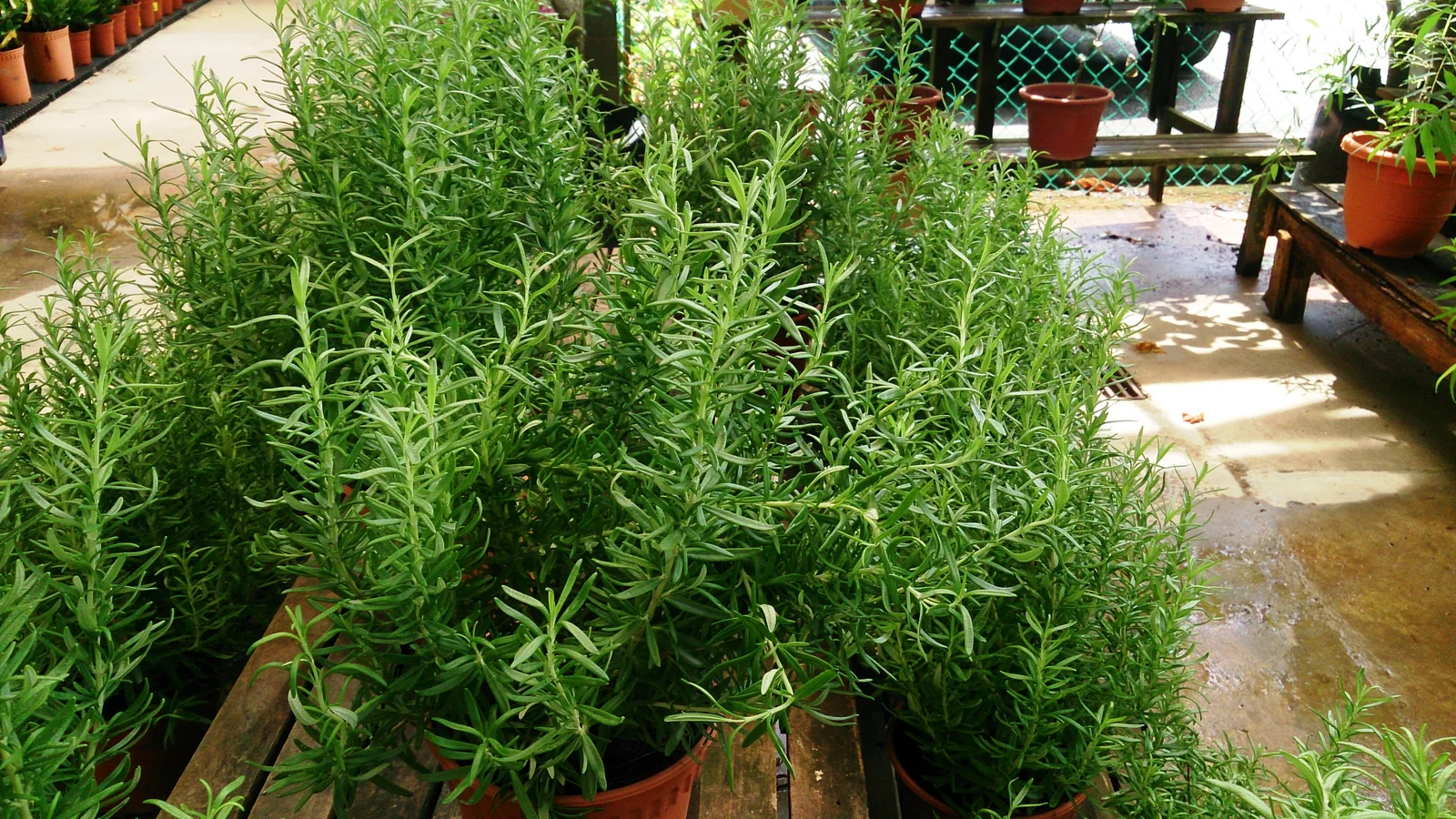
Recognize a shrub with different shapes
Rosemary is an evergreen woody shrub, now botanically named Salvia rosmarinus; the older name Rosmarinus officinalis remains common on labels. Its narrow leaves have green upper surfaces and pale undersides, and the flowers can be blue, lavender or white. Upright forms can become substantial landscape shrubs, whereas trailing selections suit the edge of a raised container or wall. Select the eventual habit before choosing a planting position. NC State rosemary profile.
For a kitchen plant, access to fresh shoots matters more than a topiary silhouette. An upright shrub can be clipped gradually as it grows, but its woody framework still needs room. A trailing form needs somewhere for stems to extend without lying in a wet saucer. Keep the label so a later pruning or winter decision refers to the actual selection. The mature dimensions in the quick-care facts describe typical upright plants, not every rosemary sold.
Select a sunny site that drains after rain
Good drainage is the main site requirement. UF/IFAS describes rosemary as a plant for at least six hours of sun that suffers when watered too frequently. In a mild climate it may remain outdoors year-round, but wet roots can still undo an otherwise favorable temperature regime. Before planting in the ground, observe where water collects after rain. A planting hole in a persistently wet location does not become suitable simply because the top surface looks dry later. UF/IFAS rosemary guidance.
In a container, choose freely draining potting mix and an unobstructed route for excess water to leave. Place rosemary with plants that have a similar moisture pattern or give it its own pot. This makes it possible to water a thirsty neighbor without repeatedly soaking rosemary. Allow root growth to catch up after planting before expecting drought tolerance. Even an established plant in a pot has a finite supply of moisture and needs checking during hot, windy weather.
Begin with a plant or a known cutting
A nursery plant is a practical starting point when the aim is an early usable harvest. Seed is possible, but germination and establishment are slower and less predictable than many annual herbs. Illinois Extension favors stem cuttings for producing plants and advises growing rosemary in containers from the outset when it will need to move indoors. Digging a developed garden shrub into a pot in autumn adds root disturbance to the seasonal change. Illinois rosemary growing guide.
Choose a plant with healthy shoots and a manageable root ball rather than paying for height alone. If propagating, take material from a healthy, correctly labeled parent; this preserves the selection you wanted. A rooted cutting is still a young plant, so keep the root zone from drying excessively while it establishes. Plan a container that can be lifted safely with moist mix in it. Portability is an ongoing requirement when the plant's winter home is indoors, not a problem to solve only at the first cold forecast.
Build a dense plant without cutting into bare wood
Rosemary becomes woody naturally, so pruning should retain leafy growth from which the plant can continue. The RHS recommends light trimming after flowering and cautions that old, bare wood often does not recover from severe cutting. Harvesting a few tender shoots can be part of this maintenance, but cutting a neglected shrub back to a leafless skeleton is a different operation. Replace a badly straggly plant if it has little usable framework, and propagate healthy material beforehand if appropriate. RHS rosemary pruning advice.
Work around the plant so its shape stays balanced. For an upright form, keep harvests from creating a permanently bare side; for a trailing form, shorten selected shoots within their leafy portions. Leave some flowering growth when the display and visiting insects are part of the reason for growing it. Inspect the plant after cutting rather than following a fixed volume of harvest. A small pot-grown rosemary and a well-rooted landscape shrub have very different reserves for replacing removed foliage.
Choose the winter location before autumn
Cold-climate rosemary needs a deliberate winter plan. Illinois Extension describes success as depending on a cool location with very bright light; a warm, dim room is a poor substitute. Some cultivars tolerate colder outdoor conditions than others, but a cultivar's reputation does not remove local exposure and drainage from the decision. If the plant is important to keep, use a location where its needs can actually be met rather than relying on an unusually mild winter. Illinois winter discussion.
For a potted plant, check available light, temperatures and the route indoors while it is still easy to make changes. Lower winter growth means a smaller harvest and a different watering demand from summer. Brown tips are a reason to inspect conditions, not an automatic signal to add water. Use the container rosemary winter guide for the fuller diagnostic sequence, including the interaction of light, potting mix and seasonal drying. Supplemental light may be needed when the brightest practical window is insufficient.
Use the tender harvest and investigate decline carefully
Fresh rosemary has a strong, resinous flavor, so small harvests can be useful. Strip leaves from woody stems and chop them when a recipe needs dispersed flavor; remove a whole woody sprig before serving if it was used to infuse the dish. Illinois Extension describes fresh or dried rosemary as suitable for poultry, meat and other savory foods. Choose the amount by the recipe and your taste rather than by how much the shrub will yield. Illinois culinary rosemary guidance.
For a declining plant, compare the roots and recent conditions. Cold, wet soil can injure rosemary over winter; the University of Maryland flags this specifically for woody Mediterranean herbs. That history differs from a dry root ball beside a heat vent. Check drainage and the moisture below the surface before changing care. Photograph progressive damage and seek a local diagnosis if the cause remains unclear; more fertilizer will not repair dead roots. Maryland herb problems.
Sources and scope
Research-based guidance informed by institutional references. Cultivar, region and growing conditions can change the advice. Product inclusion does not imply hands-on testing of every model.
_4.jpg)