Choose a kitchen task small enough to succeed
An indoor herb garden is most satisfying when its job is explicit. Perhaps you want a few chive leaves for eggs, a small mint sprig for a drink or occasional parsley for finishing a dish. Those uses require less biomass than frequent pesto, large herb salads or repeated bunches of cilantro. Start with the smaller job and measure what the plants can actually supply.
Choose herbs you already cook with rather than buying a mixed kit because it contains many species. A successful plant you never harvest takes light and counter space from one you would use. Two healthy, accessible pots are a better starting experiment than a crowded collection whose individual needs are hard to follow.
Keep a short harvest record for the first month of useful growth. Note roughly what you take and how quickly new growth replaces it. This is not a yield trial or a promise to compare against advertising. It is a household planning tool that tells you whether the plants can support the way you want to cook.
A bright room is not the same as a productive growing site
Observe the proposed window through the day. Count periods of actual direct sunlight, note nearby buildings or trees, and consider how winter sun differs from summer. A north-facing room can feel pleasant to people while being unsuitable for vigorous growth of many culinary herbs. Distance from the window matters as well as its direction.
Iowa State Extension identifies light as a major limit indoors and recommends growing different herb species in separate containers. Its indoor-herb guide provides a practical foundation for choosing plants and setting up their care. Use its light guidance as a starting point, while recognizing that hours alone do not describe intensity through every window.
Watch the plants' response. Long weak stems leaning toward the window, small new leaves or very slow recovery after harvesting should prompt a light assessment. Rotating a pot can distribute directional growth, but it does not create more total light. Moving the plant closer to an appropriate window or adding well-chosen supplemental light may be more useful than repeatedly rearranging the room.
Select herbs with different jobs, not identical care
Chives, parsley, mint, basil, thyme and other culinary herbs can be grown indoors, but they should not be treated as interchangeable houseplants. Basil needs conditions that support warm-season growth. Woody Mediterranean herbs can be less forgiving of persistently wet roots. Cilantro and other short-lived leafy crops may need successive sowings rather than an expectation that one plant will produce indefinitely.
Start some herbs from a healthy purchased plant or cutting when seed would add a long wait. Others make sense as small successive seed batches. Keep the cultivar and botanical identity where possible, especially with plants sold under broad common names. Buy plants intended for culinary use, and check any treatment history before assuming an ornamental nursery plant is ready to harvest.
Minnesota Extension discusses growing and harvesting herbs and the differences among annual, biennial and perennial plants. Its herb guide helps explain why replacement schedules differ among species. Choose one herb to learn first, then add another with a clear place and care plan instead of expanding the collection faster than the lighted area.
- For frequent small snips, choose an herb you already use in small quantities.
- For large recipes, plan additional plants or keep buying supplemental bunches.
- For short-lived leafy herbs, reserve space for replacement sowings.
- For woody herbs, allow for slower recovery and species-specific moisture needs.
- Keep culinary plants separate from unidentified or ornamental-only plants.
Separate pots make diagnosis and watering easier
Choose containers with drainage holes and accessible saucers. A decorative outer container can work if excess water is removed and the inner pot is easy to inspect. Avoid a shared undrained bowl where one thirsty plant sets the watering schedule for every root system. Separate pots also let you replace a finished annual without disturbing a longer-lived herb.
Use appropriate potting mix, and check whether it already contains fertilizer. Pot size should fit the plant and intended growth, not simply fill an empty decorative vessel. Too little root volume can create rapid drying; a small plant in a very large wet volume can be difficult to manage. Learn the feel and weight of each pot rather than watering every plant together.
Check moisture below the surface before watering. Indoor conditions change with heating, season, plant size and light. Empty saucers after drainage and keep leaves away from standing water. A weekly reminder can be useful as an inspection prompt, but it should not become an instruction to add water regardless of what the root zone is doing.
Choose supplemental light as a complete setup
Before buying a lamp, measure the canopy area and the available mounting height. A narrow light may serve one small row while leaving pots at the edges poorly lit. A powerful fixture may need more clearance than your shelf provides. Consider how the plants will grow upward and whether the lamp can be adjusted safely.
Plant response depends on light intensity, spectrum and duration together. Lumens describe brightness weighted for human vision, so comparing lumen numbers alone is not a reliable way to choose between different grow-light spectra. Look for useful plant-light information, coverage at a stated distance and clear operating instructions. Do not treat the word full-spectrum as a guarantee of adequate intensity.
Iowa State Extension explains the roles of light quality, intensity and duration and introduces daily light integral as a way to consider their combined effect. Its supplemental-light guide gives the relevant framework. Use a timer and suitable dark period, follow the fixture's directions, and keep cords and connections protected from watering spills. More hours cannot compensate without limit for an unsuitable lamp or placement.
Harvest the surplus and replace plants deliberately
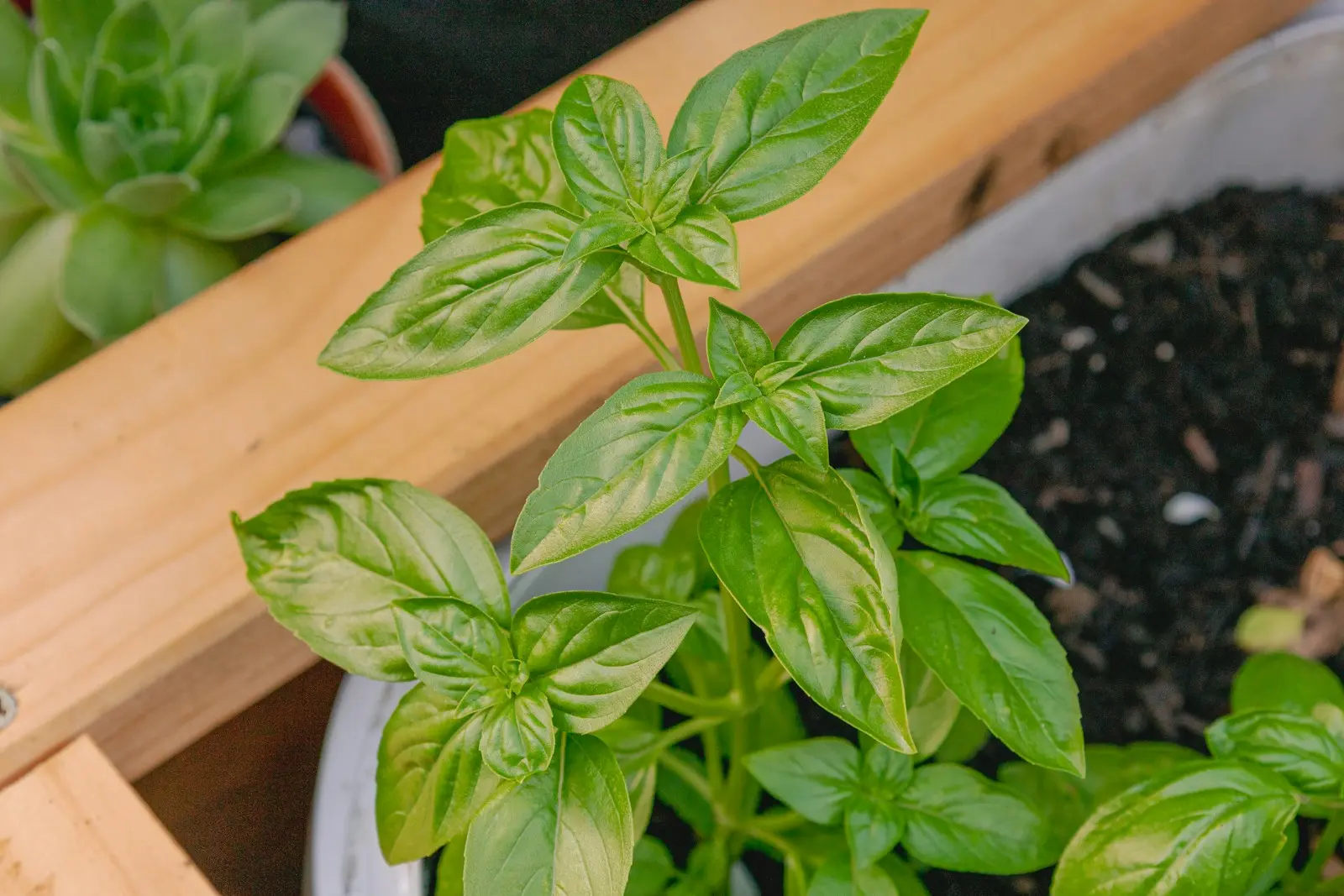
Take the amount the plant can replace, not automatically the amount a recipe requests. For a branching herb such as basil, a cut above a suitable leafy node can encourage a useful shape. Other herbs need different harvesting methods; chives and parsley should not be forced into the same cutting diagram. Leave enough healthy foliage and growing points for the species to recover.
If the plant is barely growing, pause heavy harvesting. Check light, moisture, temperature and roots before changing fertilizer. Pale or damaged growth can have several causes, and a stronger feed may worsen an already stressed root zone. Keep track of any products used on edible plants and follow harvest restrictions where applicable.
Inspect new purchases and plants brought indoors before placing them with the rest of the collection. Check leaf undersides, stems and the mix surface regularly. Identify pests before treating, and use only controls appropriate to edible herbs indoors. When a short-lived plant is tired or quality has declined, replace it rather than treating longevity as the only measure of success. A small, steady supply of useful leaves is a realistic achievement; endless restaurant-sized harvests from a dim windowsill are not.
Separate survival from production in your records
An herb can remain green indoors while producing too little new growth for regular cutting. Track those outcomes separately. Note whether the plant retains healthy foliage, whether fresh shoots develop and whether harvested growth is replaced at a useful pace. If survival is good but production is poor, the next question may be light or harvest demand rather than disease. If both decline, inspect roots, watering and pests before expanding the setup. This distinction also makes equipment decisions clearer: a lamp purchase should have a defined goal, such as supporting two small actively harvested pots, rather than an unspecified promise of an indoor garden. Start with that limited area, monitor the response and expand only when the plants and your care routine demonstrate that the system can support it.
Sources & further reading
We favor university extension guidance and original product documentation. Linked sources support the specific facts cited; they do not endorse Garden Gear Atlas.
- Iowa State University Extension: Growing herbs indoors
- University of Minnesota Extension: Growing herbs
- Iowa State University Extension: Supplemental lights