Recognize common chives before choosing the display
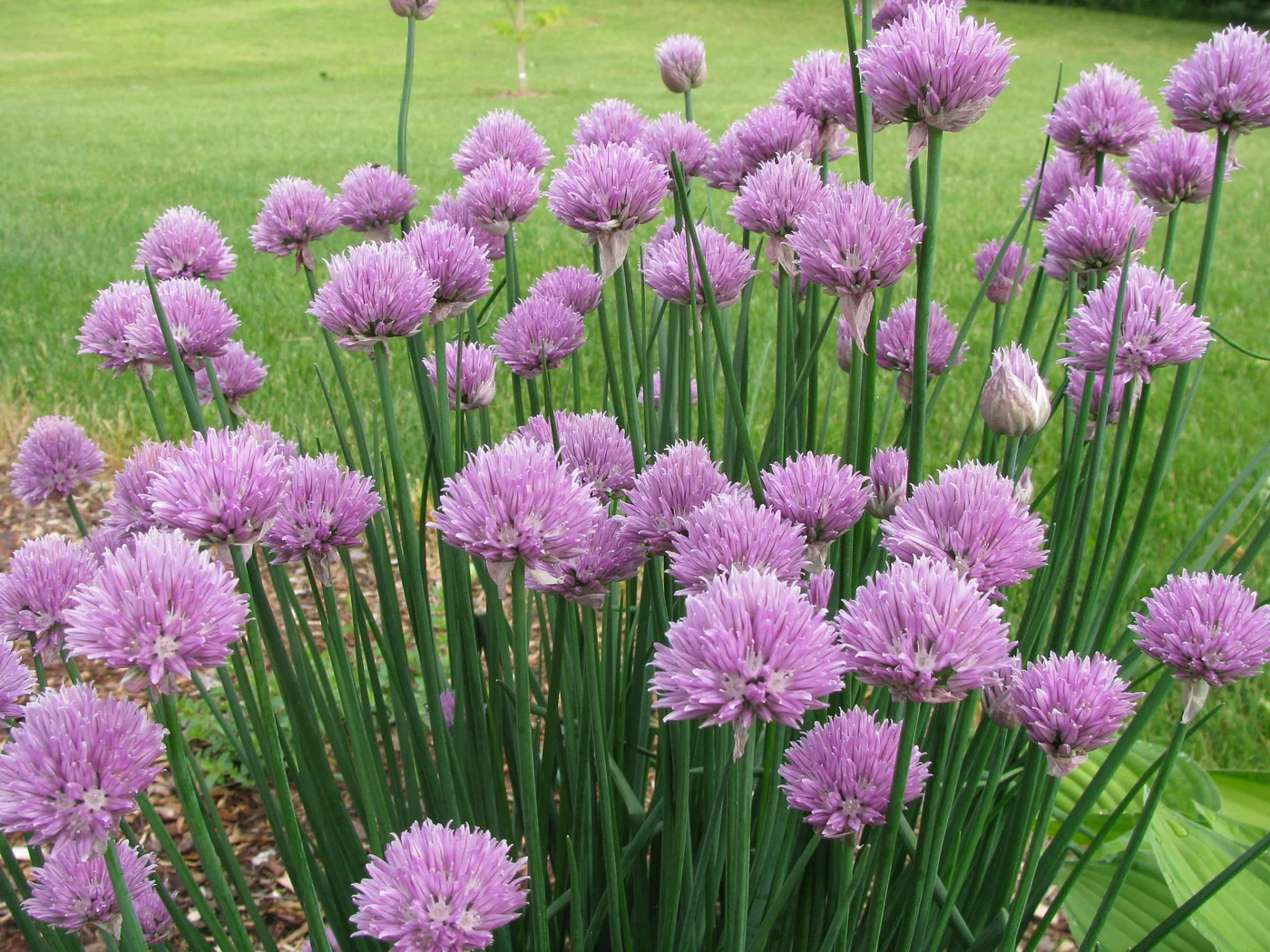
Common chives have slender, hollow, cylindrical leaves and usually rounded pink-purple flowerheads. Garlic chives, Allium tuberosum, are a different species with flat leaves and white flowers. White-flowered forms of common chives also exist, so flower color alone is not an identification key. RHS: growing chives
Use the full botanical name when you want a repeatable kitchen plant. Keep a named cultivar on the label if one is supplied. An inherited grassy clump should not enter the harvest basket merely because it occupies the former herb bed. Check its identity from a reliable planting record or a knowledgeable local source before using it.
Choose leaf texture and flower effect separately. If very fine chopped leaves are the main aim, ask about a culinary selection. If a border of flowers matters, look at the promised flower height and color too. Buying one labeled plant gives you a manageable way to judge both uses before committing the edge of an entire bed.
Count portions before counting pots
Write down two or three meals in which you actually use chives. A sprinkle over eggs, a bowl of dip and a large potato salad make different demands. Start with the size of the portion you want, then assess whether a modest clump supplies it without being stripped every few days. A seed packet is not a planting quota.
Position the plant so that the harvest can happen while cooking. A pot beside the door may be convenient if that position also meets its growing needs; a shaded doorstep is not made suitable by proximity alone. Leave enough space to hold a small bowl and reach the leaves without brushing muddy neighboring foliage into it.
For a household that uses chives frequently, consider two accessible clumps with different jobs. One can remain leafy while another flowers or recovers from a larger cut. This is a scheduling option, not a promised yield formula. Increase the planting only after you see how much foliage your own plants replace between meals.
Choose rooted material or a seed project
Illinois describes spring division as a common propagation method and notes that seedlings can vary in leaf size and texture. A division therefore preserves a plant you already like; seed makes sense when variation is acceptable and you want to raise several plants. Illinois Extension: chives
Inspect a purchased pot for a clearly established clump, its condition at the crown and the number of plants you can comfortably accommodate. A very dense pot may offer division material, but do not assume every visible leaf represents an independent transplant. Plan the destination before taking it apart, including somewhere for any extra divisions you choose to keep.
When starting from seed, mark the sowing and leave the packet with your notes. Keep the project distinct from a plant purchased for immediate picking. That avoids harvesting a young seedling group as though it were a mature clump. If only one kitchen plant is wanted, compare the care space required for a tray with the simplicity of buying one healthy start.
Give the crown an accessible place
Minnesota favors full sun, well-drained soil rich in organic matter and a soil pH of 6–7. It also cautions against excessive fertilizer. These needs differ from the driest herb-bed positions, even though chives sit beside sage and oregano on the same nursery shelf. Minnesota Extension: growing chives
Before planting, check the spot after ordinary rain and again during a dry spell. You need somewhere that can be watered without collecting runoff at the crown. Leave an open working edge so weeds can be removed carefully and the clump can eventually be lifted. A narrow gap between permanent shrubs becomes less practical as all three plants grow.
In a border, locate chives where neighboring growth will not conceal the leaves by the time you want to pick them. In a dedicated herb bed, avoid allocating the entire front edge to a dense continuous row until you know the spacing works. Small separated groups let you see crowns, identify volunteers and change one planting without dismantling the whole arrangement.
Use containers for access and control
RHS container guidance starts with a vessel at least 20 cm, or 8 inches, wide and deep, with suitable potting compost. Keep container-grown chives evenly moist during growth. Treat those dimensions as a starting size to evaluate against the clump, not a permanent limit for every mature plant. RHS: growing chives
Measure the inside space of the pot and verify that water can escape before filling it. Allow room above the medium for watering, and choose a position where runoff can be emptied if a saucer is necessary. The container soil calculator can estimate mix from your measurements; it cannot decide whether an existing root mass needs division.
Check the center of a dense clump as well as the visible rim. If water runs quickly down one side, investigate how the medium is wetting instead of repeatedly adding small splashes. Keep the pot movable enough for inspection, or choose its permanent position carefully. A heavy decorative container is useful only if routine care remains physically manageable.
Treat leaves and flower stalks as different harvests
Wisconsin recommends taking selected leaves for continuous harvest and explains that cutting the whole clump means waiting several weeks for regrowth. Its guidance also identifies the flowers as edible and attractive to pollinators. A flowering plant is therefore still useful, although its roles have changed. Wisconsin Extension: chives
Look down through the clump before placing the blades. Gather the leaves you want and keep obvious flower stalks separate, rather than chopping every upright piece into one kitchen bundle. Use clean scissors or the Fiskars Micro-Tip snips for controlled small cuts, and inspect the remaining plant after each handful.
If flowers are a priority, reserve a clump that will not be cut for every meal. When the display ends, decide whether seed is wanted. The division and harvest guide explains how to organize flowering, deadheading and renewal without putting all your chives out of production at once.
Renew a crowded planting with a destination in mind
Minnesota suggests dividing established clumps every three to four years in spring. Wisconsin gives a two-to-three-year interval. Treat those recommendations as reminders to inspect crowding and vigor, rather than a reason to split a healthy, manageable clump on a birthday. Minnesota Extension: growing chives Wisconsin Extension: chives
Before lifting, decide how many renewed plants you need and which positions they will occupy. Keep a vigorous portion for the main kitchen pot and label any extras as you work. If the present location has become too shaded or inconvenient, division is a good moment to change it; returning every piece to the same troublesome spot merely repeats the problem.
Do not assume that every thin patch requires division. Record whether growth followed a large harvest, a dry period or seasonal dieback. Inspect for damage and check moisture before adding fertilizer or disturbing roots. Your most useful evidence is the comparison between new leaves, the crown and the conditions since the last good harvest.
Set a realistic winter expectation
Minnesota notes that indoor chives grow little when winter light is poor and may die back somewhat before brighter spring conditions return. Moving a pot inside does not by itself create a productive winter crop. Minnesota Extension: growing chives
If winter picking matters, test a small labeled pot in the actual window and record usable harvests. Keep the outdoor planting as a separate reference. Use indoor culinary herbs to assess light and demand before buying equipment solely to preserve the idea of year-round abundance.
At the end of the season, compare the value of fresh leaves, flowers and maintenance time. Keep the cultivar information and note which clump supplied the most useful portions. The next planting should answer those observations: more harvest capacity, a separate flower clump or simply a better position for the plant you already own.
Sources and scope
Research-based guidance informed by institutional references. Cultivar, region and growing conditions can change the advice. Product inclusion does not imply hands-on testing of every model.