Make the winter decision while the plant is still healthy
Rosemary is a woody evergreen herb, not a leafy annual that responds to every setback with rapid replacement growth. A healthy summer plant may be large enough that moving it indoors becomes awkward. Plan the destination, light and access before cold weather forces an emergency decision. If no suitable location exists, treating rosemary as a seasonal crop can be more realistic than expecting a dim heated room to preserve it.
Check the cultivar and local hardiness guidance. Named cultivars differ, and a seller's broad zone claim cannot capture exposure, drainage, winter fluctuations or the added vulnerability of container roots. A sheltered bed and a pot on an exposed deck are different situations. Do not use survival of a neighbor's in-ground shrub as proof that your hanging container can remain outside.
Illinois Extension discusses rosemary as a tender perennial in colder regions and notes the advantages of keeping a plant in a container if it will be brought indoors. Its rosemary guide explains the seasonal transition and slower winter growth. A locally informed plan is preferable to one national bring-it-in date.
Choose the winter location for the plant, not the décor
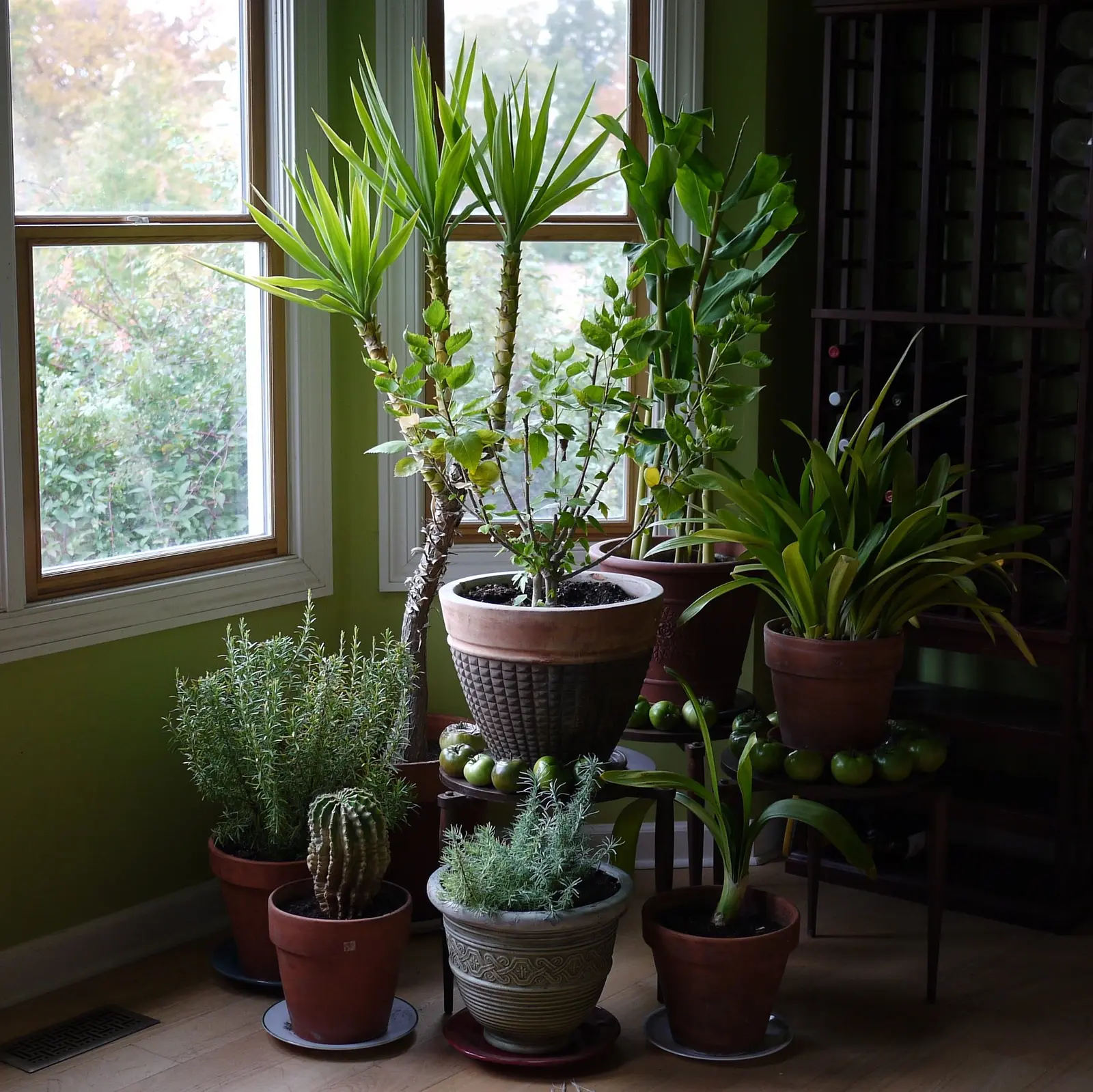
A spot that looks bright to people may provide little useful light for a sun-loving herb, especially in winter. Observe actual direct light, obstructions and the distance from the glass. A pot several feet inside a room does not receive the same conditions as one close to a suitable window. Keep foliage from pressing against very cold glass and avoid repeated blasts from heating vents.
A cool, bright location can be more suitable than a hot room with weak light. However, 'cool' does not mean exposing the plant to an unverified freezing garage or leaving it in darkness. Measure conditions where the pot will stand rather than assuming an enclosed porch is safe. If supplemental lighting is necessary, plan stable mounting, appropriate coverage and a timer.
Make the pot reachable. A rosemary hidden behind other overwintering plants is easy to overwater by routine and hard to inspect for pests. Leave room to turn or view the whole plant and to remove drainage water. A winter location should work for repeated care, not only accommodate the pot on the day it comes indoors.
- Identify the cultivar and check local outdoor survival guidance.
- Assess the actual light and temperature at the proposed winter location.
- Keep the drainage outlet and saucer accessible.
- Inspect the plant before placing it near indoor collections.
- Reduce harvest expectations until new growth demonstrates what the plant can support.
The root ball is the watering gauge
Feel the growing medium below the top surface and learn the weight of the pot when watered versus when it is approaching dryness. The surface alone can mislead, especially in a large container or one topped with decorative material. A small nursery root ball inside a much larger pot may also dry differently from the surrounding unused mix.
When watering is needed, wet the root zone appropriately and let excess water drain. Empty standing water from a saucer or decorative outer container. Do not preserve a permanently wet reservoir unless the entire system and crop management are designed for it. Rosemary's tolerance of relatively dry conditions does not make either chronic saturation or complete neglect a good strategy.
North Carolina Extension's Plant Toolbox warns about overwatering and notes indoor pest and disease concerns for rosemary. Its rosemary profile is a useful check against interpreting every brown leaf as thirst. A plant declining while its mix remains wet needs drainage and root assessment, not automatic additional watering.
Avoid a major repotting project at the worst moment
Repotting can be necessary, but changing container size, mix, location, light and watering all at once makes problems harder to diagnose. If you know the plant is root-bound during active growth, address it at an appropriate time before the winter transition when possible. Do not place a small plant into an enormous wet volume solely to reduce future work.
Use a container mix that drains appropriately and a pot with a functioning outlet. A layer of stones does not correct a dense waterlogged root zone. If an outer decorative pot is part of the display, make sure the inner pot can drain and be removed. Decorative wrapping around a gift rosemary should not hide trapped water.
Compare container materials with your care routine. A porous pot may dry differently from a glazed or plastic one, while a heavy pot may be more stable but harder to move. There is no single material that guarantees winter survival. Choose one you can inspect, water and transport safely, and keep a record of any repotting so later symptoms have a clear timeline.
Winter harvesting should follow growth, not recipes
A rosemary that is surviving winter in low light may produce little new growth. Taking repeated large cuts from it can remove more foliage than it replaces. Harvest small healthy tips only when the plant has enough leafy growth, and leave substantial green foliage on retained stems. Avoid trying to renew a struggling plant by cutting deeply into bare old wood.
If you need large amounts for holiday cooking, plan a summer harvest for appropriate drying or buy culinary rosemary rather than stripping the overwintering plant. Keeping a plant alive for next summer and producing a continuous commercial-sized winter crop are different goals. Set the goal clearly so slower seasonal growth does not trigger unnecessary fertilizer or pruning.
Iowa State Extension notes that rosemary is among the indoor herbs with more demanding light or pest-management needs, and recommends matching care and harvesting to the species. Its indoor-herb guide offers context for realistic winter expectations. More fertilizer cannot substitute for inadequate light, and a calendar feeding routine should not ignore whether the plant is actively growing.
Use symptoms to decide the next check
Brown tips with a dry, lightweight root ball call for a different response from brown foliage above persistently wet mix. Fine webbing, stippling, sticky residues or clusters of insects require closer pest identification. White powder on foliage is not the same observation as ordinary pale leaf undersides. Photograph both the whole plant and close details before treating.
Keep a newly brought-in plant separate from other indoor plants while you inspect it. If a pest is identified, use controls appropriate to an edible herb and its indoor setting, following current label directions. Do not apply a houseplant treatment and assume the leaves remain suitable for cooking. When uncertain, ask local Extension with the product name and intended harvest use.
In spring, move a surviving plant back outdoors gradually as conditions become suitable. Reintroduce stronger sun and exposure over time rather than placing winter-grown foliage into an abrupt full-day summer setting. Record which winter location, watering pattern and harvest level worked. If the plant struggled despite reasonable care, next season's improvement may be a smaller cultivar, a better-lit space or a decision to grow rosemary seasonally.
A decorative gift plant needs a drainage inspection
A cone-shaped holiday rosemary may arrive in foil, a sleeve or an ornamental cachepot that obscures the growing container. Inspect that arrangement before the first watering. Find the actual drain holes, remove trapped water and make sure you can lift or access the inner pot without damaging the foliage. Keep any care tag and confirm the plant is intended for culinary use before harvesting. Its clipped shape does not reveal the size or condition of the root ball, so avoid judging water needs from the canopy alone. If the pot has dried severely during display or transport, reassess the root zone carefully rather than adding frequent small splashes. A gift plant can be worth keeping, but its presentation should not dictate a care method that leaves roots hidden and wet.
Sources & further reading
We favor university extension guidance and original product documentation. Linked sources support the specific facts cited; they do not endorse Garden Gear Atlas.
- University of Illinois Extension: Rosemary
- North Carolina Extension Gardener Plant Toolbox: Rosemary
- Iowa State University Extension: Growing herbs indoors