Make Salvia officinalis the purchase specification
Salvia officinalis is standard culinary sage. RHS distinguishes it from other plants whose common names include sage, such as Russian sage, pineapple sage and Turkish sage. The shared everyday name is not enough to establish equivalent kitchen use or growing requirements. RHS: growing sage
Buy from a source that identifies the plant and presents it for culinary growing. Keep the species and cultivar name together, especially when adding it to a mixed ornamental border. If a plant is inherited without a label, resolve its identity before harvesting. A familiar grey leaf or aromatic smell does not replace a dependable identification.
Decide how much visual variation you want after confirming the species. You may value large leaves for a particular dish or compact growth for a pot. Make those concrete needs part of the shopping note. A named choice is easier to repeat than a plant bought simply because the label says assorted herbs.
Treat sage as a small shrub with a useful outline
Wisconsin describes stems that begin green and become woody with age; culinary sage is a short-lived perennial subshrub. The wood is normal structure, not automatically damage. What matters for a useful kitchen plant is where healthy leafy shoots remain along that structure. Wisconsin Extension: culinary sage
Look through the plant at purchase rather than judging only the top. Trace several stems from their bases to their tips and consider how much growth is reachable. A tall specimen with most leaves on distant tips may be a less convenient kitchen plant than a smaller, well-branched one. Larger nursery volume is not the same as a better harvest arrangement.
Reserve the eventual width in the garden. Leave a gap where your hand can enter to choose a shoot without snapping another branch. If the plant overhangs a narrow path, every meal may become a trimming exercise. Put the expected shape on a simple planting sketch before placing neighboring herbs close around the young plant.
Choose foliage you will actually use
Illinois describes Berggarten as robust with large silver-grey leaves. It also identifies golden, purple and tricolor forms as ornamental choices with winter limitations. Leaf color and culinary suitability need to be considered alongside the exact cultivar, rather than treated as mutually exclusive categories. Illinois Extension: sage
If you cook with sage occasionally, one healthy plant may be enough to assess your preference. Compare a few leaves in a familiar dish before expanding a collection. Keep preparation consistent when making a comparison, and record the cultivar rather than relying on memory of which pot stood on the left.
A colored sage can earn its space partly through appearance even when it is harvested sparingly. Give that role a fair evaluation: does the foliage complement the border and remain accessible for inspection? If your only goal is a reliable supply for cooking, make vigor, leaf quality and local performance more important than a decorative photograph.
Find a root environment that survives the wet season
RHS places common sage in sunny, moderately fertile, well-drained conditions and advises protection from excess winter wet. Its species profile includes foot and root rots among potential problems. A root zone that remains saturated deserves attention before the next pruning or feeding decision. RHS: common sage profile
Inspect the intended location after rain. Avoid assuming that a sunny summer bed will also be a dry winter bed. Runoff from a paved area, an overflowing container or a roof edge can change the planting environment. If the site is persistently wet, choose a better position or an appropriate container arrangement rather than relying on a small amended hole.
In a pot, check both the openings and where discharged water goes. A decorative outer vessel must remain easy to inspect and empty. Use the container drainage guide to resolve the setup before planting. The plant’s drought tolerance is useful context for established growth; it is not permission to leave a new root ball dry.
Plant for establishment before planning a large harvest
NC State advises light harvesting in the first year so a new sage can establish. The amount it can spare depends on its development, not the fact that the same species appears in recipes by the handful. NC State: culinary sage
Prepare the destination, water access and label before removing a nursery plant from its pot. Keep the root-ball level visible so you can reproduce the planting position rather than burying the stem base beneath extra mix. Position the plant while you can still see its shape from the path where you will harvest.
For a first-season dinner, take only what the plant can comfortably spare and supplement from another source if necessary. Set aside the expectation of a large drying batch until growth warrants one. Note how quickly the plant replaces a modest cut. That observation is more useful for future harvest planning than an assumed yield from the pot diameter.
Keep living leaf growth below routine cuts
NC State cautions that mature woody stems seldom produce new growth after cutting. RHS similarly warns against pruning hard into bare old wood. A plan to make an overgrown sage smaller should therefore start by identifying leafy growth that can remain. NC State: culinary sage RHS: growing sage
Select the shoot before opening the blades. If taking individual leaves, look at the condition and balance of the surrounding branch. If taking a short leafy tip, check the portion you are leaving as carefully as the harvest. Avoid repeatedly stripping one easy-to-reach side while ignoring the rest of the plant.
Use small snips for soft leafy material and a suitable bypass pruner only where the planned cut requires it. Tool capacity does not make a horticulturally unwise cut sensible. The sage framework and renewal guide explains how to distinguish kitchen harvest, measured pruning and replacement before a sparse plant becomes a collection of bare stumps.
Keep flowering and replacement decisions visible
RHS recommends light annual pruning of established sage in mid-to-late spring and removal of faded flower stems later in the season. It also recommends regularly raising replacements as older plants become woody and straggly. Follow active growth and local conditions when applying that UK seasonal sequence. RHS: growing sage
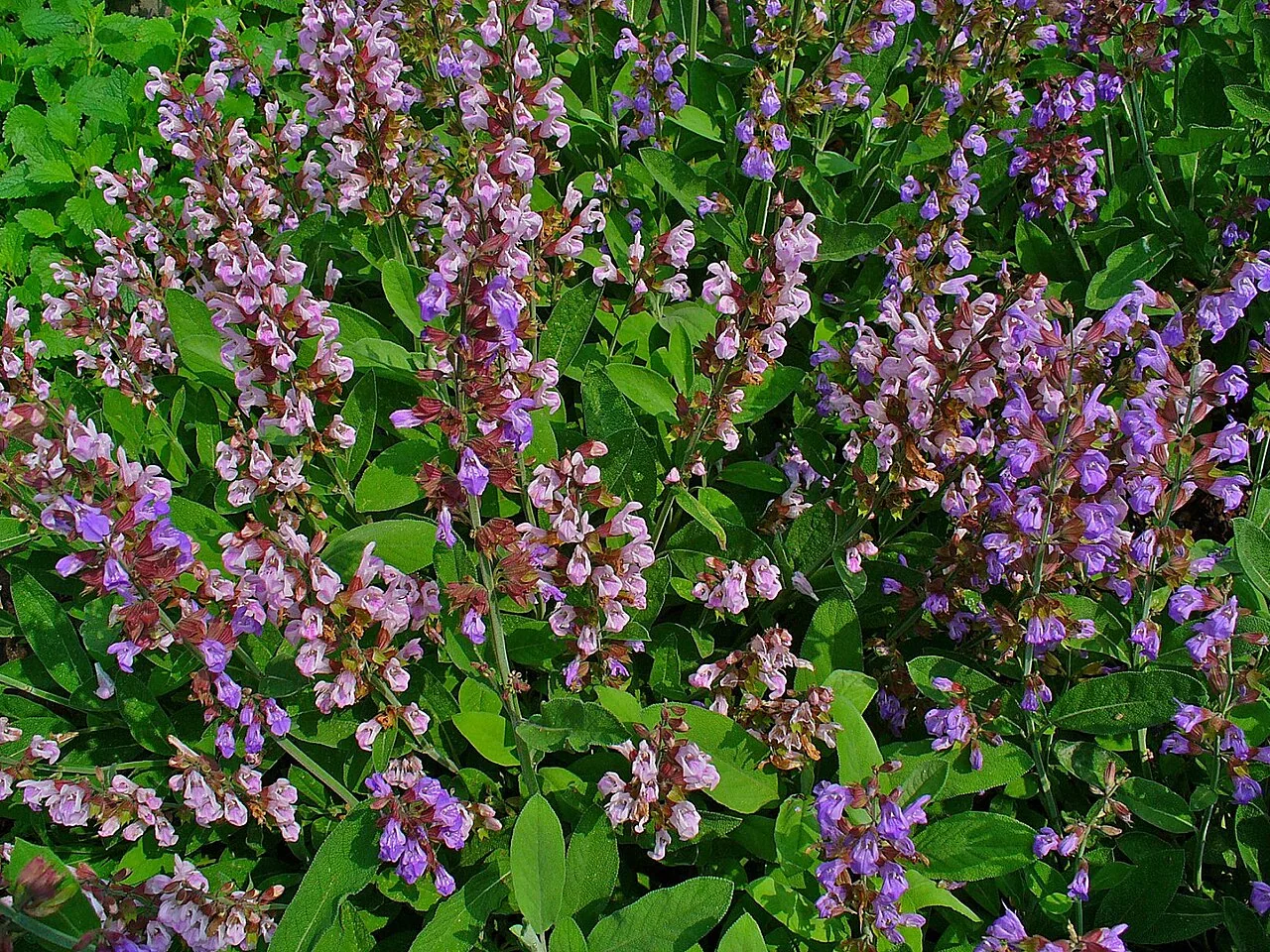
If flowers matter to you, set aside some growth that will not be harvested at every visit. Identify the stems before the display develops, so another household member does not tidy them away. Once flowering ends, inspect the shape and the leaf-bearing framework separately; spent flower stems do not by themselves show whether the main plant needs renewal.
Prepare a replacement while the parent still has healthy material if preserving that plant matters. Alternatively, choose a new labeled nursery plant when propagation space is limited. Keep the old plant until the new one is established if it remains healthy and useful. Replacement can be a planned handover instead of an emergency after an unsuccessful severe pruning.
Assess the plant through more than one season
Take one photograph after spring growth becomes clear and another after your main harvest period. Compare canopy shape, accessible leaves and the condition of the base. Add brief notes about unusual cold, prolonged wetness or a heavy cut. Those records help separate a site problem from an aging framework without turning routine care into a complicated diary.
When decline appears, look at the whole plant before choosing a remedy. Is the loss confined to one branch, concentrated at the base or spread across every growing tip? Is the medium wet or dry? Do neighboring plants show similar changes? Bring those observations to a local adviser if the cause remains unclear.
Decide whether sage is earning its place by the meals, appearance and maintenance it provides. A compact seasonal plant can be worthwhile where overwintering is unreliable; a long-lived plant still needs a reachable leafy framework. Keep the selection and growing arrangement that fit your own use, and revise the next purchase around the actual limitation you observed.
Sources and scope
Research-based guidance informed by institutional references. Cultivar, region and growing conditions can change the advice. Product inclusion does not imply hands-on testing of every model.