Buy a garden hybrid without pretending it is one wild species
Cultivated dahlias have mixed parentage. NC State treats them under Dahlia and records Dahlia × hortensis as an older name. Nursery labels may also use other botanical names loosely. This profile covers familiar garden hybrids, not the individual wild species of the genus or tall tree dahlias. NC State Extension: Garden dahlias
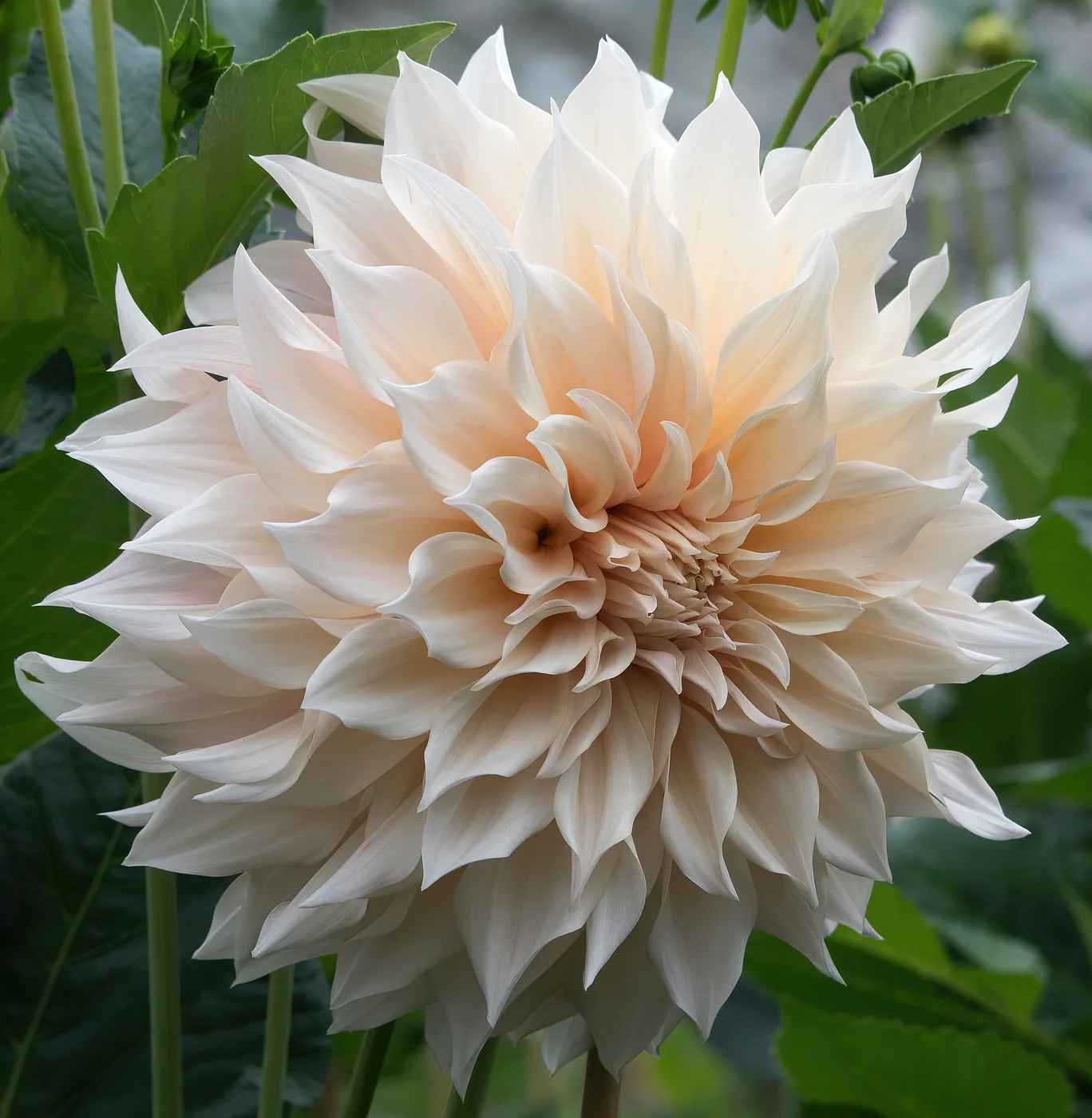
The cultivar name is therefore central to a useful purchase. Keep the promised height, flower form, flower size and propagation form together. A photograph of an enormous flower does not tell you whether the plant will fit a container, need substantial support or produce the stem proportions you want for a vase.
If you buy an unnamed seed mix, treat variation as part of the purchase. If you need matching plants or want to repeat a particular flower precisely, choose consistently named vegetative stock. A grower’s picture is a description of potential; your light, season and care will determine the resulting display.
Choose the plant around its use and your reach
Put a ruler beside the vase or container you intend to use before shopping. A large flower can dominate a small arrangement, while a short bedding plant may make an excellent patio display without providing the long stems imagined from a cutting-garden photograph. Record the desired use in one sentence so it survives the temptation of additional colors.
Walk the proposed planting area with the expected canopy width in mind. Reserve space to reach the center of the plant, inspect lower leaves and place a water outlet. Leave a harvesting route that does not require leaning over neighboring plants with open shears. The most distant corner is often the hardest place to maintain a vigorous, frequently cut dahlia.
Where containers are necessary, begin with a compact cultivar and an adequately stable vessel. The fact that a small purchased dahlia fits its nursery pot does not show that the pot can carry a full summer canopy. Compare the mature plant, support and watering access as one arrangement.
Understand what a viable start includes
A dahlia division needs an eye associated with crown tissue, connected through an intact neck to the tuberous root. A detached swollen root without the necessary crown bud is not equivalent to a ready-to-grow potato piece. Iowa State describes this structure explicitly. Iowa State: Planting and caring for tender perennials
Inspect dormant material without repeatedly bending the necks to search for growth. If a supplier’s division appears ambiguous, photograph it and ask for identification before cutting it apart. A visible eye can be small; absence of an obvious shoot in a photograph is not enough to diagnose a dead start.
Compare dormant roots with rooted cuttings and plants already in growth. Each creates a different immediate job: supporting emerging shoots, maintaining a rooted young plant or transplanting a leafy specimen. Buy the form that fits the conditions and attention you can provide upon arrival, rather than comparing purchase price as though all three were identical.
Connect spring timing with light and space
An indoor head start only helps if the growing plant has somewhere suitable to live until outdoor conditions are safe. Count available bright positions, pot space and the room needed as leaves expand. A shelf that holds dormant packages may have little capacity once every package becomes a leafy plant.
RHS guidance distinguishes slightly moist, frost-free starting conditions from the regular watering required after substantial growth develops. It also advises acclimating growing plants before they move outdoors. RHS: Growing dahlias
Use your actual transplant target to decide when to begin. Do not turn a supplier’s shipping date into an automatic planting date. If a cold spring delays the move, maintain the plants in suitable conditions and reassess space; do not put tender growth outside simply because it has exceeded the original schedule. The start you can care for well is more useful than the earliest possible start.
Install support before the canopy hides the problem
Plan the support at planting. Stakes or a cage need secure footing and enough reach to serve the chosen plant through flowering. Driving a support into an established clump later can damage underground material, and forcing a full plant through a narrow cage can break stems. Iowa State recommends placing supports before planting tall cultivars. Iowa State: Planting and caring for tender perennials
Soft garden ties connect stems to an already suitable support; they do not make a short stake tall or a loose stake stable. Fasten without constricting stems and revisit the ties as growth develops. Leave room to cut flowers and inspect the plant, rather than surrounding it with a tight mass of binding material.
For several plants in a cutting bed, consider whether one shared support arrangement is easier to maintain than many individual stakes. Keep its edges visible along the path. For a single ornamental plant, choose a support that serves its natural outline so routine maintenance does not become repeated correction of an unsuitable structure.
Separate branching, deadheading and harvest decisions
Pinching a young shoot, removing side flower buds and taking off a spent flower are different cuts. Decide what you want the plant to do before reaching for a tool. More branches, fewer very large flowers and a tidy succession of ordinary flowers do not require the same intervention.
Utah State’s cut-flower guidance describes pinching at about 12 inches tall to encourage branching, with a possible delay to the first flowers. Use that tradeoff when choosing between the earliest individual bloom and a plant shaped for later cutting. Utah State: Dahlia cut flower production
Inspect an existing plant before applying a routine pinch: it may already have several branches or have been shaped by its grower. Label a trial if you are comparing approaches. Once plants flower, distinguish an unopened rounded bud from the more pointed remnant of a faded bloom before deadheading. RHS: Growing dahlias Do not remove every nonflowering tip merely to make the plant look uniform.
Read summer stress at the roots and shoots
When leaves wilt, compare soil moisture near the root zone, exposure, recent watering and the time of day. A dry container needs a different response from a plant standing in wet soil. Look for a kinked or broken stem if only one branch has collapsed. Begin with the specific failed part rather than changing the entire bed’s care.
Keep a clear route to the base so water can reach the soil and you can check what happened afterward. A hose or irrigation outlet hidden beneath a large plant should remain inspectable. If one plant repeatedly dries before the others, investigate its root space and placement before increasing irrigation for the whole group.
For persistent distorted growth or unusual mottling, avoid passing material to other gardeners until the problem is identified. Photographs, cultivar identity, the source of the plant and the pattern of affected neighbors help a diagnostic service. Do not use a symptom photograph alone to conclude that fertilizer, virus or an insect is responsible.
Keep the flowers that justify next winter’s work
Judge the whole plant over the season. Record whether it provided the intended stem length, supported itself within the planned arrangement, remained accessible and flowered when you were there to enjoy it. A single spectacular bloom can coexist with a plant that is awkward for your space. Those are useful separate observations.
Before cold weather, choose which plants merit saving. Label them while flowers still identify the cultivars, and connect the label with a photograph. The existing summer-bulb storage guide handles the lift-or-leave decision; do not start a large storage project without a place to keep and inspect the material.
If you prefer to replace plants each spring, keep enough information to repeat successful purchases. If you save them, compare next year’s establishment with the original plant rather than assuming stored roots guarantee the same result. Reduce the collection when support, watering or winter space becomes the limiting factor. A manageable dahlia planting should deliver flowers within the maintenance routine you actually have.
Sources and scope
Research-based guidance informed by institutional references. Cultivar, region and growing conditions can change the advice. Product inclusion does not imply hands-on testing of every model.