Identify the plant that the trellis must carry
Write the cultivar and growth habit on the proposed row plan. Trailing canes cannot support themselves as an upright shrub does; semi-erect growth can begin upright and then arch across the available space. Thornlessness tells you something about handling, but it does not tell you that the plant is compact, self-supporting, or suitable for a lightweight decorative support. Ask for mature dimensions and a training recommendation tied to that cultivar.
NC State separates blackberries by growth habit, thorns, and whether they fruit on first- or second-year canes. Its home-garden publication explains these distinctions. Use them as separate entries on a purchase checklist. A thornless plant can still develop a large canopy; a primocane-fruiting plant can still need support. None of those labels on its own selects a trellis design.
Consider whether the planting is intended for a few fresh pickings or a substantial harvest row. Start with the length you can reach and maintain, then choose the plant count. Adding more crowns because the nursery plants look small can turn a manageable support into a crowded wall of growth. If the available row is short, buy fewer suitable plants rather than assuming repeated hard pruning can make every cultivar fit.
Reserve two jobs for the same growing space
A productive floricane-fruiting blackberry row contains this season's fruiting canes and new replacement growth. The replacements need room while harvesting is still underway. Oregon State describes this overlapping cane cycle and explains why training depends on blackberry type. Its blackberry guide connects cane habit with trellis choice. Plan the replacement route before the first crop makes the row difficult to enter.
On a drawing, use one line for retained fruiting wood and another for developing canes. Determine whether replacements will be directed to the other side, tucked within a defined area, or handled using a regional trailing-cane system. The right method depends on the plant and climate. The drawing's purpose is to reveal conflicts, such as replacement growth crossing the only picking opening or lying where a mower must pass.
For a worked layout, imagine a row beside a fence with access from only one side. A system that separates cane ages onto opposite sides might sound convenient, yet place half the work against an unreachable boundary. Shift the row away from the fence, choose another training arrangement, or shorten the planting. Selecting a familiar trellis name is less useful than proving that both cane groups remain accessible.
Choose an actual support design before buying components
Compare a simple vertical wire arrangement with a crossarm system using the cultivar's training instructions. Oklahoma State describes F, T, and V arrangements and explains how some separate primocanes from floricanes. It also shows why winter handling changes the usefulness of a design. Its bramble-culture guide illustrates these options. Treat the drawings as regional examples to evaluate, not universal construction specifications for any soil or row length.
List the complete structure: end posts, intermediate supports if required, anchors or bracing, wires, tensioning parts, and ties. Determine how the selected design transfers wire tension and plant weight into the ground. A package of wire plus two light stakes does not automatically reproduce a published trellis. Follow the selected construction plan and component instructions rather than substituting parts solely because their nominal height matches.
Inspect an existing fence before treating it as a ready-made structure. Ask whether you are permitted to attach wires and whether the fence was designed for sustained vine weight and tension. Keep end anchors and exposed hardware out of paths. Where the plan requires substantial posts or unknown ground conditions create uncertainty, obtain suitable installation advice. The fruit guide can help choose the system; it cannot establish a safe post foundation remotely.
Make the picking aisle part of the purchase
Mark the intended support footprint on the ground and walk around it carrying the bucket or stool you expect to use. Add the likely reach of side branches to that footprint. A clear strip beside bare posts may disappear when fruiting laterals extend into it. Account for the gardener's actual reach, clothing, mobility, and the presence of thorns before setting permanent post locations.
Place the row so you can inspect its lower canes and clear fallen material without crawling under tight wires. Maryland emphasizes matching the bramble planting and support system to the growth being managed. Its raspberry and blackberry guidance provides home-garden context. Use an accessible layout to make selective pruning possible, rather than choosing a support that encourages cutting everything back simply because the bases cannot be seen.
Decide where harvested fruit and prunings will go. A narrow dead-end aisle forces repeated carrying trips past projecting stems; an opening at the end can make the same row much easier to use. Check access to water valves and hose connections too. Positioning an irrigation shutoff behind permanent thorny growth turns a simple repair into an avoidable encounter with the whole planting.
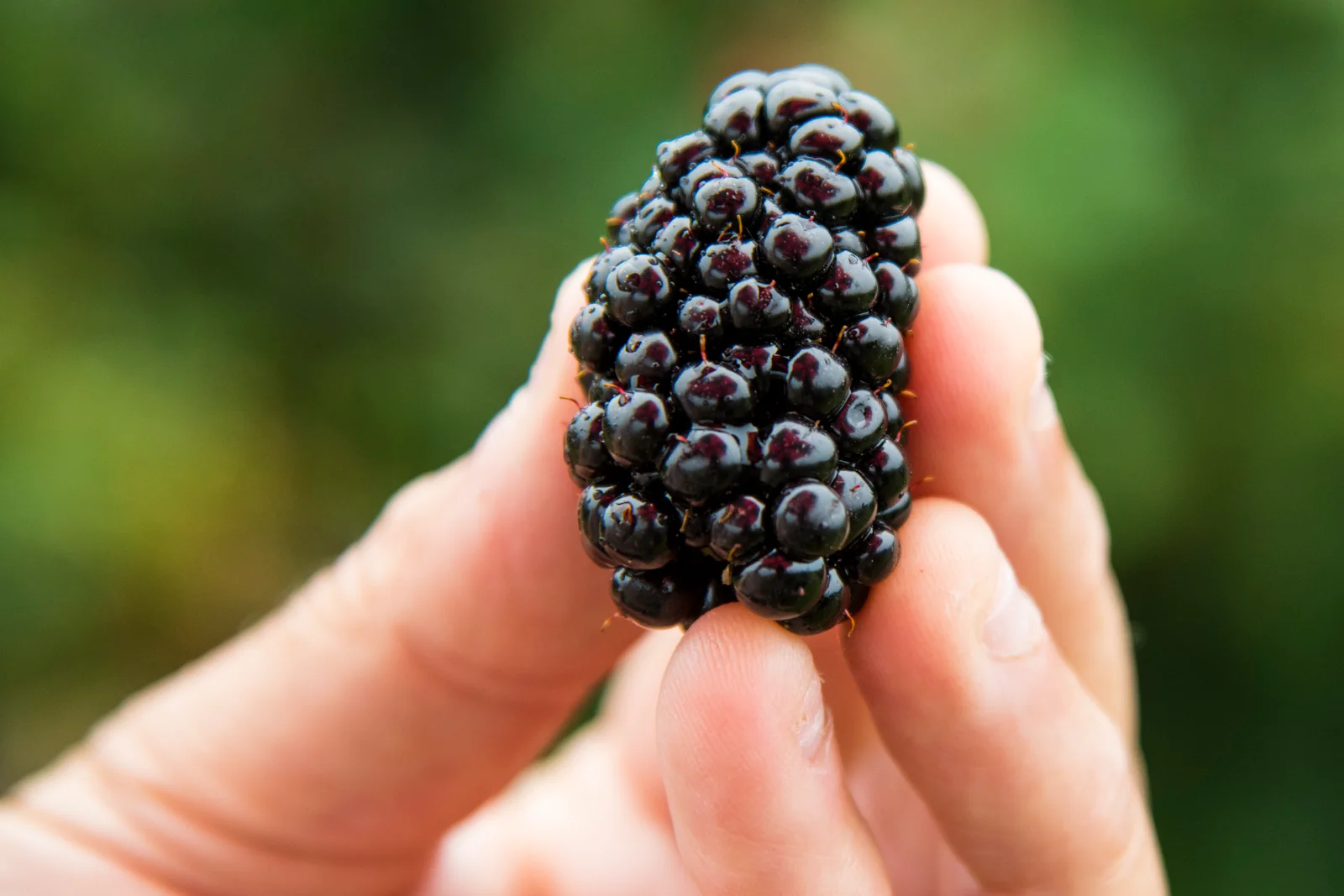
Connect the layout to blackberry ripeness and harvest access before fixing the final support positions.
Include winter handling before tensioning the final wires
In some colder situations, locally recommended management for trailing or otherwise vulnerable canes includes lowering and protecting them. That requirement changes the value of removable ties, reachable wires, and room beneath the trellis. Ask about the cultivar's regional winter performance before committing it to an arrangement that makes lowering mature canes impractical. A plant surviving at the crown is a different outcome from retaining enough cane for the next floricane crop.
Rehearse the movement with a flexible cord before planting. Could a long cane be lowered without being sharply folded around a post? Is there space for the recommended protection, and can it be inspected? Avoid treating a cold-climate method as a reason to leave all canes on wet ground in every region. Use the method that addresses a documented local constraint, and retain the necessary access to carry it out.
After a storm or freeze, inspect support attachments before pulling on canes. A loosened post, fallen branch, or wire under unexpected tension requires attention to the structure first. If a heavy section has failed, keep people out of its path while arranging a suitable repair. Do not attempt to restore alignment by forcing a brittle cane into the original position. Record what failed so the replacement addresses the actual weakness.
Establish a small repeatable training routine
Keep ties where the row can be reached, and inspect new growth while it is still easy to position. Fastening a cane loosely allows room for growth; repeated checks reveal rubbing or constriction before a tie disappears into the stem. Follow the chosen system for tipping and lateral pruning rather than copying a height from a different blackberry group. A trellis organizes growth, but it does not eliminate seasonal pruning.
At each visit, complete one clear circuit: check the structure, position new canes, inspect ties, and maintain the picking opening. Leave uncertain cuts for identification instead of mixing pruning decisions with hurried harvesting. After the floricane crop, trace and remove used canes according to local guidance while preserving suitable replacements. A cane-age label or photograph can prevent confusion when the row contains several cultivars.
Review the first full canopy before extending the planting. If fruit remains unreachable, fix the layout or reduce density. If the support is adequate but tying takes more time than expected, compare a simpler plant habit for the next row. Expansion should follow a system that works through harvest and cane renewal. It should not depend on the hopeful assumption that a longer trellis will somehow make a crowded planting easier to maintain.
Sources & further reading
We favor university extension guidance and original product documentation. Linked sources support the specific facts cited; they do not endorse Garden Gear Atlas.
- NC State Extension: Blackberries for the home garden
- Oregon State Extension: Growing blackberries
- Oklahoma State Extension: Blackberry and raspberry culture
- University of Maryland Extension: Growing raspberries and blackberries