Prepare the picking visit before the first berry softens
Start with the row you already have. Walk its usable sides carrying the shallow container you plan to fill, and identify where you can put it down without stepping into the plants. The task is to make repeated selective picking convenient. A planting that is technically reachable once may still be awkward to harvest several times.
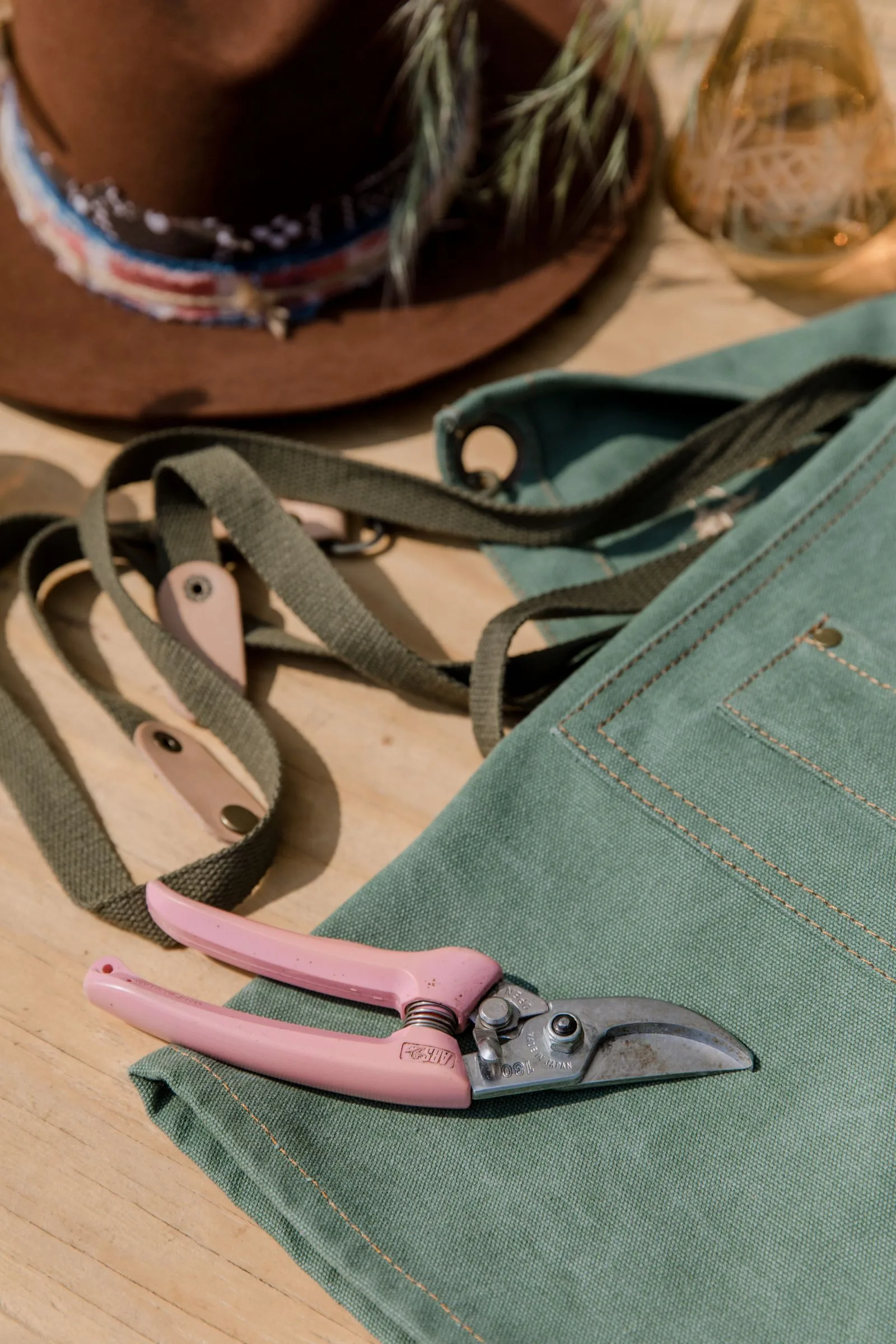
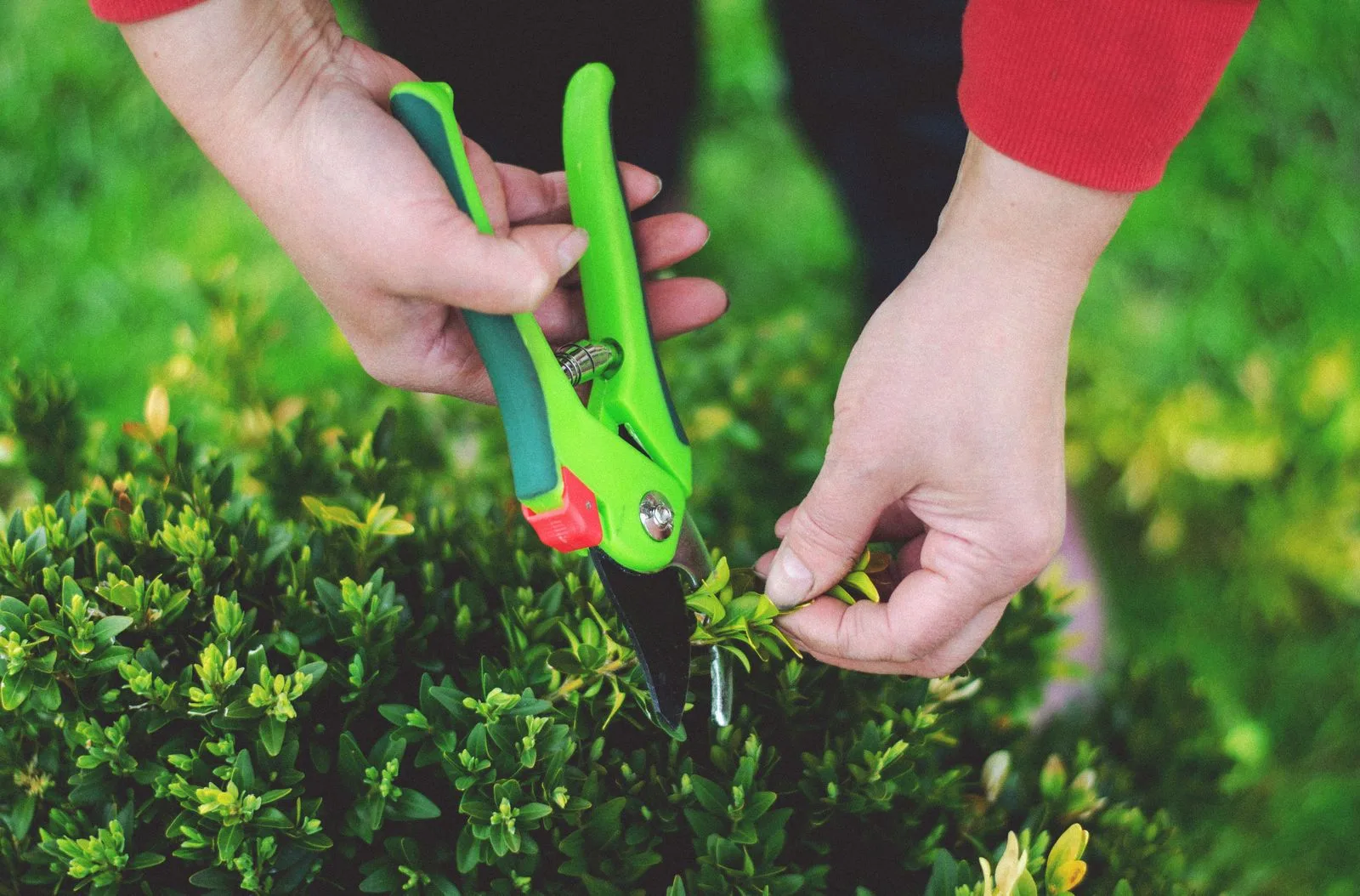
The shortlist supports access: adjustable ONE-WRAP ties can secure suitable growth loosely to an existing support, and FELCO 6 shears suit accessible small-stem pruning when a cut is justified. Neither is a berry-picking device. Check the shears' hand fit and the ties' dimensions in the gear comparison tool; use your own clean shallow harvest containers.
Gather a second container for rejected fruit and decide where each will go after picking. If the route ends in a narrow corner, begin there and work toward the exit. Check whether you need clothing or gloves for thorny canes. Set the fruit container where keeping your balance does not depend on gripping the plant.
Learn the ripe stage of this particular cultivar
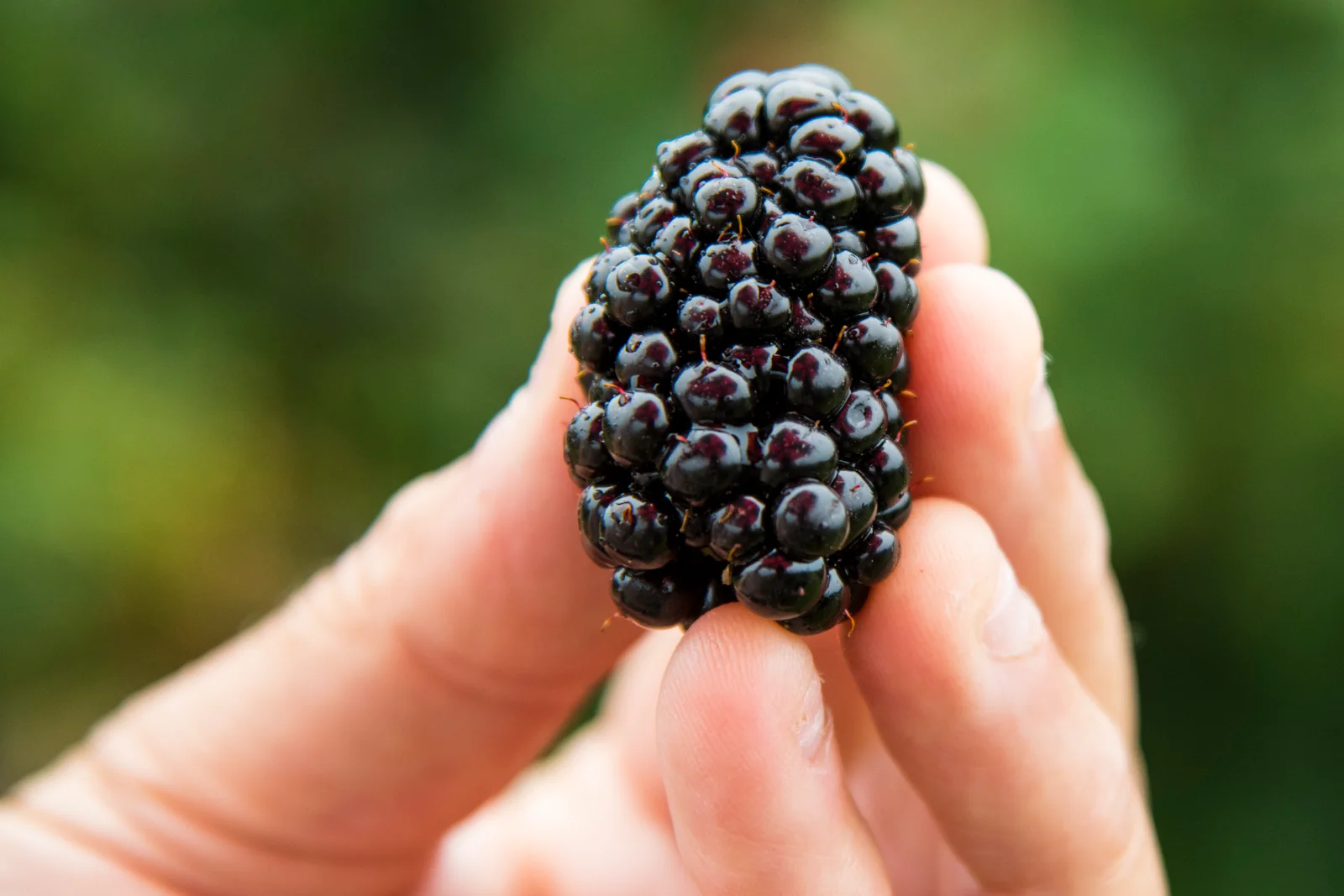
Black color is the beginning of a useful inspection, not its conclusion. NC State distinguishes dull-black fruit at peak sweetness from shiny-black berries that can be firmer for storage but less sweet. Its guide is written for North Carolina cultivars and conditions. NC State's blackberry harvest guidance. Decide whether this picking is intended for immediate flavor or a necessary handling compromise.
Compare a few sound berries on the same cultivar. Look at surface sheen, how readily each releases, and the flavor of properly rinsed samples. Keep the samples identifiable rather than combining several varieties first. Photograph a berry at the stage you preferred, including its position on the cane, to build a reference you can use at later pickings.
Do not force every berry to match the photograph. Shade, viewing angle and fruit shape can change its appearance. Look for agreement between several clues, and leave firm fruit that resists a gentle attempt. Taste is most useful when it confirms a stage you can recognize again, rather than becoming repeated random picking of hard and soft berries together.
Practice a gentle release and keep the core attached
Oregon State recommends holding the berry gently and using a small up-or-down motion; ripe fruit releases readily. It notes that most cultivars become duller at full ripeness. Unlike raspberries, blackberries retain the central receptacle within the picked fruit. Oregon State's illustrated blackberry guide. Do not try to pull out that core to make a blackberry resemble a hollow raspberry.
Support the berry with fingertips rather than squeezing it across the middle. If it fails to release, let go and reconsider the ripeness instead of increasing the force. Keep the other hand clear of thorns and fruiting laterals. A crowded cluster may need you to approach from another direction; it rarely benefits from tugging the whole stem toward you.
Place each berry into the container as it is picked. Avoid collecting a large handful before unloading, especially when your next movement requires pushing foliage aside. Work around the outside of a cluster and leave neighboring unripe berries attached. A clean release and gentle placement preserve the fruit you selected while leaving the next picking undisturbed.
Make two short passes through each reachable section
Use a deliberate order: scan the near side, look beneath the leaves, then check the far side from another accessible position. Do not begin stretching farther simply because the bowl is nearly full. Put it down, change position and recover a clear view. Hidden fruit is easiest to miss when you hurry along only the front face.
During the sound-fruit pass, place any obviously damaged or decaying berries in the separate discard container. Revisit the section briefly for fruit hanging behind leaves or caught against a tie. Keep rejected berries out of the main picking container; sorting after compression and juice leakage is a less useful point to discover them.
Maryland recommends regular harvesting to reduce fruit rot and insect feeding, and favors cool morning picking after dew dries. It advises rolling delicate fruit off gently and refrigerating promptly, rinsing shortly before use. Maryland's bramble harvesting advice. Use those handling principles with observations of your own row rather than treating morning as permission to pick wet fruit.
Adapt the interval to what remains on the row
The RHS recommends picking ripe fruit every few days and using shallow containers to avoid crushing the lower layers. It states that picked blackberries do not ripen further. RHS blackberry harvesting guidance. For a gardener choosing sweetness, the useful decision is to harvest at the desired stage on the plant instead of relying on the bowl to finish hard fruit.
After a visit, look at the fruit left behind. If many berries are already close to your preferred stage, return sooner than you would for a row still dominated by green fruit. Weather and cultivar can change that interval. Put a reminder on the calendar based on the remaining crop, then adjust it at the next inspection.
A small planting may justify a quick check during an ordinary watering visit. A larger row needs a picking slot with enough time to finish and put the fruit away. If work or travel repeatedly prevents that, reduce the actively managed area or arrange help before peak harvest. A full row of ripe fruit is a commitment to repeated handling.
Decide what an approaching wet period changes
Review the forecast alongside the fruit stage. Already ripe berries are an obvious priority before rain. Fruit that has only just turned black presents a flavor-versus-loss decision, while hard immature berries are a different case. Do not clear the whole plant simply because rain is expected; inspect the crop you can actually use.
Oregon State advises more frequent checks in warm or rainy weather and cautions that wet fruit decays faster. Its regional guide discusses earlier picking before extended rain as a compromise when flavor dilution and rot threaten. Oregon State's harvest and weather discussion. Earlier picking cannot promise the sweetness of a berry allowed to reach its preferred stage.
If you accept that compromise, keep the batch separate and label its date and condition. Choose a realistic immediate use rather than assuming it will become indistinguishable from fully ripe fruit in storage. After the weather passes, inspect damaged fruit and access together. A branch pushed across the path may conceal losses that a casual glance from the end misses.
Restore access without sacrificing replacement growth
When a cane crosses the picking route, identify where it begins and whether it carries this crop or developing replacement growth. Inspect the existing attachment before moving it. A loose tie, an untucked new shoot and a poorly located permanent support require different responses. Start with the reversible adjustment that actually addresses what you see.
The RHS describes separating old fruiting stems from new growth so later pruning remains understandable, with loose ties used during growth. Its blackberry care guide explains this cane separation. Apply that principle to your existing training arrangement. The specific route for a trailing cane may differ from an erect cultivar and should follow its established plan.
Avoid pulling a fruit-laden branch sharply into a new position or stripping leaves to create an instant viewing window. If the present layout leaves inaccessible fruit every visit, mark that section for a structural review after harvest. Use blackberry trellis planning for that larger decision. Harvest access repairs should not become an improvised trellis rebuild while the crop hangs on it.
Keep a finished cane distinct from a finished picking
An empty cluster does not prove that its whole cane has finished fruiting. Follow the cane and check its other laterals before planning removal. Likewise, the end of one cultivar's harvest does not end the season for another cultivar farther down the row. Keep the plant labels visible and use the actual crop remaining on each plant.
NC State distinguishes second-year floricane crops from varieties that can also fruit at the tips of first-year primocanes. The latter may be managed for one or two crops, with different pruning consequences. NC State explains blackberry fruiting types. Do not remove every cane that has carried a berry merely because an ordinary summer-fruiting row would now be caned out.
Record the selected crop system before scheduling post-harvest pruning. On uncertain inherited plants, photograph which cane portions flowered and what remains alive below them. A short observation period can protect useful wood from a mistaken cleanup. The raspberry crop-cycle guide explains similar age terminology, but blackberry tipping and training still require blackberry-specific instructions.
Finish the harvest before moving on to another garden job
Take the fruit out of the sun and complete its storage or intended preparation before starting a long pruning session. Use shallow batches that fit the space you have available. Do not leave one filled bowl standing beside the row while you continue searching for enough berries to fill another. The harvest operation ends when the fruit is properly handled.
Make a brief note of usable fruit, obvious losses and the sections that slowed picking. If birds are the recurring obstacle, review inspectable berry protection before the next cultivar colors. If most losses occur inside one inaccessible tangle, improving that section may be more valuable than extending the row.
Keep the first successful ripe-stage photograph and update it only when experience gives you a clearer reference. Pair it with the cultivar name and the interval that worked under that week's conditions. Next season, those records provide a starting point while leaving room for different weather, a different crop load and the actual fruit in front of you.
Sources & further reading
We favor university extension guidance and original product documentation. Linked sources support the specific facts cited; they do not endorse Garden Gear Atlas.
- NC State Extension: Blackberries for the home garden
- Oregon State Extension: Growing blackberries in your home garden
- University of Maryland Extension: Growing raspberries and blackberries
- RHS: Growing blackberries and hybrid berries