Decide whether this is a planting problem or a water problem
Walk around the slope after ordinary rain and again after a heavier shower. Photograph where water enters, where it fans out and where soil collects. A thin patch with stable soil presents a different job from a channel carrying roof runoff. Draw those routes on a simple plan before selecting plants. If water repeatedly cuts grooves or undermines the bank, get site-specific drainage or conservation advice before clearing it. A tray of plugs does not provide immediate reinforcement for moving ground.
Sunny slopes can combine summer heat with rapid drying; the bottom can support a different plant community from the top. Maryland Extension’s slope guidance makes that moisture distinction. Use it as a reason to divide your own bank into zones, rather than as a national plant shopping list.
Make access part of the decision. Can you stand securely at the edge and water the whole planting? Can you reach weeds without climbing through it? If the answer is no, reduce the first phase to a reachable section. Steep terrain that needs built access or stabilization deserves an appropriate professional plan.
Map light and soil where each group will actually grow
Mark three or four observation points: the crest, middle, toe and any pocket beside paving. At each, note direct sun in the morning, around midday and later in the afternoon. Repeat when nearby trees are fully leafed out. A photograph labeled “sunny bank” can hide several hours of moving shade, reflected heat beside a driveway and a permanently damp corner below a downspout.
When conditions permit safe access, check soil in a few small spots. Record whether it is gritty, crumbly or sticky, and whether the surface is dry while the soil beneath remains moist. Use a soil test for pH and nutrient decisions; do not buy lime, fertilizer or compost merely because a slope looks poor. Keep samples from noticeably different areas separate if you intend to manage those areas differently.
Sketch the bed in strips or irregular patches that follow these observations. A modest first plan might contain one dry planting zone and one moister zone, with the water route excluded. That is easier to plant, label and evaluate than a mixture of six species scattered everywhere.
Choose plants by their job after the flowers finish
Mt. Cuba Center describes moss or creeping phlox, Phlox subulata, as a low, spring-flowering plant for well-drained sunny ground, with some dappled shade useful in hot, humid settings. Its main assignment is a visible flowering carpet on suitable soil. Read the botanical label: the common name creeping phlox is also applied to another species.
For a small rock garden bank, a broad phlox patch can be the visual anchor. For a large open slope, consider whether the real objective is year-round cover, fewer mowing passes, habitat or a short ornamental display. Taller regionally suitable grasses and flowering perennials may serve parts of that larger job better than insisting every plant stay a few inches high. Keep their mature height out of sightlines and access routes.
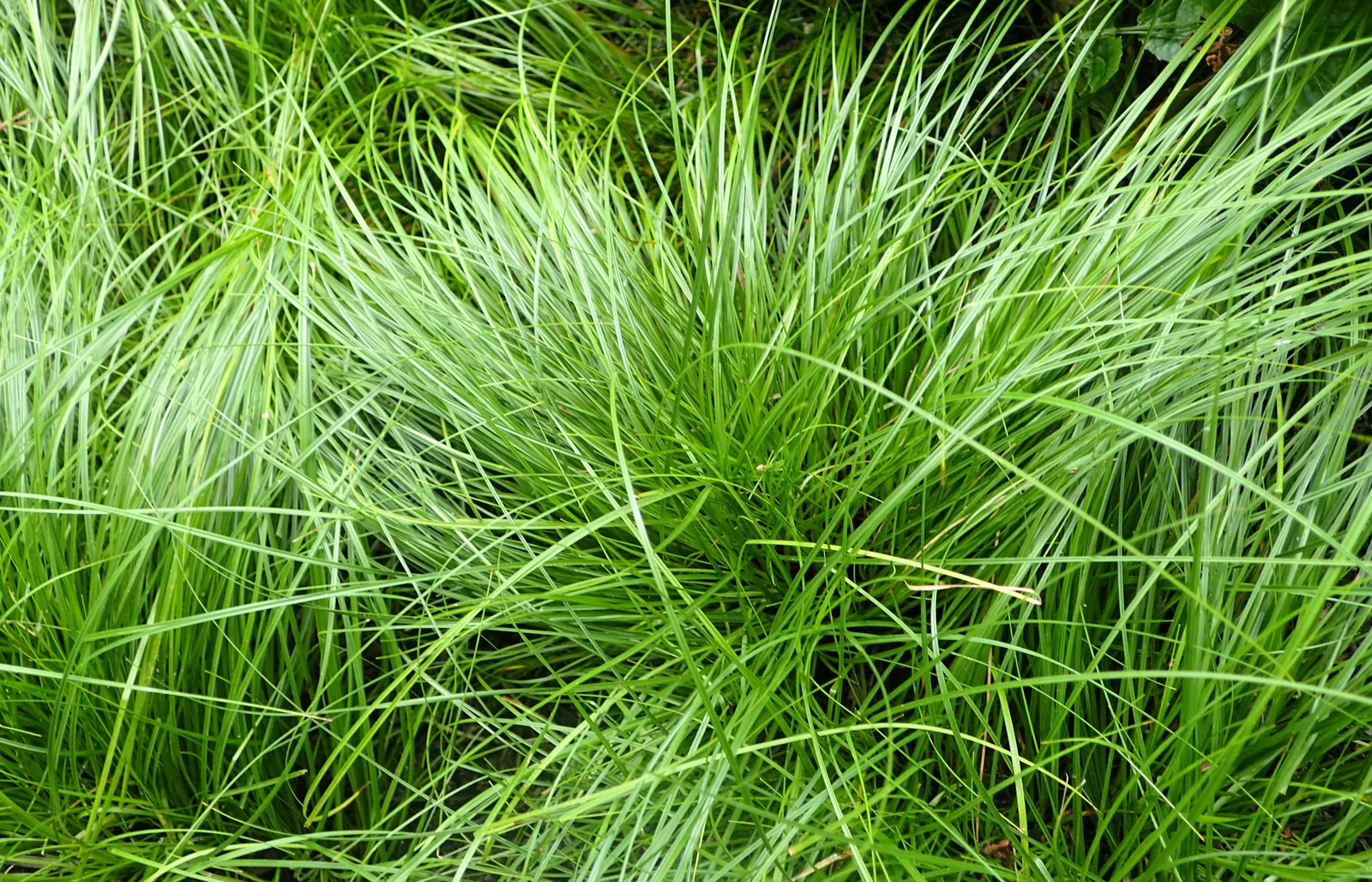
A grasslike appearance does not establish lawn performance. Pennsylvania sedge is a useful comparison for cooler shaded situations, but heavy foot traffic is a limitation identified by NC State Extension. Treat planted banks as beds, and give people and pets a separate route. See the creeping-phlox profile for its seasonal care.
Keep useful cover while you remove the real competitors
Identify the existing plants before removing them. Keep desirable vegetation that already protects a suitable part of the bank. Mark persistent weeds individually, especially plants with underground runners. A quick surface cleanup can make a bed look ready while leaving the main competition in place. Work a small patch, revisit it for regrowth, and expand only when you can maintain the cleared area.
Illinois Extension emphasizes weed preparation and continued care while groundcovers establish. Translate that into a work schedule: weed a reachable section, arrange the plants, install them promptly and protect the gaps. Do not clear the entire slope simply because all the nursery stock arrives on one day.
Avoid creating a loose, freshly cultivated surface across a bank. Around existing woody plants, leave roots and soil levels undisturbed. Where persistent weeds make hand removal impractical, ask your local extension office about a suitable staged control approach before committing to the planting date. Do not conceal an unresolved weed problem beneath new groundcovers; extracting those weeds later becomes harder when stems and roots are intertwined.
Draw the spacing, order the plants and keep the gaps reachable
Use the supplier’s mature spread and recommended planting distance for the particular species and cultivar. Put temporary markers at those centers before digging. A mature width is an eventual footprint, not a promise that two small plugs will touch by autumn. Wider spacing reduces the initial plant order but increases the area you must weed and monitor while waiting for growth.
For example, a 60-square-foot patch at 18-inch square centers gives an area estimate of about 27 plants: 60 divided by 1.5 squared. Count actual marked positions before purchasing because curves, rocks and access gaps change the result. A triangular pattern uses more plants at the same nearest-neighbor distance. The plant-spacing tool helps compare layouts; it cannot forecast closure time.
Keep a drawing of each cultivar’s location and retain its label. If two groups behave differently, that record helps separate plant choice from site conditions. Start with enough plants to create a coherent trial patch, rather than distributing the same budget so widely that every small plant becomes difficult to find and water.
Make water soak in at the plants you bought
Before installation, test whether your hose reaches the farthest planting position without dragging across foliage or requiring you to stand on the bank. A narrow hand trowel suits individual planting holes; a hose allows selective watering during the first phase. Those tasks are more useful purchasing criteria than collecting a special tool for every groundcover species.
Set each root ball at its appropriate nursery depth and settle the surrounding soil with water. Then check the actual root ball and adjoining soil, not just the surface between plants. On a slope, water may run past a plant while the original potting medium remains dry. Apply water gently, pause if runoff begins, and return after it has soaked in. Increase the watered footprint as roots and stems expand.
If using drip irrigation, place and inspect outlets deliberately instead of assuming one emitter wets the entire future mat. Check both upper and lower plants after a cycle. A schedule is only a starting setting: rain, wind, plant size and the different soil zones still determine whether watering is needed.
Judge success by cover, access and maintenance together
Take the same overview photograph monthly during active growth. Note losses, open soil, weeds and washout separately. Healthy expanding plants with a few maintained gaps may represent progress; quick leafy growth above eroding soil does not. Replace a failed plant only after deciding whether it died from moisture stress, burial, competition, traffic or an unsuitable location.
Maryland Extension points out that groundcover flowering can be brief and that roots remain useful when deciduous foliage disappears. Plan your expectations across the whole year. A brown winter appearance does not automatically mean failure, but a bare channel after storms requires attention.
At season’s end, choose the next action from the evidence: repeat a successful group, alter the species in a consistently different zone, improve watering access, or leave a mulched area where planting is impractical. Use the plug-establishment guide before the next order, and screen regional spread before introducing another vigorous groundcover.
Sources & further reading
We favor university extension guidance and original product documentation. Linked sources support the specific facts cited; they do not endorse Garden Gear Atlas.
- Maryland Extension: native plants for sunny slopes
- Mt. Cuba Center: moss phlox
- NC State Extension: Carex pensylvanica
- Illinois Extension: ground covers
- Maryland Extension: groundcovers