Know which rosette you are buying
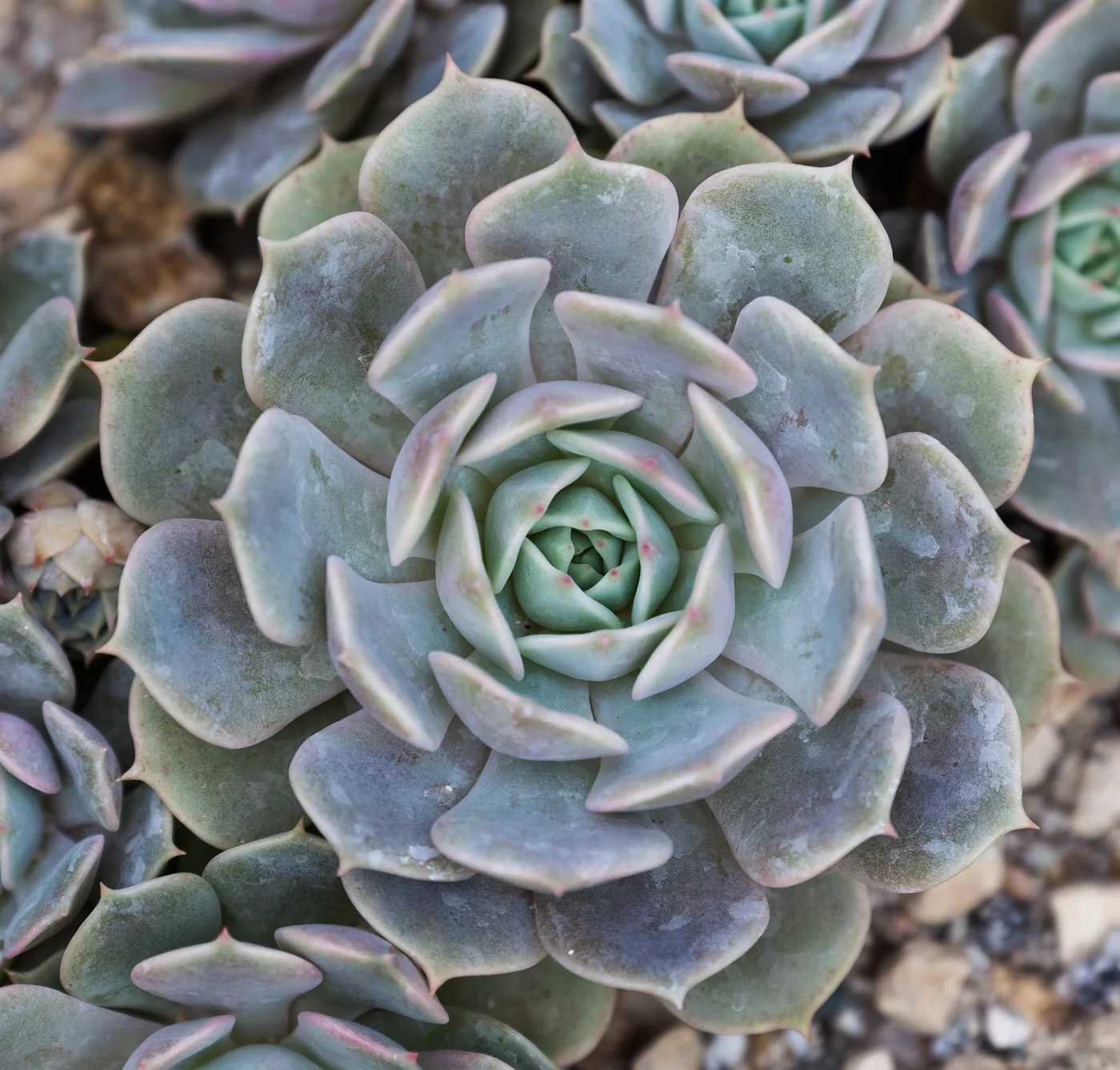
Echeveria elegans forms pale, spoon-leaved rosettes that develop into a clump. RHS describes pink flowers tipped with yellow and foliage height up to ten centimeters, with a wider eventual clump. RHS: Echeveria elegans Its common names include Mexican snowball and Mexican hens and chicks. The latter does not make it the same plant as the cold-hardy Sempervivum sold under similar names.
Choose a labeled plant if species identity matters to your collection. Photograph the nursery label and keep it with the purchase record. Many attractive blue or gray rosettes are hybrids, so a color match in a picture is not enough to rename an unlabeled plant. Inspect the center and lower leaf attachment points before choosing the fullest-looking pot. A small, clean specimen with a visible growing center is easier to assess than a tightly packed arrangement in which several rosettes hide one another.
Reserve light for the center, not only the pot
NC State describes Echeveria elegans as suitable for full sun to partial shade and commonly grown as a houseplant in North Carolina. NC State: Echeveria elegans Indoors, make the choice at leaf level. Look for a position where the rosette itself receives useful light rather than one where the pot casts a pleasing shadow while the plant remains behind a window frame.
Keep taller plants from becoming a screen in front of it. If the display is on a shelf, check the lip above and the distance to the glass, then inspect the same spot at different times of day. A single morning observation cannot show the effect of an afternoon curtain. When several rosettes share the space, leave enough room that each center remains visible from above. You should be able to inspect and water them without sliding one plant through another plant’s leaves.
Read shape as a record of growth
Illinois Extension explains that insufficient light can cause succulents to stretch and elongate. Illinois Extension: Stepping into the World of Succulents With this rosette, look for an increasingly open center and extra space along the central stem, while distinguishing that stem from a separate flower stalk. A long stalk emerging from the side of an otherwise compact rosette is a different observation from the entire rosette rising on a thin, widely spaced axis.
Take a side photograph and a top photograph before changing conditions. These give you a baseline without repeatedly handling the plant. After a light correction, compare the newest leaves and spacing at the center. Do not promise yourself that the existing stem will shorten. Decide separately whether the old shape is acceptable, needs modest support, or is a candidate for propagation once the plant is stable. The stretching and light-transition guide walks through those choices without making pruning the automatic first response.
Choose a pot for access as well as drainage
A rosette that overhangs a narrow rim can be difficult to water even when its roots fit. Before changing pots, ask whether the problem is root space or the lack of a place to direct water. You may be able to retain the same pot and improve access with a careful pouring method. If the plant is becoming a clump, compare a container that accommodates the clump’s outline with one that simply adds depth.
The medium should support the roots without piling against the lower leaves. NC State identifies overwatering as the common growing problem for this species. NC State: Echeveria elegans Use that warning to inspect the complete arrangement, including a saucer and any outer cover. During a repot, keep track of the original planting level rather than burying an elongated stem to make the silhouette look shorter. Concealing the symptom does not tell you whether the new container will dry appropriately.
Water the root zone without using the leaves as a gauge alone
Assess accessible medium and pot weight together before deciding to water. A dry-looking top dressing is not the whole root zone, and a single older leaf is not a complete moisture report. If you are learning a new medium, check its behavior over several wetting and drying cycles. Write down whether water moved through it evenly and whether the pot became lighter afterward, rather than assigning the plant the same watering day as everything nearby.
When the plant needs water, choose a method that wets the medium and allows excess to drain. Keep the work area clear so you can hold the container securely without using the rosette as a handle. If water immediately runs down one gap at the pot edge, investigate that pattern before assuming the root ball has been wetted. A small watering can may improve placement, but a fancy spout is less useful than being able to see and empty whatever catches the drainage.
Decide whether to keep or divide the clump
Offsets are part of the appeal of Echeveria elegans. NC State lists offset division, leaves and cuttings as propagation options. NC State: Echeveria elegans Let the choice follow your goal. A clump makes a broad display, while a separated offset can renew a small-pot collection or provide a spare. Neither appearance is inherently more mature or more successful; what matters is whether the roots, light and access work for that arrangement.
Before dividing, plan where every retained piece will go. Avoid turning a single manageable plant into several containers that compete for the same limited bright space. Keep offsets labeled with the parent’s identity. If you want to learn leaf propagation, use a small number of healthy leaves and consult the RHS leaf-cutting instructions. Treat propagation as a separate establishment project, with its own observation routine, rather than watering new material whenever the established parent receives water.
Make a summer move conditional
A bright indoor window does not prepare a plant for every outdoor exposure. A patio may add direct sun, hot reflected light, moving air and rainfall at the same time. Start with a sheltered location and change exposure in steps that you can observe. Keep the plant somewhere you can bring it under cover when the forecast or its response calls for that adjustment. A location that is inconvenient to reach often becomes inconvenient to monitor.
RHS cautions that echeverias need protection from frost and excessive winter wet, and generally treats indoor overwintering as the safer choice in its UK guidance. RHS: Houseplant Cacti and Succulents Translate that into local conditions rather than copying a month from another region. In a suitable mild climate, outdoor culture may be practical; elsewhere it is seasonal. The plant’s pale color and succulent leaves are not evidence that it can tolerate the winter conditions accepted by a different rosette genus.
Buy around the limitation you can demonstrate
If stretching persists, first confirm that the chosen placement actually improved usable light. Buying a larger pot does not answer that question. If the medium remains wet, a brighter lamp should not become a substitute for checking the container and roots. Separate these observations on paper: shape of new growth, behavior of the medium, and condition of the lower stem. That makes it easier to identify which change deserves money and attention.
For a light purchase, compare usable coverage over the rosette, the mounting arrangement and the ability to keep a consistent routine. For a pot purchase, compare root fit and watering access. For a propagation purchase, count how many pieces you intend to keep before ordering trays. Use the succulent pot selection guide and grow-light placement guide for those separate decisions. Your evidence of success is a stable plant with appropriate new growth and manageable care, rather than an expanding shelf of corrective products.
Sources and scope
Research-based guidance informed by institutional references. Cultivar, region and growing conditions can change the advice. Product inclusion does not imply hands-on testing of every model.