Know which dogwood is on the label
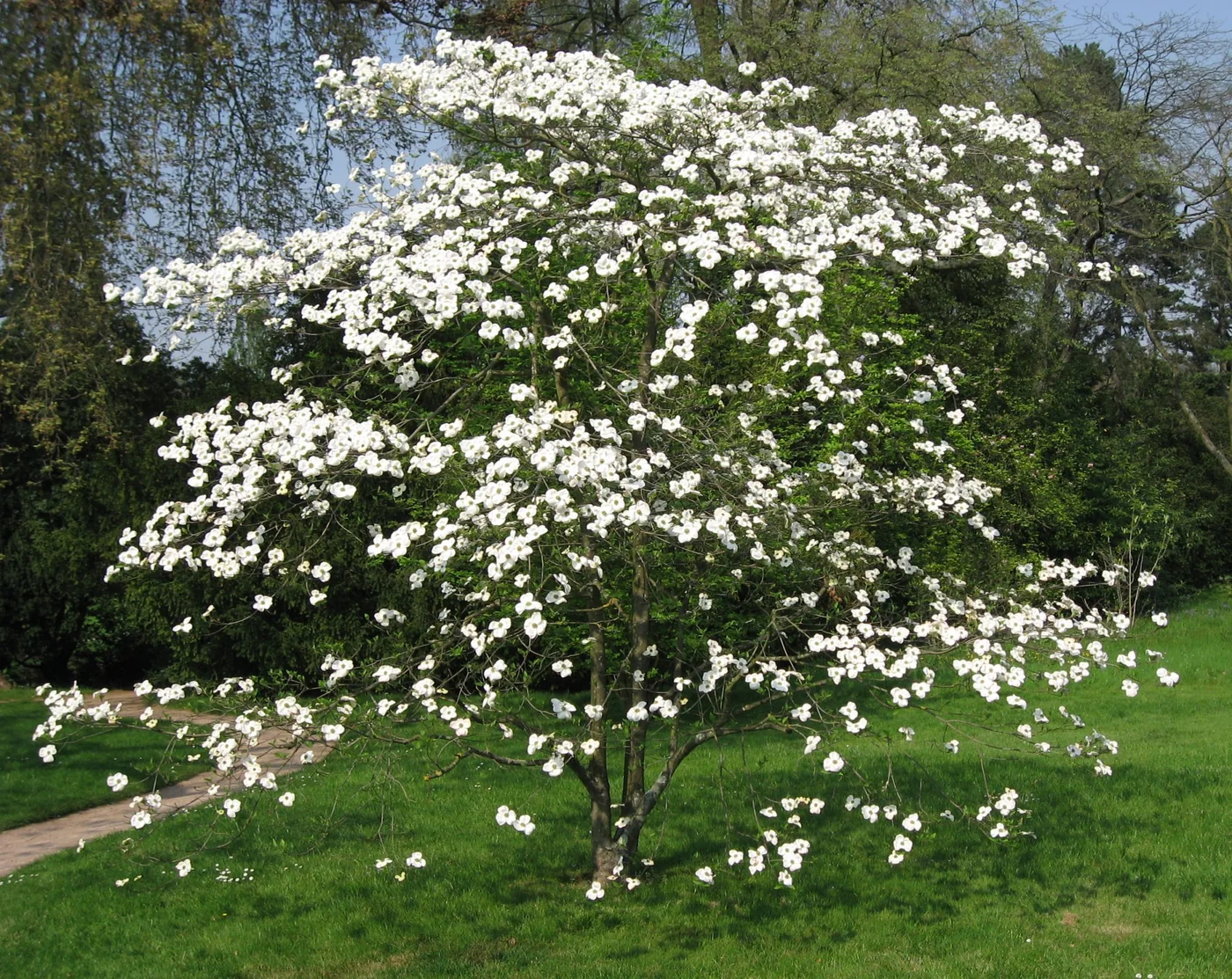
Cornus florida is the eastern North American flowering dogwood. Its conspicuous spring display consists of petal-like bracts surrounding smaller true flowers. The leaves are opposite, with veins curving toward the leaf tip; older bark breaks into small blocks. These features help distinguish it through the year. The red autumn fruits support birds and other wildlife, extending its garden role beyond the spring display. NC State Extension: flowering dogwood
The common name dogwood also covers shrubs, Asian kousa dogwood and several hybrids. If species identity matters to your planting, read the entire label and ask about parentage. Flowering dogwood cultivars can also vary in color, size and fruit production. Do not use a photograph of a pink-bracted plant to infer mature width, or assume that every white-flowering dogwood belongs to this species. Keep the original label so later care and disease questions refer to the tree actually purchased.
Match light to the rooting conditions
Dogwood can grow with more sun when its roots have generous space and adequate water, but heat reflected from paving is an additional burden. Maryland Extension describes the tradeoff: sunnier trees may flower more and have fewer leaf infections, while heat and drought can cause chronic stress. Deep shade may reduce heat exposure but also reduce bloom and favor some fungal spotting. Partial sun with afternoon relief is therefore a useful starting point, not a single nationwide rule. Maryland Extension: flowering dogwood
Compare two or three locations at the demanding part of the day. Mark walls, drives and open western exposures as well as shade from trees that will be fully leafed out in summer. Check where rain runs, where it cannot reach and how you would deliver water in a dry week. The paired dogwood heat and root-moisture guide turns these observations into a planting decision. A woodland appearance alone does not prove the soil beneath it will stay suitably moist.
Give the broad crown a bed it can keep
Flowering dogwood’s habit changes with exposure. Clemson describes a more open, taller tree in shade and a denser, shorter form in sun. It may eventually spread wider than its height. Position it where that layered canopy has room without requiring repeated clipping against a wall or over a walk. A nursery plant’s current upright silhouette is a poor substitute for a mature-space plan. Clemson Extension: dogwoods
Use the small ornamental tree guide to reserve canopy space and maintenance access together. Below ground, prefer a protected planting area over a small hole surrounded by busy lawn. Surface mulch can conserve moisture and reduce competition, but its depth and contact with the trunk still matter. Work through the young-tree rooting-area guide before adding dense underplanting. Leave room to observe the base and check soil rather than filling every opening immediately.
Choose healthy roots and a locally appropriate planting season
Georgia Extension advises choosing stock with sound stems and healthy roots, avoiding container plants that are pot-bound. Keep exposed or balled roots from drying during handling. For Georgia, dormant-season planting is recommended for bare-root and balled-and-burlapped trees. Maryland’s general planting guidance specifically favors spring for dogwoods, whereas Clemson favors fall. Those regional recommendations are a reason to check local timing and stock type, not combine them into one mandatory national date. Georgia Extension: growing dogwoods Maryland Extension: planting a tree or shrub Clemson Extension: dogwoods
Prepare the destination before the tree arrives. Find the trunk’s root flare, set depth from the actual root system and avoid an isolated pocket of heavily amended backfill. The root-flare planting guide gives the sequence. If delivery is delayed into hot weather, make water access and monitoring part of the revised plan. Container-grown availability does not remove the stress of planting a leafy tree during a demanding summer spell.
Follow the water into the soil
Dogwood roots need oxygen as well as water. Maryland recommends checking moisture several inches deep through the first two years and watering when that soil is dry, with particular attention during summer. Inspect the nursery ball as well as surrounding soil; a wet lawn surface may not describe either. Keep records simple: where you checked, what it felt like, whether you watered and whether the next check showed an improvement. Maryland Extension: growing flowering dogwoods
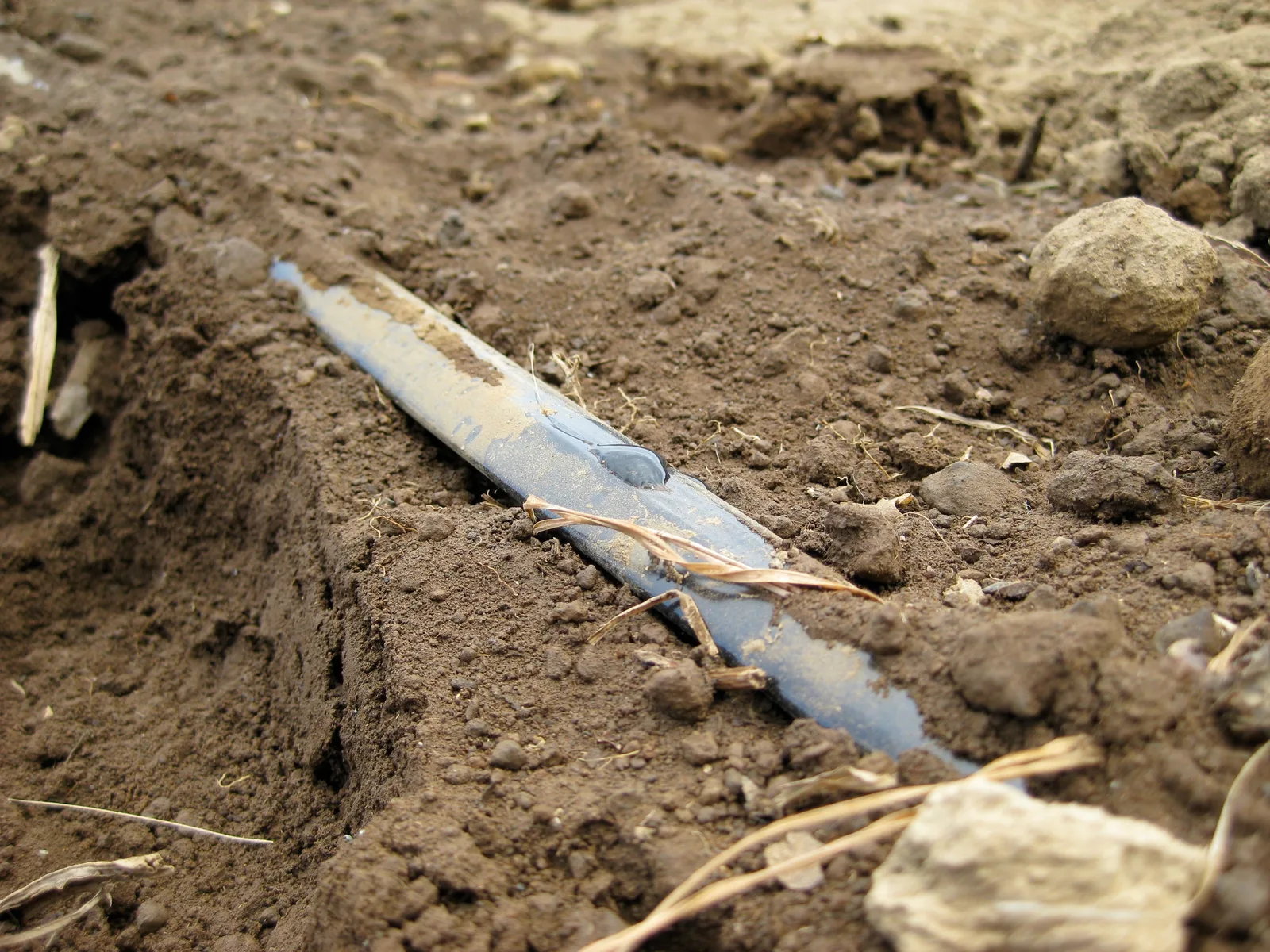
For soil-directed irrigation, watch an entire watering and inspect its result. Water that runs along a slope or lands in one narrow patch needs a delivery adjustment, not an automatic increase in runtime. The soaker hose and inline drip comparison explains the different wetting patterns. A hand hose can be enough for one accessible tree. Use what lets you maintain useful coverage, and broaden the watered area as roots expand beyond the original planting ball. Maryland Extension: watering trees and shrubs
Treat resistance as a specific trait
Disease-resistant does not mean resistant to every dogwood disease. Maryland lists ‘Appalachian Spring’ as resistant to dogwood anthracnose, but not powdery mildew or spot anthracnose. A nursery selling it simply as disease-resistant leaves out information that could change the choice. Ask which disease is common locally, which evidence supports the offered selection and whether the plant remains Cornus florida or is a hybrid. Maryland Extension: growing flowering dogwoods
For an existing tree, distinguish patterns before choosing treatment. Maryland’s diagnostic key separates small spots on bracts and leaves from powdery mildew, expanding blight and twig dieback. Several disorders can involve browning or distortion, so appearance alone may not settle the diagnosis. Photograph whole-tree distribution and the earliest symptoms; seek local help if damage spreads into branches. A resistant cultivar still needs appropriate soil, water and protection from injury, and a susceptible tree should not receive a spray simply because a different dogwood nearby was diseased. Maryland Extension: dogwood problem key
Make modest care decisions after the flowers
Routine heavy pruning is not part of maintaining a dogwood’s natural form. Where small cuts are needed for damage or access, choose them deliberately and preserve the main layered structure. Flower buds are already visible by autumn, so pruning then can remove part of the following spring’s display. Georgia Extension also notes that seed-grown trees vary in age at first flowering and that heavy shade reduces flowering. Missing bloom is not, by itself, evidence of a fertilizer deficiency. Georgia Extension: growing dogwoods
Use the soil-test interpretation guide before changing pH or nutrient supply. A report provides a measured basis for amendments; the presence of an acid-loving tree is not a rate recommendation. Keep fertilizer away from decisions about wilt or drainage until the cause is understood. In later years, check that expanding shrubs have not blocked access to the base or irrigation outlets. The most useful ongoing care preserves the conditions that made the original planting position suitable. Maryland Extension: understanding a soil test
Sources and scope
Research-based guidance informed by institutional references. Cultivar, region and growing conditions can change the advice. Product inclusion does not imply hands-on testing of every model.
- NC State Extension: flowering dogwood
- Clemson Extension: dogwoods
- Maryland Extension: flowering dogwood
- Maryland Extension: growing flowering dogwoods
- Georgia Extension: growing dogwoods
- Maryland Extension: planting a tree or shrub
- Maryland Extension: watering trees and shrubs
- Maryland Extension: dogwood problem key
- Maryland Extension: understanding a soil test