Know which fragrant hosta you are buying
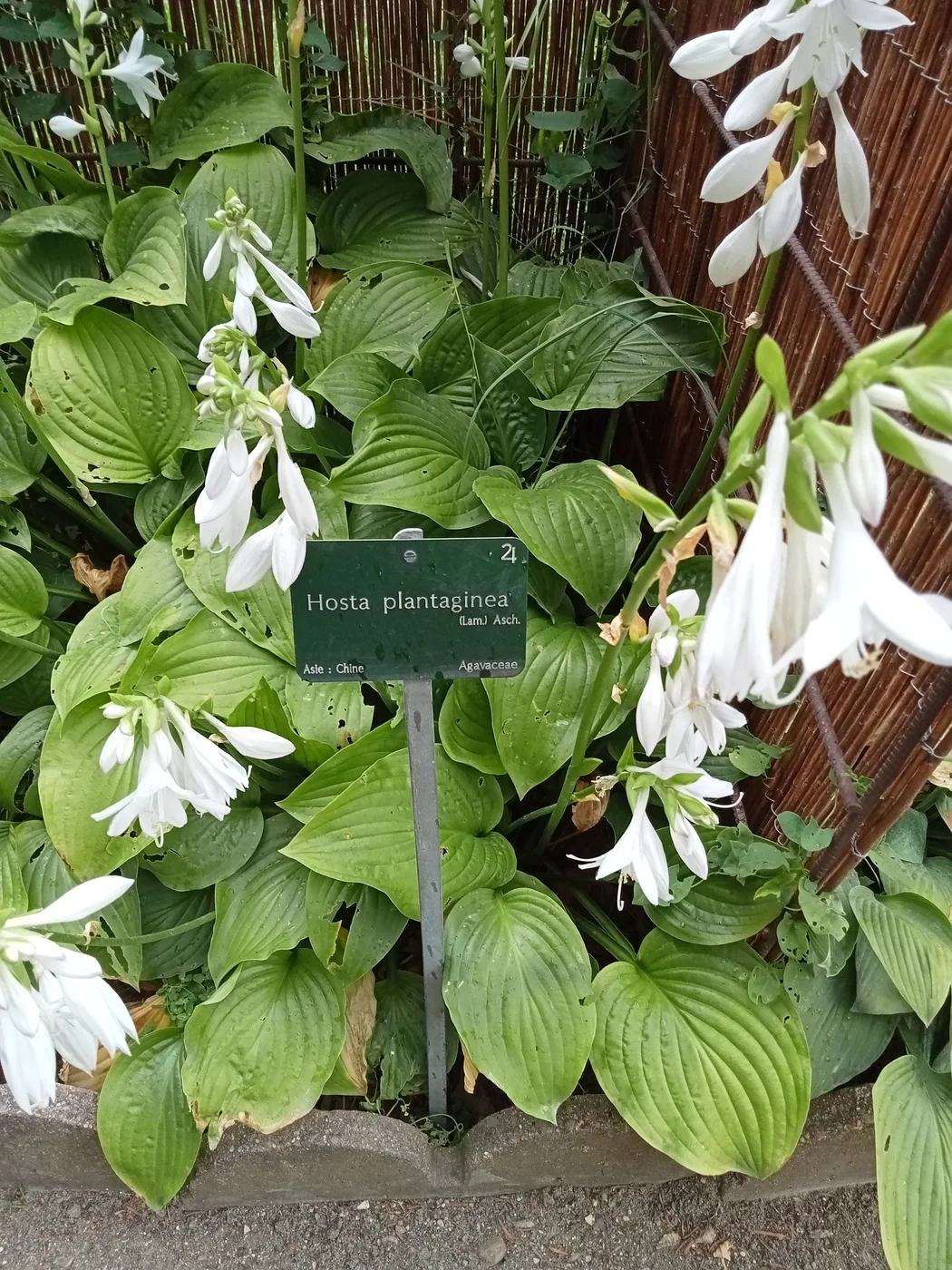
Hosta plantaginea is a species with glossy, light green, heart-shaped foliage and large fragrant white flowers. It is native to China. NC State Extension: Hosta plantaginea
A plant labeled simply fragrant hosta may be a named hybrid rather than this species. Either can be a good garden choice, but the names should not be treated as interchangeable when comparing size, flower timing, or appearance. Ask for the complete label and keep it. If the species itself is your goal, confirm that identity before making a collection of matching plants.
Choose the display you value most. Someone who wants patterned foliage may prefer another hosta; someone who uses a garden seat in late summer may give fragrance a higher priority. The fragrance, shade, and moisture guide focuses on placing this particular plant so its flowers become part of daily life rather than an overlooked detail at the back of a bed.
Measure a mature mound beside the path
Mark the plant's expected spread on the ground before digging. Stand where you will walk, kneel, or sit when it fills that outline. Leave enough distance that the foliage is not continually brushed aside to pass. A plant selected for large leaves loses some of its value if those leaves are repeatedly bent by everyday traffic.
Use the same exercise beside a bench or small patio. A close position makes the flower display accessible, but the actual crown need not sit directly against the paving. Consider how far the mature leaves reach and where a watering spout can enter. Keep a maintenance opening behind the mound if access from the front will be restricted.
For a repeating border, place fewer plants initially and allow for mature coverage. Filling every visible spring gap can produce competition and awkward access later. Temporary openness is easier to manage than moving multiple large clumps after the design becomes crowded.
Find useful shade rather than an unwaterable corner
Missouri Botanical Garden emphasizes protection from intense summer exposure, good soil structure, and checking moisture in hosta beds. It also notes that established hostas can remain undivided for many years in a suitable position. Missouri Botanical Garden: choosing hostas
Shade beneath a tree and shade beside a building are different practical settings. Before choosing between them, identify where rain reaches the ground, where roots already occupy the soil, and whether you can deliver water without dragging a hose across the plant. The cooler-looking site may still be the harder one to maintain.
Do not damage major tree roots to make a perfect planting hole. If the only available opening is cramped or difficult to irrigate, consider a separate container or a different planting position. A decision to move the design a short distance can be more effective than repeatedly adding amendments to a site that cannot accommodate the plant.
Plant for establishment you can inspect
RHS guidance places the top of a container-grown hosta root ball at its previous level, waters it in, and emphasizes continued attention during the first summer. RHS: growing hostas
Before planting, compare the root ball with the prepared opening and identify where the growing points sit. Keep the label temporarily visible so the planting does not disappear among neighboring leaves. After settling the soil, check that water reaches the original root ball as well as the surrounding ground. Treat a new plant as an individual until you have evidence that its roots are using the bed.
Mulch should simplify maintenance rather than conceal the plant base. Keep a visible inspection area around the crown and avoid creating a bowl that channels runoff into it. If you cannot tell where the crown begins without digging through mulch, remove the excess covering before making other care decisions.
Choose a container with a long-term exit plan
A large hosta in a container is a commitment to both summer care and eventual repotting. Choose a vessel with an opening that allows the root ball to be removed. A strongly inward-curving rim can make that difficult later. Keep the pot's drainage accessible and think about its filled weight before placing it on steps or in a location that will need seasonal rearrangement.
RHS warns that container hostas can become waterlogged in winter and that summer drying can brown leaf margins. RHS: growing hostas
That gives you two separate seasonal questions. In summer, can you reach and water the root zone reliably? During the dormant period, can surplus rain leave the pot? A single calendar setting does not answer both. Use the container drainage guide when choosing the vessel, and plan how you will inspect it even after the leaves have died down.
Preserve flowers until you have enjoyed them
Decide whether you want the flowers before treating every stalk as a tidying job. In a foliage-focused planting, flower stalks may be incidental. Here they are one of the reasons to choose the species. Flag the plant in your maintenance notes so a routine cleanup does not remove the anticipated display before it opens.
Arrange the nearby space around the way you use it. If you return home in the evening, place the hosta where you naturally pass or pause. If the only available site is behind other tall plants, consider whether its foliage alone still justifies that position. Fragrance is difficult to evaluate from a catalogue photograph, so buy from a source that identifies the plant clearly.
After flowering, choose whether the remaining stalks suit the garden's appearance. Their removal is a selective cleanup task, not a reason to shear the healthy leaf mound into a new shape.
Read damage before choosing a treatment
Minnesota Extension separates sunscald, fungal leaf spots, foliar nematode symptoms, and viruses in its hosta diagnostic guide. It cautions that laboratory testing is needed to confirm a virus and distinguish between viruses. Minnesota Extension: hosta leaf symptoms
Take photographs of the whole plant and both surfaces of representative leaves before removing them. Record when the change began and whether it followed a heat event, storm, or change in watering. Leaf holes, pale patches, and collapsing leaf stalks should not automatically lead to the same response. An accurate description helps a diagnostic service choose what to examine.
If an unusual color pattern raises concern, pause division and sharing while you seek identification. Do not label a pattern as attractive variegation simply because it is visually interesting. Conversely, do not destroy a valued plant based only on a passing resemblance to a photograph. Resolve the specific uncertainty before taking an irreversible action.
Maintain a clump rather than a schedule of disturbance
Make an annual inspection of size, emerging growth, and access. Divide when the plant has outgrown its role or when you intentionally want more plants, rather than assuming every mature mound needs dismantling. Identify a destination for each division before lifting the original. Keeping pieces temporarily in unsuitable places creates a second establishment problem.
RHS describes division in spring or autumn, with growing points and roots retained on each piece and divisions returned to their original planting depth. RHS: growing hostas
For a specimen grown for fragrance, the decision also affects the near-term display. If the current clump fits and performs well, leaving it alone may serve your objective better. Keep a durable label and a simple seasonal photograph. Those records preserve identity and show whether the plant is gradually expanding into a path or simply looking fuller during a particularly favorable season.
Sources and scope
Research-based guidance informed by institutional references. Cultivar, region and growing conditions can change the advice. Product inclusion does not imply hands-on testing of every model.