Choose it for foliage, and keep it out of the kitchen
Asarum canadense is unrelated to the ginger used in cooking, as Native Plant Trust explains. Its common name and aromatic rhizome can encourage the wrong assumption. Keep the full botanical name on the label and regard the plant as an ornamental woodland groundcover.
Wisconsin Extension warns against consumption because this species contains aristolochic acid. Do not use the rhizome for tea, flavoring or home remedies. This also is not a plant to offer for pet grazing; choose its location with the household’s actual plant-chewing behavior in mind.
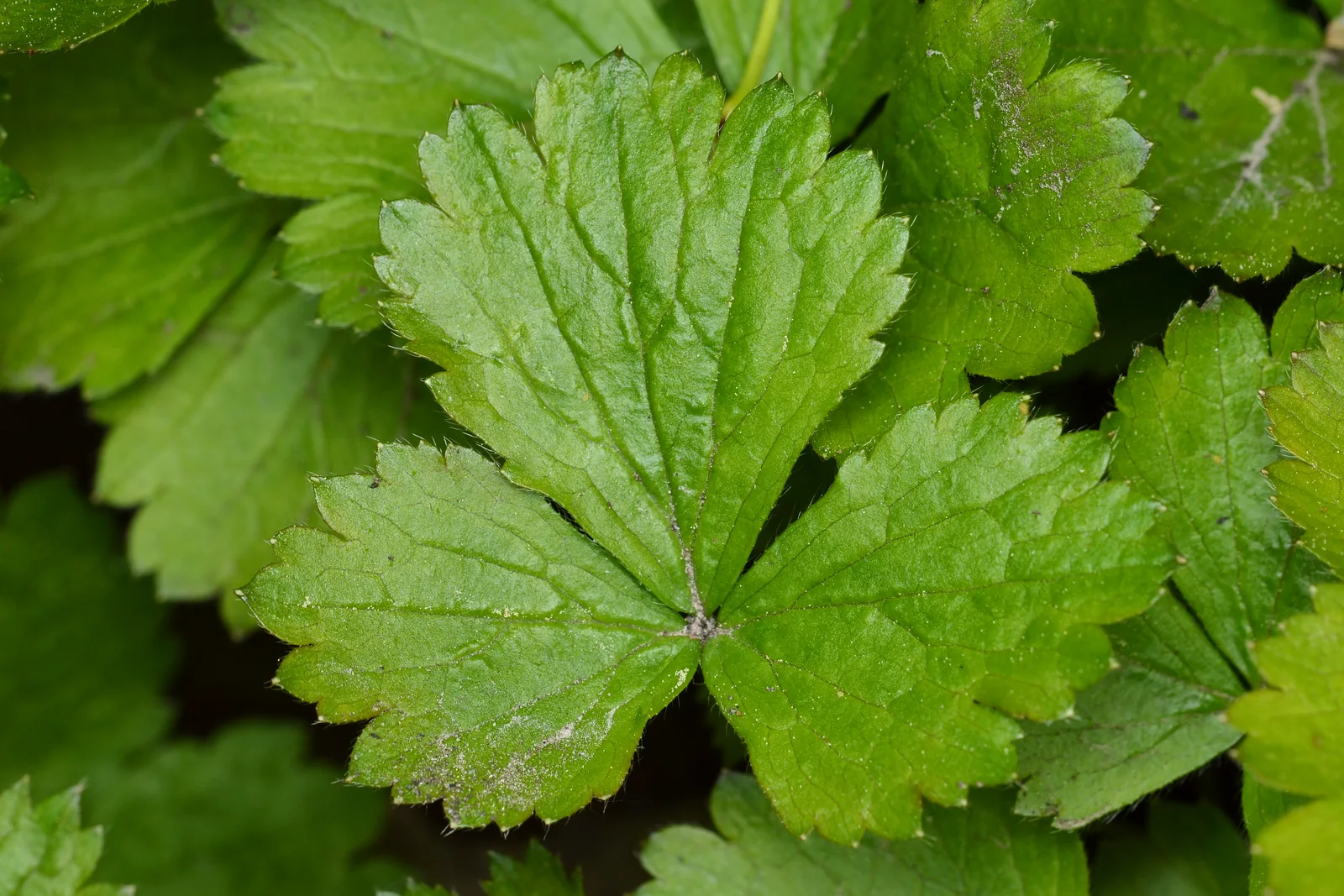
The garden attraction is a broad foliage layer you can view beside a path or beneath compatible taller plants. If someone wants a useful herb garden ingredient, select true culinary ginger for appropriate growing conditions instead. If the objective is ornamental shade coverage, wild ginger remains a candidate after moisture, regional suitability and access are considered.
Separate a moist woodland pocket from difficult dry shade
Illinois Extension recommends partial to full shade with moist, well-drained soil. That description should guide the first planting location. A tree canopy creates shade but does not ensure moisture, and a shaded clay hollow can be wetter than this general woodland description implies.
Inspect candidate pockets after rain and during a dry interval. Keep a small record of how each feels beneath the surface. The best trial area is one you can reach easily and water when needed, rather than the most hidden bare patch in the garden. Avoid making the driest under-tree zone your only test and concluding that all wild ginger performs poorly.
Choose companions with compatible moisture needs and allow room for both their mature foliage and yours. A loose grouping near a larger perennial can be easier to maintain than a tightly alternating pattern of several groundcover species. Keep the route to a hose or compost area outside the planting so repeated access does not crush its leaves.
Set small plants among roots without rebuilding the soil
Use nursery-grown plants and fit them into naturally open pockets. Move a planting position if a woody root blocks the hole. Do not add a raised soil ring around an established tree simply to create space for wild ginger. The dry-shade and tree-root guide explains why existing roots and soil levels should determine the arrangement.
Lay out a small group before digging. Use the supplier’s recommended spacing and check how the mature leaves will relate to a path, boulder or neighboring crown. More space means more open ground to care for at first; tighter spacing means a larger initial order. The plug-establishment guide can help compare those choices without promising a closure date.
Moisten dry root balls before removing their pots. Keep the root mass supported, plant at the appropriate nursery level and settle the soil with gentle watering. Move mulch back around the planting without burying crowns or folding leaves beneath it. Mark positions clearly so small plants remain visible to anyone who weeds or tends the bed.
Manage the moisture check, not a permanent watering calendar
During establishment, examine the original root balls as well as nearby garden soil. Their moisture can differ, especially if the nursery medium is exposed or a tree root occupies much of the pocket. Apply water gently, then check that it entered the intended area. Water running across a shaded bed is not proof that every new plant received it.
Watch the edge closest to paving, the pocket with the densest tree roots and the middle of the group. These positions make useful comparison points. If only one part repeatedly wilts or scorches, inspect that site before changing the routine for the entire bed. A single irrigation schedule can overwater one pocket while failing to reach another.
When damaged leaves remain after a corrected watering problem, judge recovery by subsequent growth rather than expecting the old tissue to become perfect. Take a dated photograph and avoid repeatedly disturbing the roots to check them. If a patch continues to decline despite suitable moisture, collect images and site notes for diagnosis before applying fertilizer or replacing plants.
Allow the colony to grow and the seasons to show
NC State Extension describes wild ginger as a deciduous, spreading woodland perennial with inconspicuous spring flowers close to the ground. Plan for a leafy growing-season layer and a different winter appearance. Its flowers are interesting at close range, but they are not a conspicuous floral carpet like moss phlox.
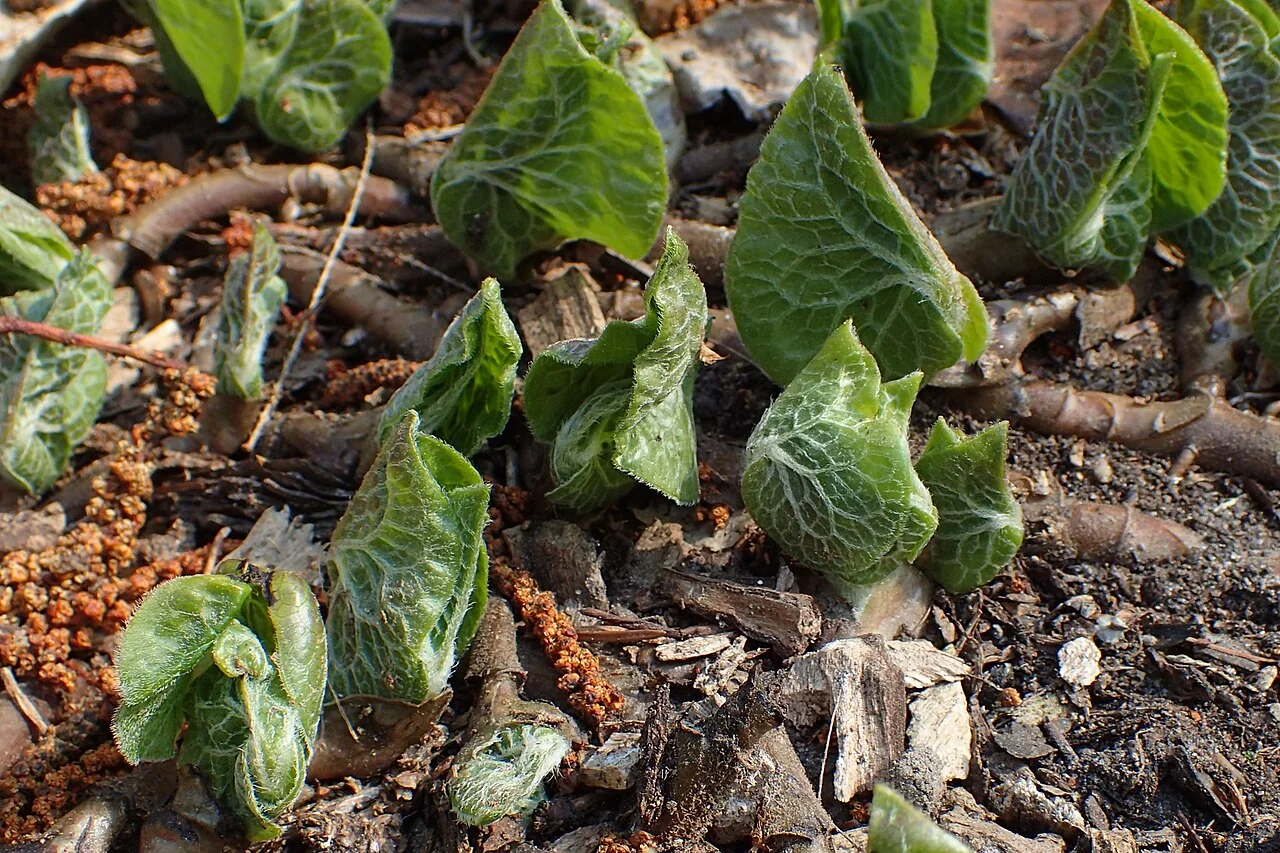
Place it where you can observe new foliage from a path without stepping into the colony. In autumn, retain an appropriate loose leaf layer where it does not smother small plants. Lift away dense mats that pin emerging growth down, and avoid repeatedly raking through crowns. Keep leaves out of required walking surfaces while allowing the bed itself to retain its woodland character.
Track the expanding outline once or twice each growing season. If it approaches a small companion, decide early whether to move that companion or reduce the wild-ginger edge. Do not assume the original pot spacing remains the boundary of an established colony. An accessible edge and clear plant records make adjustments easier.
Separate chewing damage from moisture stress
Slugs and snails are occasional pests identified by NC State Extension. A leaf with missing tissue calls for a different inspection from one with a dry brown margin. Check damaged and intact leaves nearby, and look beneath the foliage without lifting the entire plant.
Inspect again when conditions favor seeing the suspected culprit, and photograph fresh damage rather than only the oldest damaged leaf. Decide whether limited chewing is acceptable before considering control. Broad foliage can make a few holes visually conspicuous even when most of the plant is functioning. If new leaves continue to disappear or damage increases, seek a specific identification and locally suitable response. Avoid assuming that every hole is a slug problem, or that every wilted leaf indicates thirst.
Propagate only after the first planting works
Wisconsin Extension describes division of the near-surface rhizomes, with early spring preferred. Wait for a healthy established group before making divisions. Have the next location prepared, keep divisions from drying and do not remove the most vigorous edge merely to fill a site where the original plant already struggled.
For a modest garden, buying a few accurately identified nursery plants may be more practical than starting from seed. If you choose seed propagation, follow a species-specific source for its dormancy requirements and label the container with the sowing date. Do not interpret a lack of immediate germination as permission to discard the pot or transplant it into an unlabeled mixed tray.
Before expansion, assess local native status, source identity and the care the first group required. Avoid collecting from wild colonies. This profile helps with ordinary garden culture; it does not establish that every Asarum species is interchangeable in climate, appearance or ingestion risk. Keep the name Asarum canadense with any shared division and revisit the regional-spread guide when planning another location.
Sources and scope
Research-based guidance informed by institutional references. Cultivar, region and growing conditions can change the advice. Product inclusion does not imply hands-on testing of every model.