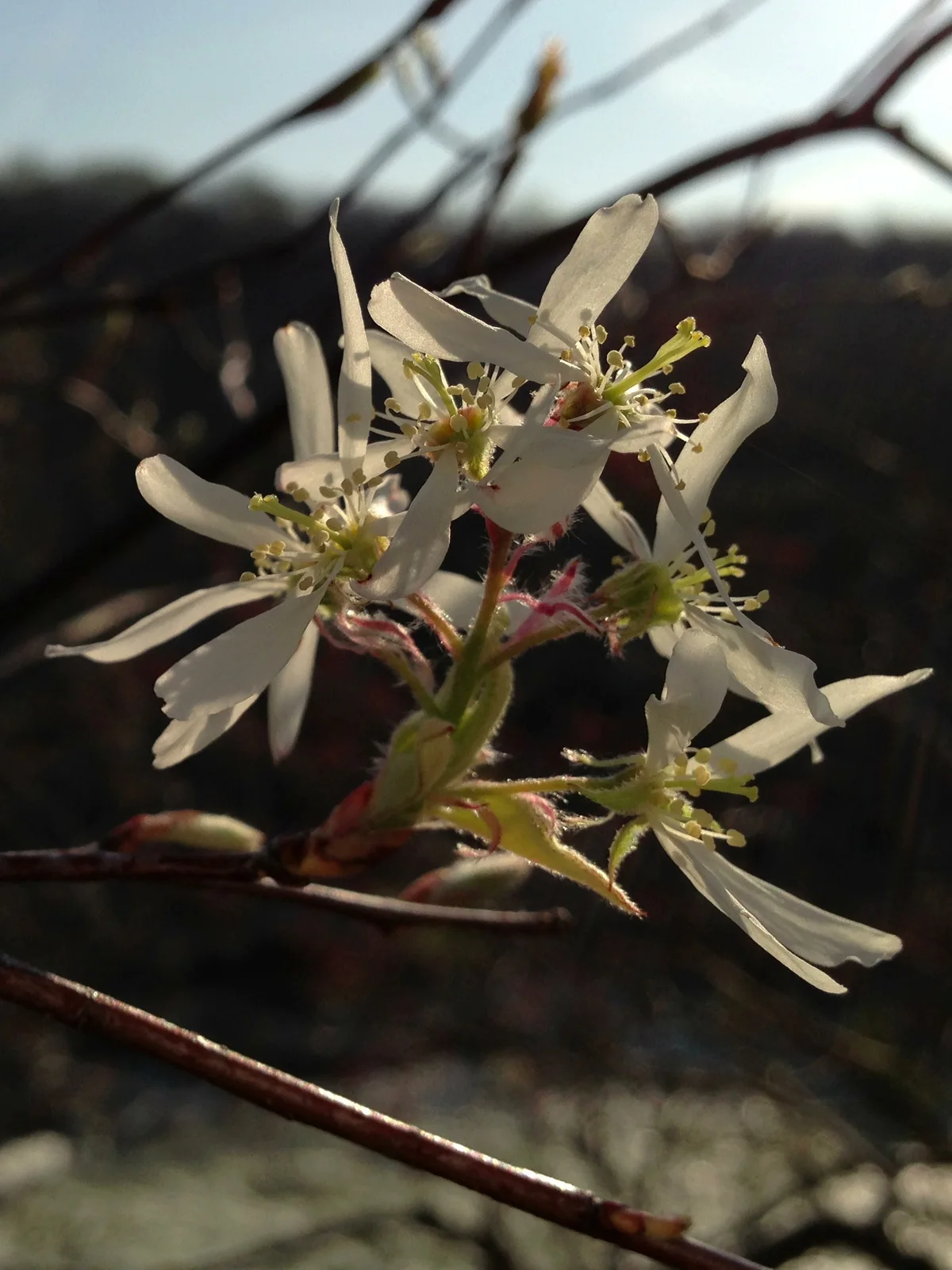
Resolve the name before designing around it
Serviceberry is a shared common name. This profile concerns Amelanchier arborea, the downy serviceberry. Maryland Extension distinguishes it from A. canadensis and A. laevis, and identifies A. × grandiflora as a hybrid group. The familiar ‘Autumn Brilliance’ belongs to that hybrid group, so its advertised characteristics should not be copied onto every A. arborea seedling. This distinction matters when you are choosing by mature shape, regional origin, or a particular landscape purpose. Maryland Extension: serviceberry species
Ask for the botanical name on the plant invoice as well as the display tag. If the seller uses only juneberry, shadbush, or serviceberry, ask which species or hybrid is supplied. Keep that information with your planting record. A tree selected for spring flowers and wildlife can be an excellent choice without being the same plant marketed elsewhere for orchard fruit production. Establish the identity before borrowing a pollination plan, pruning system, or yield expectation from another serviceberry. Maryland Extension: serviceberry species
Give a woodland tree usable growing room
Downy serviceberry can form a small tree or a multistem specimen rather than a permanently low shrub. Its natural branching form makes it useful where you can see flowers against a darker background and appreciate the crown after leaves emerge. Its eventual size deserves the same planning as another ornamental tree: the open area above a young nursery plant can be misleading. Missouri Extension: Amelanchier
Measure the space beside paths and beneath overhead obstructions, then compare it with the particular plant source’s mature-size description. Decide whether low branches are welcome or would conflict with access. Use the small ornamental tree guide for that comparison. A permanent ground position is usually the practical choice. If a plan depends on keeping an unidentified serviceberry very small by repeated cutting, resolve the plant identity and expected form before making the purchase.
Plant for root establishment and protect the trunk base
Begin with healthy nursery stock and a planting position that drains. Inspect the roots, keep the root flare visible, and handle the tree by its root ball. Water to settle the planting and keep mulch away from the trunk. Maryland Extension advises against routine top pruning to compensate for lost roots; a newly planted crown does not need to be indiscriminately shortened to balance the root ball. Use the root-flare guide for the complete planting process. Maryland Extension: planting a tree or shrub
Make the young tree easy to revisit. Keep its label and planting date, record rainfall or irrigation when you check the root zone, and leave clear access around the base. In a mixed border, mark the original planting ball so you can compare it with surrounding soil. This gives you useful evidence if the tree struggles: whether moisture actually reached the original roots, whether the site stayed wet, and whether damage began near the trunk or out in the canopy.
Enjoy fruit without borrowing an orchard promise
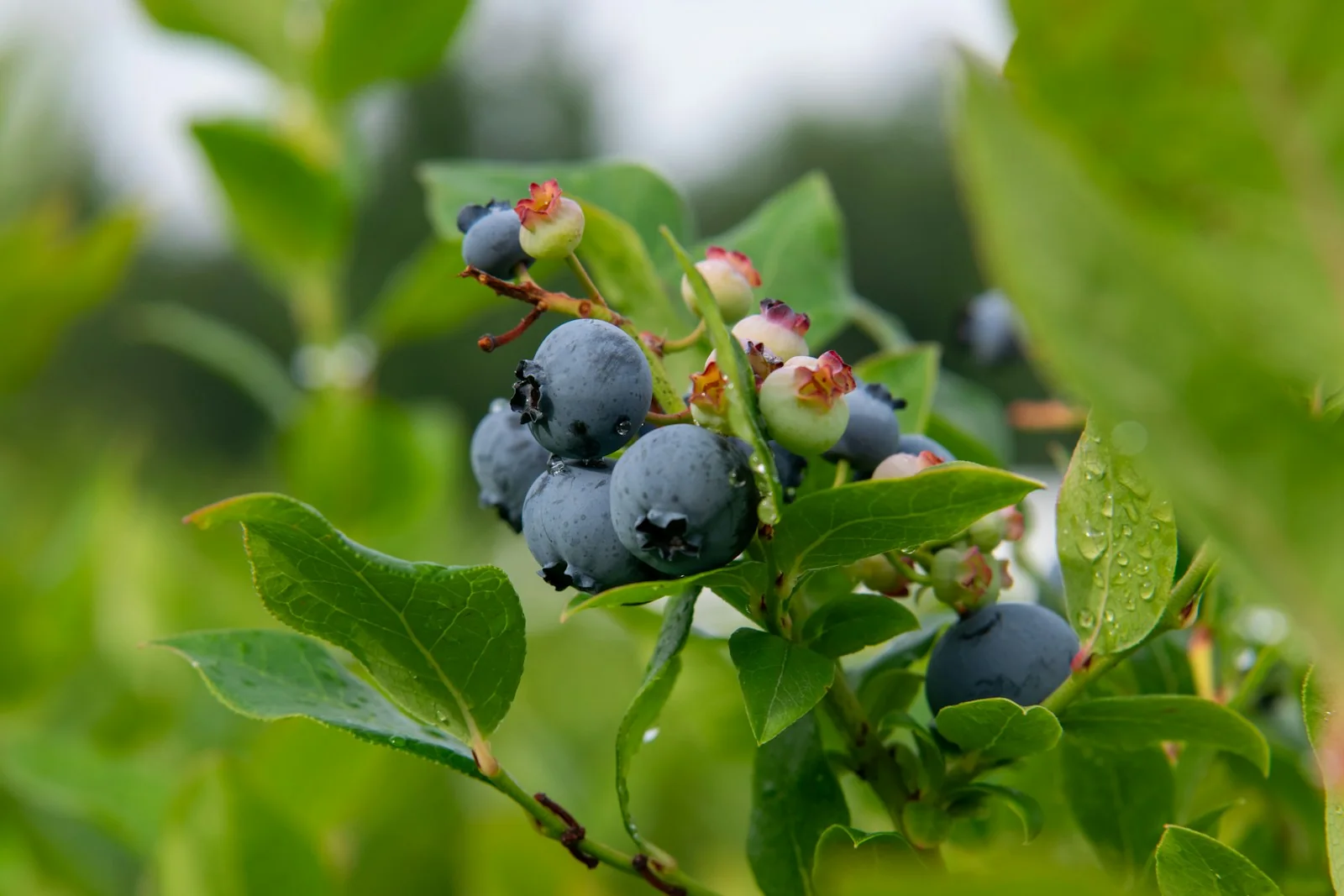
Missouri Extension describes A. arborea fruit ripening toward early summer in its region, changing from green through reddish stages to deep purple. Birds may remove it before it reaches the stage you hoped to harvest. The Missouri conservation account also notes variable flavor, from unremarkable to sweet. For an ornamental planting, treat fruit as a seasonal benefit whose quantity and quality you will learn from the actual tree, rather than assuming a commercial berry-crop result. Missouri Extension: Amelanchier Missouri Department of Conservation: downy serviceberry
Watch a small group of fruits as they develop and record when local birds begin visiting. If sharing the crop is your goal, this may require no intervention. If harvesting matters, consult the ripening-berry protection guide before designing access around the tree. Confirm the plant’s identity before eating anything, and do not transfer fruit-use claims from a common name alone. A reachable, correctly identified specimen is easier to manage than a tall tree purchased on an assumed yield. Missouri Extension: Amelanchier
Manage suckers and keep propagation expectations realistic
Root suckers can change the outline of a serviceberry planting. Decide whether a broader multistem effect fits your garden or whether new basal growth conflicts with the chosen tree form. UF/IFAS notes the need to manage suckering when maintaining a tree-shaped specimen. Inspect the base before small shoots become entangled with surrounding plants; it is easier to make a clear decision when their origin is visible. UF/IFAS: Amelanchier arborea
NC State lists seed and cutting methods for propagation. These are distinct projects from buying a nursery tree of a known shape and origin. Label any seedlings or propagated plants with their source rather than giving them a cultivar name they have not been shown to match. Keep young plants where you can monitor establishment before moving them into permanent positions. For an existing specimen, the ground-level pruning guide helps with reachable woody cuts, while the plant’s desired form should determine which shoots are retained. NC State Extension: downy serviceberry
Read seasonal color and wildlife value together
Downy serviceberry offers white flowers before or around leaf emergence, followed by summer foliage and a fall change that can include gold, orange, and red. Missouri’s conservation agency describes it in open rocky woods and notes its early-season nectar and fruit value for wildlife. The display therefore changes rather than remaining at one photographic peak. Plan neighboring plants so they do not obscure the lower crown exactly when you most want to see it. Missouri Department of Conservation: downy serviceberry
Keep a short seasonal record: first open flower, leaf expansion, fruit ripening, and autumn color. This is especially useful beside other native woody plants whose flowering times shift with the same weather. The native flowering shrub season guide can help build a sequence without requiring every species to bloom simultaneously. Judge a new planting after several seasonal observations instead of treating the absence of fruit on one visit as proof that the tree provides no wildlife interest.
Match the symptom pattern before treating a problem
Serviceberry leaves can show several different kinds of injury. UF/IFAS describes blotches caused by leafminers, skeletonized surfaces associated with sawfly larvae, and distorted growth with aphids. It also discusses leaf spots, rust, and powdery mildew. Sudden blackening and death of blossoms or shoots raises a different concern, including fire blight, than a few blemished leaves late in the season. Excessive nitrogen can increase susceptibility to that disease, so fertilizer is not a sensible default response. UF/IFAS: Amelanchier arborea
Photograph the upper and lower leaf surfaces and include the whole affected branch. Note whether symptoms are confined to old foliage or advancing into new growth. Send persistent shoot dieback or uncertain disease symptoms to a local extension diagnostic service before selecting a treatment. A few spotted leaves, drought-related leaf loss, and an actively dying shoot require different decisions. Record the weather and root-zone conditions alongside the photograph so the diagnosis includes environmental stress as well as possible insects or pathogens.
Sources and scope
Research-based guidance informed by institutional references. Cultivar, region and growing conditions can change the advice. Product inclusion does not imply hands-on testing of every model.