Choose what to grow
Compare plants.
Put the light, root space and seasonal needs beside one another before choosing a place in your garden or home.
1 of 3 plants selected — add another to compare.
| Care decision | 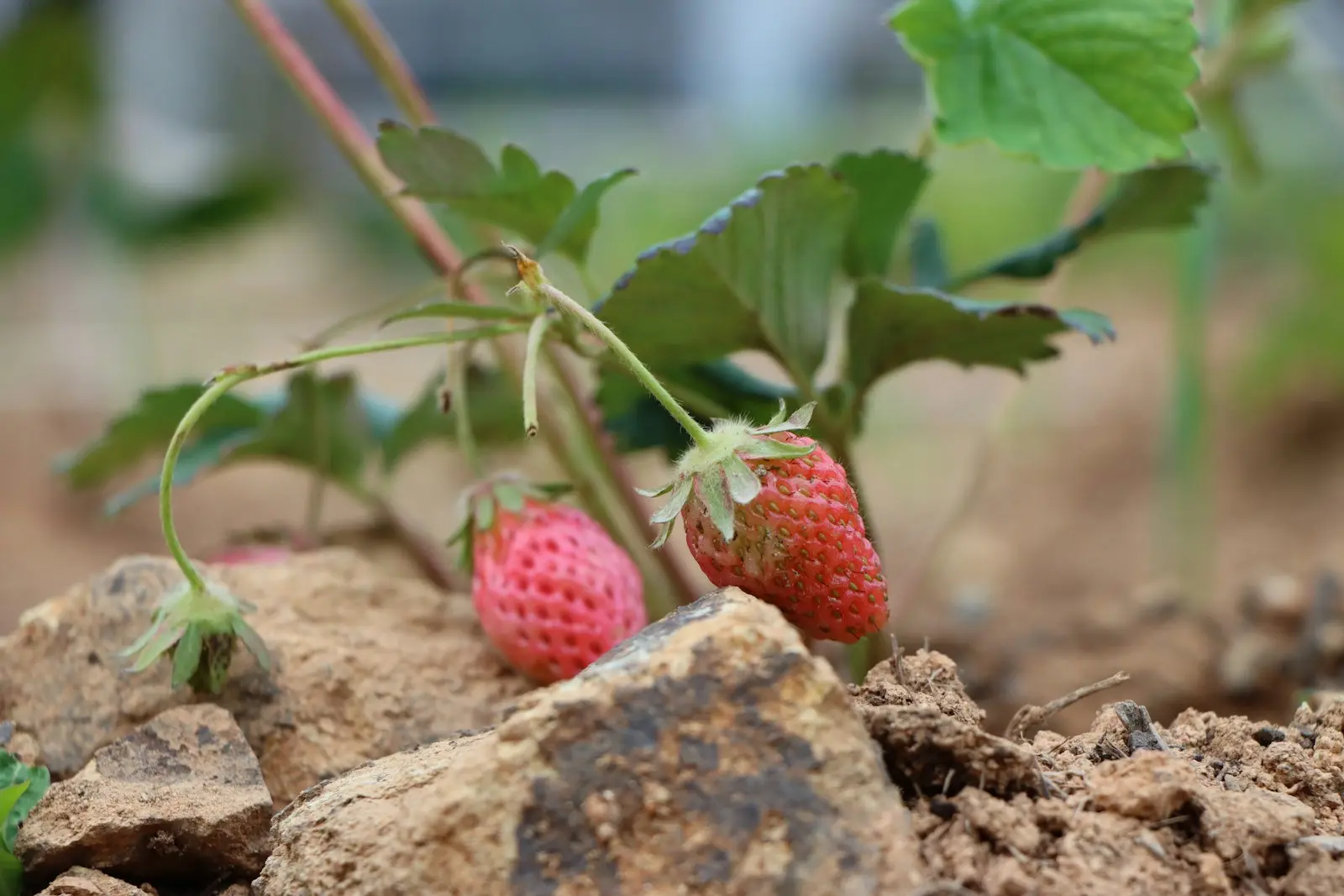 |
|---|---|
| Light | Full sun for the best crop; reduced light can limit flowering and keep foliage wet longer. |
| Water | Keep the shallow root zone supplied during establishment, flowering and fruit enlargement; adjust to rainfall and container drying. |
| Soil & growing mix | Well-drained soil rich in organic matter; New Hampshire guidance targets pH 5.8–6.2, with local soil testing used to refine amendments. |
| Mature size | Individual plants commonly grow 6–12 inches high and 1–2 feet wide; rooting runners can extend the patch beyond that footprint. |
| Growing season | Biologically perennial. June-bearers give a concentrated regional season; day-neutrals can crop repeatedly under suitable temperatures. Some climates use annual planting systems. |
| Winter & climate | Cultivar and winter protection determine perennial survival. Dormant crowns tolerate more cold than exposed open blossoms; container roots need a separate winter plan. |
| Container fit | Well suited to containers. Check mature size and root-space guidance in the reference. |
| Place & variety | June-bearing describes a flowering habit, not a universal June harvest. In Florida, strawberries are commonly planted and harvested as a cool-season annual crop; northern perennial-bed instructions cannot simply be shifted onto that calendar. |
| Equipment to consider | Choose equipment after reading the care reference. |
| Evidence & next steps |
|
These facts help compare choices. They do not establish that plants can share a pot, watering circuit or outdoor site. Check the full reference and local suitability before planting.
Open this comparison as a bookmarkable page
Give your choice enough room.
Use inside bed or pot measurements to plan mix quantities and working space.