Choose what to grow
Compare plants.
Put the light, root space and seasonal needs beside one another before choosing a place in your garden or home.
1 of 3 plants selected — add another to compare.
| Care decision | 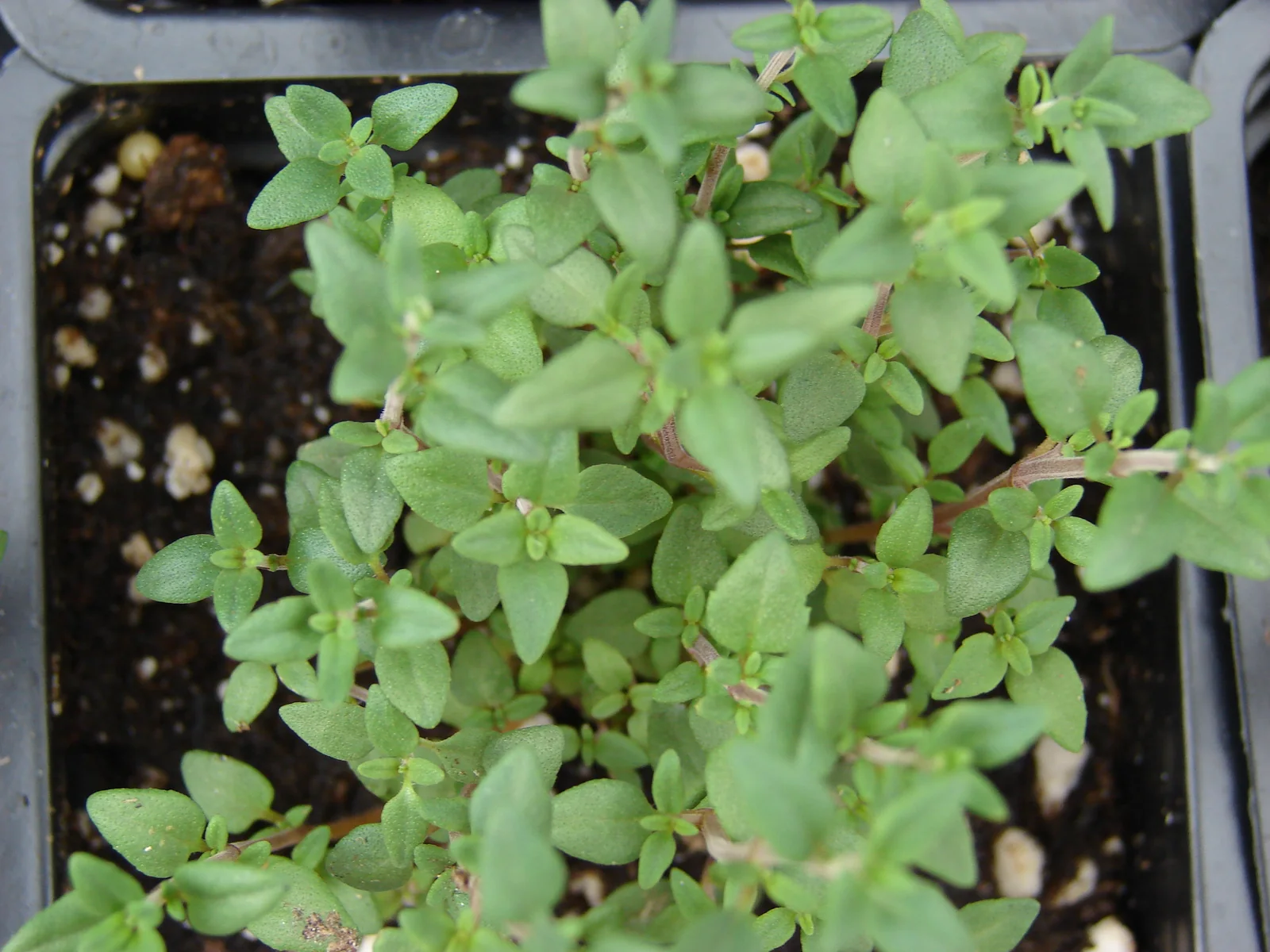 |
|---|---|
| Light | Full sun; at least 6 hours of direct light outdoors. |
| Water | Water during establishment and prolonged dryness; pots need checking, but saturated roots are a major risk. |
| Soil & growing mix | Light, well-drained soil; tolerates dry, sandy or rocky conditions and modest fertility. |
| Mature size | Usually 6–12 inches tall and 6–16 inches wide, depending on cultivar. NC State. |
| Growing season | Woody perennial; strongest leaf harvest during active growth, with spring or summer flowers. |
| Winter & climate | NC State lists USDA zones 5–9; cultivar, winter wetness and container exposure affect survival. NC State. |
| Container fit | Well suited to containers. Check mature size and root-space guidance in the reference. |
| Place & variety | This is common culinary thyme, Thymus vulgaris. Groundcover thymes and lemon-scented selections differ in habit and sometimes hardiness. A cold-tolerant thyme can still fail in wet soil or an exposed pot. |
| Equipment to consider | Choose equipment after reading the care reference. |
| Evidence & next steps |
|
These facts help compare choices. They do not establish that plants can share a pot, watering circuit or outdoor site. Check the full reference and local suitability before planting.
Open this comparison as a bookmarkable page
Give your choice enough room.
Use inside bed or pot measurements to plan mix quantities and working space.